Thursday, September 06, 2007

Eric McDavid Denied Vegan Food....AGAIN

From:    sacprisonersupport@riseup.net
Date: Wed, September 5, 2007 10:38 pm

Hello everyone,

Please read on for the latest on Eric and his upcoming trial...

Eric denied vegan food....again
Eric is still being denied a healthy diet. As of Friday night, the jail
stopped bringing Eric breakfast and dinner trays that he could eat. The
only vegan food the jail was bringing Eric was a bagged lunch with a
peanut butter sandwich and fruit. Now, they have stopped providing him
ANY vegan meals - not even the bagged lunch. This means that the only
food available to Eric is what he is able to order from commissary and the
food on his trays that happens to be vegan (usually a little fruit and
bread each day). Obviously, this is not enough to meet his body's
needs. No one can be healthy on just bread and fruit, there are few vegan
options from the commissary, and he only has access to commissary once a
week. Eric has exhausted all official channels for having his meals
restored. It is difficult to believe the timing of this dramatic and
abrupt change in his diet is merely a coincidence. With less than a week
to trial, Eric is now struggling to take care of his physical health as
well as maintaining his emotional and mental health. With all of Eric's
options for redress being exhausted, we need your help! Please call the
Sacramento County Jail and request that they provide Eric with complete
vegan meals immediately. The have been giving him vegan food for the last
15 months and they can do it again. Please call the jail at: 916.874.6752

Fundraising
The last of the matching funds have been met! This means that we have
surpassed our goal of $15,000. Our biggest thanks to all of you who
helped make this possible. All of the money raised will go directly to
Eric's legal defense. We still do not have a final figure from Eric's
lawyer about how much money we will actually need to get all the way
through trial - the $15,000 was an estimate that he gave us many months
ago. While we hope this will be enough to pay for all of the legal fees,
we won't be certain for another couple of weeks. Please stay tuned and be
ready - we might need your help again in the future!


In Limine Hearing
On Friday, Eric will have his final hearing before trial begins on Monday.
This hearing is very important, as the government has filed two motions
that seek to deny Eric the ability to choose his own defense strategy.
The first motion is a motion to preclude the use of the entrapment
defense. The second motion is to preclude the defense from "raising
previously decided legal issues" - which would include all of the issues
raised in virtually all of the pre-trial defense motions that Eric's
lawyer filed in December/January. We are working on posting the
government's In Limine motions on Eric's website.


Trial in less than a week!
Eric's trial begins on Monday, September 10. The first day will be jury
selection, with opening arguments probably beginning on September 11. We
have been told that court will only be in session Monday, Tuesday, and
Wednesday of each week. This means that we will (probably) be in court
September 10, 11, 12, 17, 18, 19, etc. Originally the government was
speculating that trial would last 10-14 days - now they are only
projecting 6. This means that we could possibly be done with closing
arguments after the second week, although that seems somewhat unlikely.
It seems more likely that trial will run into the third week - September
24, 25, and 26. However, nothing is certain. For those of you who are
planning on attending trial, please keep in mind that Eric's preference is
for people to be there, if possible, at the end of trial. We realize
this is complicated by the fact that we don't actually know WHEN that
might be... We'll keep everyone updated as trial progresses and we should
have a better sense of the timeline as things move along. And please
remember, if you are planning on attending trial make sure that you are
dressed appropriately for court.

List Volume
Thanks to all of you who have stuck with us for the almost 20 months of
this ordeal. Up until now, the volume on this list has been very low, but
as trial approaches we will continue sending out more frequent updates.
Once trial arrives we will be trying to send updates every day about the
court proceedings. If this is NOT something you are interested in, please
let us know before Monday so we can remove you from the list. If you know
others who ARE interested in receiving this information, but are not on
the list, please have them email us and we will add them. We will also be
posting our updates on various Indymedia sites, as well as on Eric's
website at www.supporteric.org

After almost 20 months in Total Separation, Eric is very ready for his
trial to get started. His strong heart and good spirits have constantly
amazed us - he often seems to handle things better than those of us who
are not locked behind steel doors and concrete walls. And while he is
aware that this will not be an easy fight, he remains steadfast and secure
in his decision to move forward with integrity and to fight these
outrageous charges against him. Thank you all for standing with him, for
supporting him, for sharing your love, your joy, and your outrage at
injustices suffered.

Yours,
SPS

Activist Goes to Trial for Giving Explosives Instruction

Rod Coronado, a lifelong animal rights activist and convicted arsonist, goes to trial next week for allegedly telling a crowd something they could find on Google.

By WILL CARLESS Voice Staff Writer

Tuesday, Sept. 4, 2007 | Animal rights activist Rod Coronado spent most of the late 1990s in federal prison, serving a 57-month sentence for burning down a fur farm laboratory on the campus of Michigan State University.

In 2003, four years after his release from prison, Coronado made a controversial speech to a group of activists in San Diego. After the speech, according to court documents, a member of the audience asked Coronado how he built the incendiary device he used to destroy the fur farm in Michigan.

The answer Coronado gave could be about to send him back to federal prison. If federal prosecutors have their way, Coronado could end up spending more time in prison for talking about the Michigan State arson than he did for committing the arson itself.

In his answer, Coronado described how he built the Molotov cocktail-type device he used for the Michigan arson. Almost three years after he made the speech, he was charged under a seldom-used federal statute that prohibits individuals from teaching or demonstrating the making or use of an explosive device with the intent that passing on the information will lead to further crimes.

The case, which comes to trial in federal court in San Diego next week, is the latest phase of a three-year effort by federal prosecutors and investigators to bring charges in relation to a massive arson in University City that caused $50 million of damage and occurred the same day as Coronado’s speech.

A banner found at the scene of the arson read "If you build it, we will burn it -- The ELFs are mad." ELF is an acronym for the Earth Liberation Front, an extremist environmental group; Coronado was once the group's spokesman.

In 2005, two local animal rights activists, Danae Kelley and David Agranoff, were jailed for several months for refusing to testify before a federal grand jury investigating the arson. Those activists were later freed and the grand jury has yet to bring any charges.

Coronado, who lives in Tucson, was in San Diego for a pre-trial hearing Friday. He said the charges that have been brought against him are a last-gasp effort by the government to justify several years of fruitless investigation of the arson.

"In lieu of capturing the responsible parties for the University City arson, the government is trying to silence someone who has given some breath to a movement they want to hurt," Coronado said outside the court.

Federal prosecutors would not comment on the ongoing case.

The government’s case will essentially hinge on Coronado’s intent when he made the speech. Undercover investigators were at the speech and recorded it, but according to court documents, the investigator’s recorder cut out before the question and answer section of the lecture began. Therefore, exactly what was said about the Michigan State arson, and how Coronado said it, is in dispute.

Under a strict reading of the statute Coronado has been charged under, prosecutors must prove that when Coronado described how he made the incendiary device he intended his audience to go out and use that information to commit crime, said Gerald Singleton, one of Coronado’s attorneys.

But Singleton said he will ask the judge to instruct the jury to take a more narrow approach to the statute in Coronado’s case.

That approach is based on a 1969 Supreme Court decision, Brandenburg v. Ohio.

In Brandenburg, the court ruled that the government could only punish inflammatory speech if it was "directed to inciting and likely to incite imminent lawless action." If the judge instructs the jury to follow this case, Singleton said, the jury would have to agree that Coronado intended to incite immediate lawless action from the group that gathered to hear him speak that night in Hillcrest.

Coronado said that group consisted mainly of middle-aged animal rights activists and young punk rockers -- hardly the sort of crowd to go out and immediately start burning things down, he said.

Singleton said the narrower interpretation of the statute makes sense considering the fact that the information his client passed on to the crowd can be found easily and quickly online. A Google search for "How to make a Molotov cocktail" garnered 6,880 results in 0.37 seconds, including a page from the online encyclopedia Wikipedia that includes diagrams showing the making of a Molotov cocktail.

Singleton will have some help in winning over the judge and jury in the shape of J. Tony Serra, a battle-hardened veteran of civil rights law who once defended members of the Black Panthers.

Serra will be examining some of the witnesses and will be making the closing statement in Coronado’s trial, Singleton said.

The trial begins Sept. 10.

http://www.voiceofsandiego.org/articles/2007/09/04/news/01coronado090407.txt&itemid=200709040716520.528885

Tuesday, September 04, 2007

Support Rod Coronado

> From: Support for Rod  <info@supportrod.org>

Hello All!

This past weekend was one I could only have dreamed of; perhaps too cynical or
jaded by experience, I tend to leave idyllic adventures for my four year old
daughter’s bedtime. But, once again life has shown us that magic is abundant,
love is conquering, and that the design of life certainly has plans for us.

After a week of tumultuous events, Rod and I were wed on September 1, during
what was one of the most magical days of our lives. We were surrounded by our
loved ones, Earth warriors, community builders, blissful children, and the
spirit of the Earth, whom was sure to make herself known.

The week began with the arrival of some dear friends and family members, which
set a tone of support and strength. But, we also received a call from Rod’s
Probation Officer, who was very angry that he had attended a benefit in
Minnesota, even after we had permission from the court’s in San Diego. As it
turns out, the court’s here were not happy about that, and his PO
asked for him to be returned to prison for violating his terms of release.
I feel Rod is protected by all of the love that surrounds us now, for Judge Bury would not
violate him, although in the future it seems he may need to ask for permission
to attend such events. That was a huge SIGH* for us, as it would have been a
sad wedding for me without my partner……

Then came the next obstacle, how would we be allowed to have some of
our wedding guests, attendants, and our minister marry us since they all posed a risk of
violating Rod’s terms of probation? I don’t know how or why this worked out,
but the PO officer and the supervisor were willing to give us temporary ok to
associate with them for the time of the wedding. We prayed for that,
literally visualized and only believed that it would be that way, and when it
came time to ask that of the courts, we were granted the permission! They said,
“they felt like it was the human thing to do…” hmmm…. I have a few more
suggestions, but, I was more than pleased and we then knew that Creator was watching closely.

Rod went to San Diego on Friday, and although no major details were
decided on, as it was presented to me, things sound hopeful. (Rod has ANOTHER
InLIM hearing this Thursday…please attend!) Rod was not stressed or disturbed as
is the usual reaction to the appearances in San Diego, but was joyful and easily
reconnected back to the plans of the weekend, surrounded by family and friends, and an
abundance of joy!

Our hearts were so happy the entire weekend. I do not think we could
have been more sure about anything, as our testament to each other was so
obvious and true throughout the time. I have witnessed a lot of dramatic
emotions during such times, and it was so refreshing to have each other as
a source of peace and solace. We walked together in union right up to the
time of the wedding when then it was apparent that this relationship is far
bigger than us.

When we arrived at the Botanical Gardens, the weather was hot and sticky….real
hot and real sticky. There was much work to be done and not a lot of
time to do it in ( the story of our lives). As the ends were coming together, on the
distance an enormous black cloud began to show itself. Rolling
thunder began to sound, and I tried to remain unattached to the idea that
the party may be over before it started. We managed to do all the pictures,
and set up the table just in time for some rain to come down, which meant that all the
table clothes and chairs were soaked.

But…. as in Arizona, the storm passed…….or so it seemed. Ten minutes
before we began our entrance to the ceremony, the darkest clouds covered our head, and
lightning and thunder began to increase. We lit the sage and the children
walked up the path, blessing our way. We made it into the sacred circle right
as a light rain began to fall, and everyone, including Rod and myself were
overjoyed with the blessings of the West. We had a pipe blessing,
and then when our friend Peg began the invocation of the four directions, the winds
wiped, the lightening and thunder cracked, and we were all humbled by such a
display. As a friend said, “that should be in a movie!”

Once the wedding party left the ceremony site, the rains subsided and the sun
shown her face, and the chairs dried and the party began!

We thank everyone who was there to help us, we rejoice in the beauty
of all the hearts that opened so wide and shared with us that dear moment, and
we send our love for those who we wished to be with us, and could only be so
in spirit.

And after this week, we will walk hand in hand into the courtroom of Judge
Miller and believe that Creator will guide us so magnificently through the
trial, as we shown that these steps truly are part of a grander design.

I personally send my love and prayers out to the many along the way who have
been there to assure me that we are not alone, and I pray for healing to those
who may still appose us or see my family as a threat. I know that
what Rod and I do is about love, it is about a new way, and a future. It is not
about hurting, or destroying, any of the fearful places people sometimes reside. If
we can all experience these profound events that happen daily across
the planet, we shall be reminded that life is sweet, even when there is
suffering. Letting go of the past and walking into the future is the only way to
walk free; for Rod, for me, for the governments, for any human that hopes for
harmony….

We will see you on our honeymoon, San Diego, September 10, 2007. Please be
there, in body or spirit!

Urgent: Running Down the Walls

Earlier this month, members of the Black Riders
Liberation Party (BRLP) were arrested throughout
southern California. While some of the trumped up
charges were dropped, other members of the Party face
serious charges, including weapons possession. Because
of the arrests and the cost of building a defense, the
BRLP are desperate need of funds.

On September 8, 2007, the Anarchist Black Cross
Federation will be having a 5k run/walk to raise money
for the BRLP and the ABCF Warchest program. We are
asking for all supporters of people’s liberation
movement and political prisoners to join us at our
event. Every dime raised will be used for the BRLP
defense or will directly assist political prisoners in
financial need.

It is time to put your walking / running shoes on and
move for the movement.

It is time for you to beat your feet for something
important.

Spend a morning walking / running in a park and help
defend our revolutionaries.

We need your help. They need your help. Join us on
September 8th.

What: Running Down The Walls 2007
When: September 8th, 2007 – 10:00 Am to 2:00 PM
Where: Whittier Narrows Regional Park, El Monte, Ca
750 Santa Anita Ave South El Monte, CA 91733-4300
(East side of Legg Lake)

Registration fees: $12 pre-registration; $15, the day
of the run. (Make checks out to Tim Fasnacht)

For more information: www.abcf.net/la

Filipino Revolutionary, Cleared of EU “Terrorist” Charge, Arrested in Holland

On the morning of August 28, Dutch plainclothes police raided the home of exiled Filipino revolutionary leader Jose Maria Sison in Utrecht, the Netherlands, arrested him and charged him with ordering the murder of two persons in the Philippines in 2003. According to his wife, they broke down the front door without bothering to ring or knock, bruising her arm as they prevented her from making a phone call. They carted away computers, documents, CDs, and other files, remaining until the evening while she was instructed to sit in a corner. Eight other locations were simultaneously raided. Sison was not at home the time. Luis Jalandoni, the chief peace negotiator for the Filipino Maoist rebels in their talks with the Government of the Philippines, details what happened:
“The Dutch Police called up Prof. Sison to invite him to the police station because according to them there were new developments on the complaint that Prof. Sison had filed in 2001. Thinking that it was about the complaint he filed on an assassination plot that was hatched by the then incumbent [Joseph] Estrada government against him, Prof. Sison brought with him some documents pertinent to the said complaint.
“But when he arrived at the police station, he was separated from his three companions that included his lawyer. They learned later that Prof. Sison had been whisked away to a jail complex in Scheveningen formerly used by the Nazis for detaining Dutch resistance fighters on the patently spurious charge of ordering the murder of [Arturo] Kintanar and [Romulo] Tabara.”
Sison remains in the National Penitentiary in Scheveningen in The Hague where the judge before whom he appeared August 31 states he will remain in solitary confinement for up to 14 days. According to his lawyer, Jan Fermon, the official charge against him is “incitement to murders” in the Philippines. Its proximate cause, according to the Philippines mainstream press, was affidavits filed with the Philippines Department of Justice last year by the wives of Kintanar and Tabara (themselves former communists expelled from the movement) followed by visits to the Dutch Embassy in Manila.
Sison has lived in Holland since 1987. The 68-year-old former professor of English literature and accomplished poet headed the newly refounded Communist Party of the Philippines from 1968 to 1977. During these years the party’s military arm, the New People’s Army (NPA), made extraordinary advances in its People’s War to topple the U.S.-backed dictatorship of Ferdinand Marcos. Captured by Marcos’ troops in 1977, Sison spent years in prison, including a year and a half strapped to a cot, in solitary confinement before he was released in 1986 by President Corazon Aquino following the “People Power” revolution that drove Marcos and his notorious wife Imelda out of the country. Since then he has served as chairman of the International League of Peoples Struggle, and Chief Political Consultant to the National Democratic Front of the Philippines in its off-again on-again peace talks with the Manila government.
The CPP has stated for 20 years that Sison is no longer involved in operational decisions and serves from Europe in an advisory role. In 1986, after he was freed from prison, Sison embarked on a world lecture tour. In October he accepted the Southeast Asia WRITE award for a book of his poems from the Crown Prince of Thailand in Bangkok. While visiting the Netherlands three months later, he was informed that his passport had been revoked and that charges had been filed against him under the Anti-Subversion Law of the Philippines. Those charges were later dropped, as have subsequent charges filed by authorities in the Philippines.
But meanwhile the New People’s Army has acquired control of about 8000 villages and perhaps 20% of the Philippines countryside. (It claimed as of 2003 to have 128 guerrillas zones, covering 60% of the villages in the country.) Since 2004, the Armed Forces of the Philippines have designated the NPA “Number One security threat” to the nation (i.e., greater than the Muslim secessionist forces or the allegedly al-Qaeda-linked puny bandit group Abu Sayyaf). The U.S. government, alarmed by communist advances, moved immediately after 9-11 (which helped justify moves against any kind of “terrorism” anywhere in the world) to dispatch troops to the Philippines in what was briefly billed as the “second front” in the “War on Terror.” The ostensible target was Abu Sayyaf, although the Filipino Maoists suggested that U.S. forces (expelled by an act of the Philippines Senate in 1992 but now invited back by Macapagal-Arroyo) might ultimately be deployed against them.
In August 2002, U.S. Secretary of State Colin Powell announced with some fanfare that it had decided to declare Sison a “terrorist.” The CPP as well as the NPA were already on the list of “foreign terrorist organizations” prepared by the State Department and rubber-stamped by Congress every two years.
To make the list one has to (1) be foreign, (2) engage in terrorist activity, and (3) threaten the security of U.S. citizens or U.S. “national security.” “Terrorist activity” according to Section 212(a)(3)(B) of the Immigration and Nationality Act of 1952 defines this as “any activity which is unlawful under the laws of the place where it is committed (or which, if committed in the United States, would be unlawful under the laws of the United States or any State)” involving hijacking or sabotage of any aircraft, vessel, or vehicle; kidnapping; violent attacks on “internationally protected” persons; assassination; use of biological, chemical, or nuclear weapons; use of explosives or firearms “with intent to endanger, directly or indirectly, the safety of one or more individuals or cause substantial damage to property;” and/or the threat, attempt or conspiracy to do any of the above, or to incite people to do so, or to collect information on potential terrorist targets, or to collect funds for terrorist attacks.
By this definition, any violent rebellion against any government—however oppressive and illegitimate—anywhere is “terrorist,” or can be so defined at the whim of a State Department the entire world associates with lawless violence. (It would have criminalized the American Revolution, for god’s sake, and smeared the Founding Fathers as “terrorists.”) But Powell’s explanation for the blacklisting of the CPP and Sison was specifically as follows: “The CPP, a Maoist group, was founded in 1969 [sic] with the aim of overthrowing the Philippine government through guerrilla warfare. CPP’s military wing, the New People’s Army strongly opposes any U.S. military presence in the Philippines and has killed U.S. citizens there.” (These allegedly include a U.S. Army colonel, a military intelligence agent, two U.S. Air Force airmen, and two Ford Corporation employees over many years during which the U.S. stationed military forces in the Philippines and actively aided the Marcos regime and its successors in efforts to crush the insurgency.)
Taking their cue from the U.S. State Department, the Council of the European Union (comprised of the E.U. foreign ministers) added the CPP and Sison to their own terror lists. On September 10, 2002 Sison was informed that in accordance with the Netherlands’ “sanction regulation against terrorism” his benefits had been terminated and his bank account frozen. He was also ordered to report weekly to a government office, where he had reported monthly for over a decade. This despite the fact that there were no pending criminal charges against him anywhere in the world. The city of Utrecht, in which he resides, offered resumption of his stipend on “humanitarian” grounds, but only if he implicitly accepted the designation of “terrorist” applied to himself.
The Dutch Minister of Foreign Affairs explained the decision. “The U.S. regards the activities of the CPP/NPA and Sison as a threat for American citizens and for the national security of the American foreign policy. The CPP is characterized by a strong anti-American attitude. The organization is a fervent opponent of the pro-American policy of the current Philippine government and the presence of American troops in the country. In the 80s and 90s, six Americans died in NPA attacks.” In other words, the U.S. was applying strong pressure on Amsterdam to demonize and punish Sison for his “attitude,” his opposition to the government of Gloria Macapagal-Arroyo, and his association with an organization accused of killing members of the U.S. military supporting the Manila regime.
In a stunning setback to U.S. vilification efforts, that decision was annulled by the European Court of First Instance (ECFI)—the EU’s Supreme Court—just a month and a half ago (on July 12). The Luxemburg-based ECFI concluded that Sison had never undergone any criminal investigation by any competent judicial authority concerning any terrorist act. It stated that EU Council decisions regarding Sison up to June 29, 2007 were “violative of the rights of Professor Sison,” and even ordered the EU to shoulder Sison’s legal costs.
In a statement issued on July 13, Sison noted that in “the Philippines, I have been repeatedly cleared of criminal charges. At the fall of the Marcos fascist regime in 1986, I was cleared of the charges of rebellion and subversion. In 1992 the charge of subversion that had been trumped up in 1988 was nullified. In 1994 the charge of multiple murder arising from the Plaza Miranda bombing [in 1971, in which 8 members of the Liberal Party were killed, and which was used by the Marcos government as the pretext to declare martial law] was dismissed by the Manila prosecutors as something based on speculation. In 1998 the Philippine secretary of justice issued a certification that there were no pending criminal charges against me.
“In 2003, the Arroyo regime started to fabricate charges of rebellion and common crimes against me. But in a recent decision in early this month, the Philippine Supreme Court has rendered null and void the identical false allegations of rebellion against more than 50 accused, including the Batasan 6, some NDFP [National Democratic Front of the Philippines] legal consultants and myself.”
These legal defeats of the Philippines government headed by the grotesquely corrupt President Gloria Macapagal-Arroyo, and of the U.S.-orchestrated attack on Sison in Europe form the backdrop of this latest move against the Maoist leader. This time he’s accused of responsibility for the killings of Tabara and Kintanar, two former Maoists (expelled from the CPP in the early 1990s) killed in 2003 and 2004 by the NPA in actions for which the guerrillas indeed take responsibility. They were proponents of a strategy of urban guerrilla warfare, especially in Davao City, using NPA “Sparrows” to attack military and police personnel during the 1980s. The urban guerrilla strategy was predictably condemned in the harshest terms by the Filipino and western governments at the time, and it is curious to see them bemoaning the fate of the deceased whom they would surely at the time have denounced as terrorists. All the more curious because the CPP seem to agree with that assessment.
Gregorio Rosal, spokesperson for the Communist Party of the Philippines, stated in a five-page statement to the Philippines media in 2004 that the NPA metes out the death penalty “only on those found guilty beyond reasonable doubt” of having committed heinous crimes. He said that a People’s Court had tried Kintanar in 1993 and declared him guilty of several crimes and listed them as follows:
1. Masterminding, launching and propagating gangster operations, including kidnap-for-ransom, bank holdups, and dollar-counterfeiting operations while still in the CPP. He cited as examples the kidnapping of Japanese businessman Noboyuki Wakaoji in 1986 and Bombo Radyo-Philippines owner Roger Florete in 1989 where Kinatanar and his men allegedly earned $10 million and P15 million in ransom, respectively.
2. Stealing massive amounts of funds from the Party.
3. Instigating factionalism and attempts to destroy the revolutionary movement.
The CPP has further charged that Kintanar was an “intelligence agent of the [Manila] government’s military and police since 1992,” and was a “project officer in an assassination plot against Prof. Jose Maria Sison in the Netherlands” in 2000 (to which Jalandoni alludes above, and to which Sison has brought Dutch authorities’ attention).
Tabara, according to the Maoists, was apprehended by CPP officials in a parking lot on Sept. 26, 2004. He pulled a gun when they attempted to arrest him for murdering an elderly peasant leader and they shot him to death. This happened in a society in which the regime in power employs death squads. The human rights group Karapatan states that more than 800 left-wing activists have been extra-judicially killed since 2001. The Bush administration makes no fuss about that, or the fact that there were 1200 people on death row in the Philippines in June 2006 when the Philippines Congress passed a law banning the death penalty. The official justice system in the Philippines is widely perceived as fraudulent. But the U.S. and its allies validate it while treating the people’s courts as illegitimate and tools of terrorists answering to Sison in his Utrecht exile.
This is the context of Sison’s arrest. It is not about some “murders” in the Philippines. It’s about cracking down on the People’s War in the Philippines, which has made some major strides in the last few years. It’s about U.S. pressure on Europe to kowtow to its broad concept of “terrorism” and to exhaust the potential of the paranoia it’s whipped up to demonize any “anti-American” target anywhere. I suggested as early as June 2002 that there would be “red targets in the Terror War” and Sison has been for some time a high-profile target.
His arrest in Holland, surely with the encouragement of the Bush administration, is not just an attack on a distinguished leader but a warning to all who sympathize with the global revolutionary left and its armed struggles. Meanwhile the “terrorist” designation can be flexibly applied to anyone Washington wants to set up. The State Department is reportedly about to declare Iran’s Revolutionary Guards—a whole branch of a country’s military—a “terrorist organization.” This is a huge leap from targeting violent non-state organizations with the label. Reportedly the Europeans regard this step as provocative and worrisome. (It paves the way, among other things, for U.S. forces to treat the Revolutionary Guards as “illegal combatants” not covered by the Geneva Conventions, hence subject to torture in the event of war with Iran.) But it’s the natural culmination of the Bush/Cheney fear-mongering, blackballing strategy.
What’s next? Declaring the Cuban militia “terrorist”? The whole Venezuelan or Russian or Chinese Army? One recalls the medieval Church declaring this or that “anathema” or heretical, marked by Satanism or witchcraft. Such verdicts were intended to spell death for those so marked, and to intimidate and silence any inclined to defend them if they stubbornly resisted the legitimacy of the judge. Sometimes they were applied to whole nations. One would think such pontifical arrogance had died centuries ago. But here we have it again in the thuggish U.S. administration trying yet failing to secure the world’s obedience using tactics resembling both those of the Inquisition and those of the terror-inflicting fascists in the 1930s.
As Maoists movements press on, especially in South Asia, Marxists of all stripes may increasingly come into Washington’s crosshairs, alongside those that it chooses to term “Islamist terrorists.” The U.S. government continues to categorize the Nepali Maoists as terrorists, even though they have laid aside their arms for the time being and assumed posts in the new Nepali government. It must note with alarm news of a Maoist People’s War unfolding in the small but strategically located country of Bhutan. While it coddles the Cuban anti-Castro terrorist Luis Posada Carriles, supports Jundallah (God’s Brigade) in attacks on Iran, and continues a long tradition of support for other pro-U.S. terrorists including the notorious Contras of Nicaragua, Washington zeroes in revolutionaries like Sison, enraged that they with their undying rebellious spirit still exist in this world it feels it owns, in which it demands the right to monopolize terror.
* * * * *
Several Filipino Congressmen have rallied to Sison’s defense. Rep. Satur Ocampo of the Bayan Muna Party (himself arrested on bogus, decades-old murder charges in March but then released) has suggested that the Arroyo government wants to sabotage the peace talks. His colleague from the same party, Rep. Teddy Casiño, agreed. The arrest “will result in an all-out war and lead to the end of peace negotiations,” he declares. Ocampo charges that the Dutch and Philippine governments are “conniving” against Sison, and that “[t]here seems to be an irregularity in the arrest, although I’m not familiar with their procedures. But it looks like from our practice here, it only means they are looking for evidence when they also raided his office and confiscated all the materials there.” Rep. Crispin Beltran said the Dutch government erroneously arrested Sison on “preposterous” charges designed “to sabotage the chances of peace talks and attack the NDF.”
Meanwhile Dutch and Filipino supporters are organizing a petition campaign. Hastily arranged demonstrations have occurred in the Philippines, Netherlands, U.S. (New York and L.A.) and Hong Kong. Former U.S. Attorney General Ramsey Clark has offered his services as an attorney, describing Sison as “a gentle person… and inspiring leader” and “great man.” “Everyone who is concerned about peace and freedom has to be greatly distressed over the arrest of Joma Sison,” he told members of the New York Committee for Human Rights in the Philippines last week. “Sison is a great spirit that the world needs to know about, a great voice that the world needs to hear. The demonization will destroy us if we permit it to continue.”
It’s heartening that a former U.S. attorney general, predecessor to the unsavory likes of John Mitchell, Edwin Meese, John Ashcroft, and Alberto Gonzales, can still say such things openly in these proto-fascist times. It suggests that the lawlessness infecting our own legal system (especially since 9-11, and justified by carefully fanned “terrorism” fears)—a bullying lawlessness that infects allies’ legal systems and the operations of a compromised UN—is not unchallengeable or needs to intimidate all who feel disgusted by the demonization and lies. Clark (79) who once served President Lyndon Johnson at the height of the Vietnam War somehow evolved into a trenchant critic of imperialism. That gives his word all the more weight for anyone concerned about peace and freedom and inclined to listen.
Gary Leupp is a Professor of History, and Adjunct Professor of Comparative Religion at Tufts University, and author of numerous works on Japanese history. He can be reached at: gleupp@granite.tufts.edu. Read other articles by Gary.

Life in a FARC Camp

www.dissidentvoice.org
by Garry Leech / September 1st, 2007

We met two female members of the Revolutionary Armed Forces of Colombia (FARC) at the pre-established rendezvous point deep in the Colombian jungle. There we waited in a simple two-room wooden shack, which served as the home of a local peasant family. We sat there talking and drinking coffee while one of the guerrillas stood on the riverbank communicating through a hand-held radio. Finally, having received the all clear, which meant that there were no army patrols on the river, the four of us climbed into a canoe for the next stage of our journey. It had taken Terry Gibbs and myself more than two days to reach that point and we still had a short river trip and a hike through the jungle before we would finally arrive at the FARC camp that was our destination.

After an hour journeying deeper into the lush green rainforest we pulled over to the riverbank, climbed out of the canoe and walked down a narrow path through the jungle to a small clearing. We waited there while our two female guerrilla guides stashed the canoe and its outboard motor. When the two rebels returned to the clearing they were each carrying two planks of wood measuring six foot long, ten inches wide and two inches thick. They insisted on also carrying our backpacks for us. The sun was setting when we all set off along a trail through the jungle on a one-hour hike to the FARC camp.

We stumbled and slid along the muddy path, traversing streams on fallen logs with only the narrow beams of our small flashlights to illuminate the way. Miraculously, I managed to avoid falling into the quagmire that passed as a trail. Almost an hour into the hike I heard the female guerrilla up front mumble something to a shadowy figure in the darkness. A fully uniformed, AK-47-toting male guerrilla then greeted Terry and I as we passed him. I noticed a small white light through the trees up ahead and as we reached the perimeter of the camp saw a uniformed man with a gray beard working on a laptop computer. It was FARC commander Raúl Reyes; a member of the rebel group’s seven-person Central Command. According to many analysts, Reyes is the second-highest ranking member of the FARC.

Reyes greeted us both and after an introductory conversation invited us to join him and several other guerrillas for dinner. Afterwards, Terry and I were shown to our bivouac, which consisted of a bed with wooden planks for a mattress, a mosquito net and a plastic camouflaged canopy that hung above everything to provide protection from the frequent tropical rains. Our bivouac was identical to the ones used by the guerrillas in the camp. For the next three days, Terry and I lived as the guerrillas lived. We bathed with them in a nearby stream. We went to the bathroom in their rainforest latrines, which consisted of trenches dug in the ground. And we all ate ample servings of basic Colombian food.

Terry and I were at the remote FARC camp for different reasons. She was there to interview female guerrillas as part of her research on women engaged in social struggle in Colombia. I was there to interview Reyes. We were given free rein of the camp and access to all the guerrillas, about one third of whom were female. We were also allowed to take photos with the stipulation that we didn’t publish the faces of any of the rebels except Reyes. We also passed many hours engaged in informal conversations with Reyes and other guerrillas.

Living conditions for the guerrillas were austere to say the least. They consisted of the aforementioned bivouac, two uniforms, a pair of rubber boots, an AK-47 assault rifle, extra cartridges of ammunition, a machete and three meals a day. Despite the austerity, the camp’s infrastructure was impressive given its remote location. The bivouacs were interconnected with a network of wooden walkways constructed several inches above the wet, muddy ground. As few trees as possible had been felled to make space for the bivouacs and walkways in order to preserve the rainforest canopy, no doubt to limit the possibility of detection from the air.

In the center of the camp was a large wooden-framed, tent-like structure with sheets of black plastic that served as a roof. Inside were a dozen rows of benches constructed from wooden planks similar to the ones our guerrilla guides had carried to the camp. A television and chalkboard were situated at one end of the structure and each evening the guerrillas watched the news on Caracol and RCN—Colombia’s two major television networks—in order to keep informed about current issues. This activity was particularly interesting given that the country’s television networks generally presented a very negative portrayal of the FARC.

The wooden walkways extended beyond the center of the camp in several directions, becoming wooden steps whenever the path went up or down hills. One walkway disappeared into the rainforest only to terminate at the men’s latrine. The word latrine might be a bit elaborate given that it only consisted of two trenches dug into the ground. One was for urine and the other for feces. A different walkway led to the women’s latrine, which consisted of the same facilities. There were long sticks that were used to shovel the red, clay-like mud back into the trench to cover up the human waste.

A third walkway led to the camp’s kitchen, which was a large, open-sided structure that contained two fires and lots of large pots and pans. The cooks prepared three meals a day of basic Colombian fare such as beef, chicken, rice, potatoes, yucca, vegetables and lots of soup. One afternoon, while Terry was interviewing female guerrillas, I walked down to the kitchen and hung out with the two rebels, one male and the other female, who were on kitchen duty.

“You all seem to eat well here?” I said to them, half as a question and half as a statement.

“You’ve come at a good time,” explained the female guerrilla. “We have plenty of food right now. Sometimes we don’t have much to eat. How often we get supplies depends on the weather and the security situation.”

“Do you two cook everyday?” I asked them.

“No,” replied the male rebel. “Everybody takes a turn. We will cook dinner today and then breakfast and lunch tomorrow. After that someone else will take over and do the same.”

“So everybody cooks?” I inquire. “The men and the women?”

“Of course,” the female guerrilla answered. “Everybody does everything in the camp. It doesn’t matter if you are a man or a woman. You cook, you wash your own clothes, you stand guard, and you go out on patrol. It is the same for men and women.”

I had heard that this sort of equality was part of the FARC’s philosophy, but wasn’t sure to what degree it had actually been implemented. I still wasn’t sure to what degree it applied in other FARC units throughout the country. However, there was little doubt that the guerrillas in that particular camp had achieved an impressive degree of gender equality. It was not just evident in their activities and words but, more importantly, in their way of being.

Surprisingly, for me at least, it was more evident in the behavior of the men than the women. The softness of the energy exhibited by the male rebels towards their female colleagues, their absolute lack of machismo, their acceptance of them as equals, was actually quite astounding. And for the women, they also exhibited many feminine qualities for a group of females living a traditionally male lifestyle. In fact, maintaining their femininity was important to the female guerrillas. During off-duty hours we often observed female rebels getting together to apply make-up or to braid each other’s hair. Evidently, equality in that FARC camp was not about women acting like men.

Everyday in the late afternoon the guerrillas went in groups to bathe. Terry and I would go with a bunch of rebels shortly before dinner each day. The wooden walkway wound its way through the rainforest and down a hill to a small stream. The rebels had built a dam across the stream that allowed the fresh, clear water to flow over the top of the twelve-inch high wooden structure, through the ten foot long bathing area and then over another dam before continuing its course through the rainforest. Wooden floorboards were placed in the bottom of the pool of water created between the two dams to ensure solid, mud-free footing.

The male and female guerrillas stripped down to their underwear and bathed together in the shin-deep pool of water. They also hand washed their clothes on a wooden table constructed along one side of the pool. The guerrillas each had two sets of camouflage uniforms and they washed one each day, which then dried over the following twenty-four hours while they wore the other one. In one of our bathing sessions I attempted to hand wash the pair of trousers that had gotten muddy on the hike to the camp. A female guerrilla who was bathing with us couldn’t help but smile at my ineptitude in the laundering department. A male rebel took pity on me and taught me his washing technique, which was surprisingly effective.

Everyday began at 4:50 am. Some rebels went out on patrol and others stood guard around the camp’s perimeter. Many of those who remained in the camp engaged in education programs that taught basic reading, writing and math. All the guerrillas were peasants, some illiterate. The better-educated rebels would be paired with the less literate ones in order to provide them with a basic education and to teach them the fundamental concepts of Marxism. The pairs would spend a couple of hours each afternoon engaging in lessons. Some days the guerrillas engaged in military training. After dinner, the rebels would watch the news, engage in group discussions about political and cultural issues, watch a movie and be in bed by 9:00 pm.

We were told that the rebel unit frequently moved camp for security reasons. Such an operation involved packing up everything, except the wooden infrastructure, for the journey to another part of the jungle where they would take out their machetes and begin constructing a new camp. Because they were all peasants, the rebels were very adept with that ubiquitous tool of the countryside, the machete. However, other skills that the group required were not always so easy to come by, such as medical care.

I asked one female rebel what happened when a guerrilla became ill, or was injured or wounded.

“There are always several guerrillas who can apply basic medical care,” she explained. “And these guerrillas pass this knowledge on to others so each unit always has medics.”

“But what if the sickness or injury is serious and requires extensive medical care, like surgery?” I inquired.

“Then the person is transported to one of the FARC’s hospitals, which are staffed by doctors. For security reasons, it is preferred that they don’t go on such a journey unless it is absolutely necessary.”

“Where are these hospitals located, in villages or in jungle camps like this?” I asked her.
“In camps like this,” she replied.

Several of the guerrillas referred to their cultural time on Sundays as an important part of guerrilla life. During these sessions they would engage in music, theatre and poetry readings, with most of the art being inspired by their revolutionary ideals. On our final afternoon in the camp the guerrillas put on a cultural show. We all gathered in the large structure for the performance, which consisted of songs and skits that were full of humor and political and social commentary. One skit that several rebels performed was a parody of beauty pageants, which are extremely popular in Colombia. A male and a female guerrilla held imitation microphones and acted as the hosts of the pageant, which sought to crown the new Señorita Colombia.

They first introduced the reigning champion, who was an attractive female rebel dressed in a halter-top and miniskirt with a cardboard crown perched atop her head. She took her place at the front of the room while the hosts introduced the contestants seeking to become her heir. One by one, the four contestants entered the room from behind a curtain. They each paraded around the inside perimeter of the structure in their skimpy outfits as the audience cheered wildly. The interesting catch was that all four were male guerrillas dressed in drag and adorned with lipstick and makeup.

The hosts then asked the contestants questions about what they would do if they were to be crowned the new Señorita Colombia. When it was his turn to answer, a short stocky mestizo rebel who was Señorita Cauca replied, “I would bring about the New Colombia in which all Colombians would be equal.” His reference was to the socialist society that the FARC has envisioned and labeled the “New Colombia.” Clearly, in the FARC, culture and politics are integrated.

The funniest moment in the show occurred when Señorita Chocó, a tall thin black guerrilla with a moustache, paraded around the structure exhibiting exaggerated feminine mannerisms while wearing a wig, a red bikini top and a blue makeshift plastic mini-skirt. The skit ended when the hosts asked Terry and I to select the new Señorita Colombia. We agreed on Señorita Chocó. The hosts then coaxed several male rebels into dancing with the guerrillas in drag. The entire skit was a parody on the sexist nature of beauty pageants and the objectification of the female body.

There were a few older guerrillas in the camp who had been members of the FARC for decades. Among them were Reyes, who had been in the rebel group for 26 years, and the oldest woman in the FARC, who had been living in the jungle for 32 years. Most of the guerrillas, however, were in their twenties. Some of them were couples whose bivouacs had been constructed with double beds. Any two guerrillas who want to enter into a relationship with each other have to obtain the permission of their commander. This protocol is similar to that in the US military where soldiers posted overseas must obtain the permission of their commanding officer before getting married. FARC guerrillas also need to obtain permission to end a relationship, although that is rarely denied.

The fact that the guerrillas are rotated in and out of field units makes it difficult to maintain long-term relationships. One morning I sat down with a guerrilla couple in their bivouac to discuss engaging in relationships under such conditions.

“It is difficult because you never know when one of you is going to be sent somewhere else,” explained an Afro-Colombian female guerrilla named Carmen.

“The FARC tries to keep couples together whenever it is possible,” added her partner Osvaldo.
“If you are separated is it possible to stay in touch with each other?” I asked.

“No, not really. It is difficult, but that’s just the way it is,” said Osvaldo, acknowledging that commitment to the FARC and their revolutionary cause is every guerrilla’s first priority.

Terry and I also engaged in many informal conversations with Reyes and I conducted one formal two-hour interview with the FARC commander. During the informal conversations we discussed a wide variety of topics related to Colombia and the world in general. Some of the conversations occurred during the meals that we ate with Reyes. Other conversations were held around the table in his bivouac, which was situated at one end of the camp. The only difference between Reyes’ living quarters and those of the other guerrillas was that it contained a table with wooden benches on each side and a laptop computer.

One topic of discussion was the possibility of a prisoner exchange between the FARC and the US government. More precisely, I asked about the possibility of the rebel group exchanging the three US military contractors that it was holding captive for Simón Trinidad and Soñia, the two FARC members imprisoned in the United States.

“We cannot agree to such an exchange because we are engaged in an internal conflict and so any exchange would have to be between us and the Colombian government,” explained Reyes. “We are not at war with the United States and we don’t want to internationalize the conflict. And besides, any humanitarian exchange would have to include the release of all the guerrillas being held in Colombian prisons.”

We also discussed the country’s new center-left political party, the Democratic Pole. At one point I asked Reyes if he thought there was any possibility of the FARC negotiating peace with the Democratic Pole should the party win the presidency in the 2010 elections.
“It would depend on their policies,” he replied.

Back in my bivouac I thought about the accusations made by many analysts that the guerrilla group is nothing more than a criminal organization. These critics often claim that the FARC was ideological many years ago but now is only interested in profiting from its criminal activities, which are primarily related to the coca trade. Colombia’s President Alvaro Uribe has repeatedly declared that there is not an armed conflict in Colombia and that the government is simply combating criminals who engage in terrorism. Clearly these are efforts to de-legitimize the FARC as a political entity.

The FARC’s involvement in the coca trade and its human rights abuses against civilians, including kidnapping and the use of landmines and notoriously inaccurate homemade mortars, have made it easy for critics to simply dismiss the rebels as criminals. However, the issue is not so black and white, as illustrated by life in the FARC camp. In fact, it is difficult to accept such a simplistic analysis of the FARC given the difficult life that the guerrillas live. After all, unlike Colombian soldiers and paramilitary fighters, the rebels do not get paid and they receive no material benefits other than three meals a day.

And if guerrilla leaders like Reyes are little more than the heads of a criminal organization, then they must be considered miserable failures. After all, other Colombian criminals live in luxury. The leader of the former Medellín cocaine cartel, Pablo Escobar, lived lavishly in magnificent mansions, as have many other Colombian drug traffickers over the past thirty years. Paramilitary leaders have also lived well on their vast cattle ranches in northern Colombia, enjoying the riches wrought from their criminal activities. And now they are demobilizing so they can legally enjoy their ill-gotten wealth.

On the other hand, the FARC’s leaders live as Reyes lives. There appears to be no personal monetary gain despite the guerrilla group’s financial wealth. It is a hard life spent sleeping on wooden planks, bathing in rivers, fighting off tropical diseases, and constantly moving from camp to camp to avoid US intelligence gathering efforts and the Colombian army. Reyes has lived in the jungle in this manner for 26 years and the only comforts that he enjoys are a laptop computer and the camp’s television. It is hardly the lifestyle of a criminal whose principal objective is the attainment of wealth.

After spending three nights in the camp, and with our work completed, Terry and I awoke on our final morning, packed our things and bid farewell to the guerrillas. Along with our rebel guides, we made the return trek through the rainforest to the river and boarded a canoe. As we cruised along the jungle river I thought about Colombia’s future. After almost seven years of Plan Colombia, five years of President Uribe’s security policies and more than five billion dollars in US military aid, there is no evidence that the FARC has been significantly weakened militarily. Consequently, with the FARC being too strong to be defeated on the battlefield and not strong enough to take power by force, a negotiated settlement is the only possible route to achieving peace.

The FARC, however, is not about to simply negotiate its demobilization in return for reduced prison sentences as the paramilitaries have done. Nor is the FARC likely to demobilize in return for a full amnesty under a “peace” agreement that leaves the structures of neoliberalism intact, as did the M-19 in Colombia, the FMLN in El Salvador and the URNG in Guatemala. Any negotiated peace would require a restructuring of Colombia’s political, social and economic system to ensure a much more equitable distribution of the country’s wealth and land. But such a negotiated settlement would require the acquiescence of the country’s political and economic elites as well as of the US government. Consequently, at least for the near future, it appears that the conflict will continue to rage. And, tragically, it will be the civilian population that will continue to bear the brunt of the violence.

Garry Leech is an independent journalist and editor of the online publication Colombia Journal, where this article first appeared, which analyzes US foreign policy in Colombia. He also teaches international politics at Cape Breton University in Nova Scotia, Canada. Read other articles by Garry.

Saturday, September 01, 2007

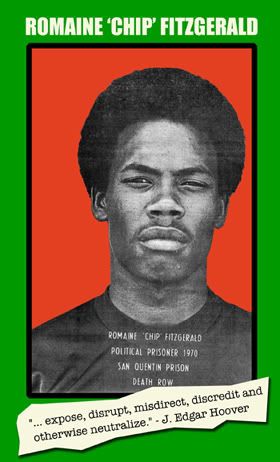
Chip Fitzgerald has Parole hearing Sept. 26th- act now!


Romaine ‘Chip’ Fitzgerald has a parole hearing set for
September 26th. We are asking all supporters of
political prisoners to support Chip and do your part
to free this man.

Chip has the “dubious distinction” of being the
longest held political prisoner in the United States.
Held since 1969, he is serving a life sentence for a
crime he did not commit: the killing of security
guard, Barge Miller.

Weeks prior to the killing of the guard, Chip had also
been involved in a shoot-out with a CHP officer, who
later admitted that had orders to shoot-to-kill
members of the Southern California Black Panther
Party.

During the altercation Chip received a gunshot wound
to the head. He was still recovering from the wound
when the security guard was killed.

Chip admits defending himself with the CHP officer but
is adamant about his innocence in the death of Barge
Miller. It is important to note that these
altercations took place during the same period as the
targeting of Geronimo Ji Jaga Pratt, an LA Black
Panther who served 27 years in prison for a murder he
did not commit.

It was later discover that the FBI and other policing
agencies had, as their policy, orders to neutralize
and destroy the Black Panther Party. As part of that
campaign leaders were assassinated and falsely accused
for crimes they did not commit. Chip is one of these
people.

Now Chip has a real possibility of walking through
those prison gates a free man, but he needs your help.


Chip needs people to send letters on his behalf. The
more that is sent the stronger message is delivered.
Please take action now.

Please check out the ABCF’s Chip Fitzgerald Freedom
Campaign website. There you will find a sample letter
that you can print out and send in. THIS IS SOMETHING
THAT CANNOT WAIT. PLEASE ACT NOW.

Chip Fitzgerald Freedom Campaign:
http://www.abcf.net/la/laabcf.asp?page=lachip1

Thank you for your support,

LA ABCF

September 8th: Running Down the Walls

Running Down the Walls Just One Week away!

What: Running Down The Walls 2007
When: September 8th, 2007 – 10:00 Am to 2:00 PM
Where: Whittier Narrows Regional Park, El Monte, Ca
750 Santa Anita Ave South El Monte, CA 91733-4300
(East side of Legg Lake)

Running Down The Walls is here again!
The Los Angeles Anarchist Black Cross Federation is
proud to announce the return of Running Down the Walls
(RDTW). RDTW is a 5k run/walk for Political
Prisoners.

Due to increased demand by PP/POWs and community
activists, LA-ABCF will be organizing the next RDTW on
Saturday, September 8th, 2007. We hope our friends
will come out and support the run just as they have in
past. Our goal is to increase the number of
solidarity runs in prisons and other cities, as well
as, raise much needed funds and awareness for our
comrades held captive as political prisoners.

As of right now we have solidarity runs in USP Big
Sandy, MCI Walpole, Boston and Western Massachusetts.

Proceeds from this run will be divided between the
ABCF Warchest and the Black Riders Liberation Party’s
Defense Fund.

For those interested in supporting the run. Here is
how you can help:

-Be a runner:
We are asking people or groups who are running to
collect as many sponsors for the run as possible.
Remember the money received is going to help
imprisoned comrades and assist the Black Riders in the
legal defense from recent police repression.

-Donate to the Warchest:
Send funds to the Philadelphia ABCF, who heads up the
Warchest, indicating your desire for those funds to go
to the Warchest. (Philadelphia ABCF P.O. Box 42129
Philadelphia, PA 19101)

-Organize a Running Down the Walls in your location:
We wish to expand the solidarity runs in more cities
and prisons. Please contact LA Anarchist Black Cross,
if you plan on doing this. Also, the LA ABCF welcomes
anyone interested in helping us to organize the LA
run.

For more information, please check out our website at:
www.abcf.net/la or email us at: la@abcf.net

“Not only our pace and spirits soared, but the sun
broke through the clouds and the temperature rose to
the 60s. So we ran down the walls and ran up the sun
and we were glad to be doing it.” – Jaan Laaman at
1999 RDTW

Daniel moved again!

Daniel is already on the road again. He's at FCI Terre Haute in Indiana (not sure how NYC to Oklahoma to Indiana makes much travel sense!), but there's no way to know for how long. If you'd like to write, his new address is:

DANIEL McGOWAN
#63794-053
FCI TERRE HAUTE
FEDERAL CORRECTIONAL INSTITUTION
P.O. BOX 33
TERRE HAUTE, IN 47808

Again, we have absolutely NO idea how long he will be here or where he'll end up next so if you'd like to write a letter it's up to you if you want to send it here. I'm sure he'll appreciate it if he ends up stuck there for a week or two.

Thanks for your support!


Daniel McGowan is an environmental and social justice activist. He was charged in federal court on many counts of arson, property destruction and conspiracy, all relating to two incidents in Oregon in 2001. Until recently, Daniel was offered two choices by the government: cooperate by informing on other people, or go to trial and face life in prison. His only real option was to plead not guilty until he could reach a resolution of the case that permitted him to honor his principles. As a result of months of litigation and negotiation, Daniel was able to admit to his role in these two incidents, while not implicating or identifying any other people who might have been involved. He was sentenced to 7 years in prison on June 4, 2007 and began serving his time on July 2, 2007.

Finally -- A 'Lesson' From Vietnam

By Mumia Abu-Jamal
Finally -- A 'Lesson' From Vietnam
[col. writ. 8/23/07] (c) '07 Mumia Abu-Jamal
Speaking before a Veterans of Foreign Wars (VFW) group recently, US President George W. Bush evoked the slaughter, concentration camps, and devastation following the US pullout from Vietnam, to warn against the costs of precipitous withdrawal from the Iraq debacle.
The argument boiled down to the recent conservative claim that if the US leaves Iraq now, it'll result in a societal bloodbath.
There is something quite unseemly about a man who, when he was of age, declined to go to Vietnam, now arguing for its lessons before men who did go, some of whom have lost limbs.
There is another odd, almost surreal quality to hearing the president who went to war on the most naked of lies, who authorized a bombing campaign called "shock and awe", who sent the entire region into a tizzy of maddening discontent, which led to the deaths of an estimated 500,000 Iraqis, argue about the costs of withdrawal.
His "stay the course" is as empty an echo as was that of one of his presidential predecessors, Lyndon B. Johnson when he called for troop increases in Vietnam.
What is missing from his convenient 'lesson' from Vietnam, is the reckoning of just how such pain, suffering and death was visited upon the Vietnamese by the American war. According to many sources, some 3 million Vietnamese were killed by US military forces (the number isn't clearer, simply because, as they were Asians, it wasn't deemed necessary for an accurate count).
What Bush conveniently forgot to mention was the continuing costs of war facing Vietnam, because of the US use of toxic chemicals, such as the defoliant, Agent Orange. The US dropped over 10 million gallons of that poison on Vietnam, and the country still suffers from this aerial assault. According to Anthony Arnova's The Logic of Withdrawal (N. Y.: The New Press, 2006), some four million people suffered from this barrage, which has left an untold number with serious birth defects, and has caused an unprecedented environmental and ecological damage to the rural regions.
A recent civil lawsuit against Dow Chemical (which created the weapon) was dismissed by US courts.
Perhaps there are lessons to be learned from Vietnam after all, but not ones the Bush Regime may wish to address.
Recent Bush Administration criticisms of Iraqi President Nouri al-Maliki, that his government is 'ineffective', and doesn't listen enough to his American paymasters, sounds eerily similar to mumbled musings against South Vietnam's President Ngo Dinh Diem. The CIA 1st key military leaders know that the US was losing faith in their chosen puppet, and thus laid the groundwork for a military coup that not only toppled Diem's government, but led to his brutal assassination.
Are we witnessing the opening stages of this 'lesson', being replayed in Iraq?
Let us not think for a moment that the US doesn't prefer generals to presidents; or, as in Pakistan's Musharraf, both for the price of one. The history of 20th century Latin America has been one of an American love affair with generals, and -- yes, with death squads (many trained in the infamous School of the Americas --since renamed --at Fort Benning, Georgia).
"Dubya", who was apparently a poor student of history, is not much better as a teacher, for if this is the only lesson learned from Vietnam, then he needs to go back to summer school.
One lesson is that lies and scare tactics may lead people to war, but it won't keep them there once they learn the truth.

*******
Mumia Abu-Jamal is a political prisoner in the United States, with what could be the final decision on his legal appeals possibly coming down this summer. That decision could give Mumia his freedom, a new trial, life in prison, or execution. It is time to turn up the heat against this injustice.
Free Mumia!