Friday, July 31, 2009

Political Prisoners and Prisoners of War with birthdays in August

Here is the list of Political Prisoners and Prisoners of War with birthday in August. Please take the time write them - wishing them well on their birthdays.

BILL DUNNE
10916-086 / P.O. Box 2068
Inez, KY 41224
USP Big Sandy
August 3
(Anti-Authoritarian Political Prisoner)

DEBBIE SIMS AFRICA
OO6307 / 451 Fullerton Ave
Cambridge Springs, PA 16403-1238
August 04, 1956
(MOVE Member)

OJORE NURU LUTALO
59860 / PO 861
SBI# 0000901548
Trenton, NJ 08625
August 6th
(Anarchist
Political Prisoner)

DR. MUTULU SHAKUR
83205-012
P.O. Box 8500
Florence, CO 81226
Florence ADMAX
August 8, 1950
(BLA POW)

RENE GONZALEZ
58738-004
P.O. Box 7007
Marianna, FL 32447-7007
FCI Marianna
August 13, 1956
(Cuban 5
Political Prisoner)

HANIF SHABAZZ BEY
#295933
P.O. Box 860
Oakwood, Virginia 24631
Keen Mountain Correctional Center
August 16, 1950
(Virgin Island 5
Political Prisoner)

RUBEN CAMPA
#58733-004 / P.O. Box 33
Terre Haute, IN 47808
FCI Terre Haute
August 18, 1963
(Cuban 5
Political Prisoner)

MALIKI LATINE
#81-A-4469 / Box 2000
Dannemora, New York 12929
August 23, 1949
(Black Panther
Political Prisoner)

RUSSELL MAROON SHOATS
AF-3855
175 Proggress Dr.
Waynesburg, PA 15370
August 23, 1943
(BLA POW)

RONALD REED
#219531
5329 Osgood Avenue North
Stillwater, Minnesota 55082-1117
August 31, 1950
(Black Liberation
Political Prisoner)

How Leonard Peltier could leave prison by August 18

Columns
Harvey Wasserman

July 30, 2009

For a formidable and growing global community of supporters, the prospect of Native American activist Leonard Peltier finally leaving prison inspires a longing that cuts to the depths of the soul.

So Peltier’s first parole hearing of the Obama Era---on Tuesday, July 28---inspired hope of an intensity that will have a major impact on the new presidency. A decision must come from the Federal Parole Commission within three weeks. His attorney is calling for a surge of public support that would create an irresistible political climate for Leonard’s release.

The relationship between Peltier and those who have followed his case over the decades can be intensely personal. His imprisonment has come to stand not only for five centuries of unjust violence waged against Native Americans, but also for the inhumane theft of the life of a man who has handled his 33 years in jail with epic dignity, effectiveness and grace.

Peltier’s latest parole hearing convened at the federal penitentiary in Lewisburg, Pennsylvania, where he is currently held. According to Eric Seitz, Peltier’s Honolulu-based attorney, Peltier spoke for more than an hour “with great eloquence” about the nature of his case, his imprisonment and his plans for freedom. “The hearing officer seemed to listen carefully,” said Seitz. “We thought it went very well.”

The decision on Peltier’s parole will be made by the four sitting members of the Federal Parole Commission (http://www.usdoj.gov/uspc/ ) whose offices are in Chevy Chase, Maryland.

Commissioners Isaac Fulwood, Jr., Cranston Mitchell, Edward Reilly and Patricia Cushware are all Bush appointees. One seat is vacant; Fulwood was elevated to the Chairman’s seat in May by President Obama.

According to Seitz, the hearing was taped by an officer charged with reporting to the Commissioners within 48 hours. The Commissioners are required to render a decision within 21 days---by August 18. Should they rule in his favor, Peltier could walk out of prison very soon after the decision is issued.

Should the Commssioners turn down his parole application, Seitz says the appeal would go to the federal district court in Harrisburg. The report of the hearing would become available to Peltier and the public.

Seitz said he spoke to the record for about 20 minutes on the legalities of the case. He said Peter Mattheissen, author of IN THE SPIRIT OF CRAZY HORSE, explained the history of the 1970s incidents that led to Peltier being accused of murdering two FBI agents. CRAZY HORSE is the definitive account of the origins of the case and of the climate of violence and repression imposed on the native community at the time of the killings. Seitz said Mattheissen emphasized “the many reasons to have misgivings about whether the system performed well and fairly in Leonard's case.”

Mattheissen was joined by Dr.Thomas Fassett of the United Methodist Church, who testified, said Seitz, “to the negative impact of Peltier’s 33-year imprisonment on the world’s view of how the US government treats its native population. Leonard's case is viewed in the larger community both nationally & internationally as a major embarrassment…as a gross injustice…a black mark.”

The testimony was accompanied by thousands of letters, with signees including South African Bishop Desmond Tutu, US Senator Daniel Inouye (D-HI), and actor Robert Redford, whose film INCIDENT AT OGALALA is the definitive documentary.

Cynthia Maleterre of the Turtle Island Clan then outlined how Peltier could meet the requirements of parole in his home community in North Dakota. Restored to his Chippewa-Dakota homeland, Maleterre explained that Peltier would have housing, a job and be surrounded by family, including great-grandchildren he has never seen.

Seitz said testimony opposing parole came from a representative of the FBI, sent by Director Robert Mueller, a holdover Bush appointee, and from the former director of the Minnesota Bureau. Two sons of Jack Coler, one of the FBI agents killed in the Ogalala shoot-out, also argued against Peltier being freed, as did a former agent named Ed Woods.

Seitz said that all those opposing parole argued Peltier should spend the rest of his days in prison, and did not deserve a new trial.

But Seitz was “guardedly optimistic” about a favorable decision from the Parole Commission. He said that a “good rapport” had been established with the hearing officer, and that the new chair of the commission is generally held “in high esteem.”

President Barack Obama does have the power to grant clemency, but Seitz said prisoners apply only when all other avenues have been exhausted. Usually, says Seitz, “presidential pardons do not come until the Chief Executive is leaving office.”

Seitz says letters to the Parole Commission and to local newspapers, calls to Congressional Representatives (202-224-3121), talk show hosts and other forms of public pressure are now of the utmost importance. The hope, he says, lies in creating a “public environment favorable to release.”

As Leonard Peltier approaches his 65th year---having spent half his life in prison---every day is now critical to lifting this burden from our collective souls.

For more information go to http://www.leonardpeltier.net.

Thursday, July 30, 2009

BLACK AUGUST BY MUMIA ABU JAMAL

Black August

by Mumia Abu-Jamal
Written Aug. 4, 1993

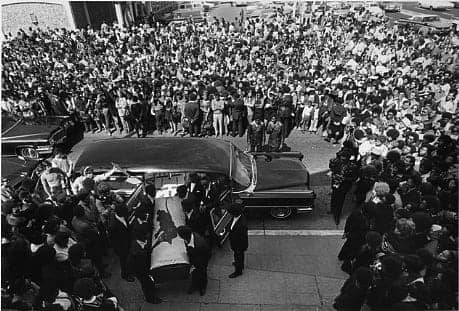
George Jackson, born Sept. 23, 1941, was not quite 30 when he was murdered at San Quentin Aug. 21, 1971, yet his writings from prison had built a large and passionate following. Inside St. Augustine’s Church in West Oakland on the day of his Revolutionary Memorial Service, the first Black August event, were 200 Black Panthers in full uniform, while 8,000 people listened outside, perched on rooftops, hanging from telephone poles and filling the streets. As George’s body was brought out, the people raised their fists in the air and chanted, “Long Live George Jackson.”
“George Jackson was my hero. He set a standard for prisoners, political prisoners, for people. He showed the love, the strength, the revolutionary fervor that’s characteristic of any soldier for the people. He inspired prisoners, whom I later encountered, to put his ideas into practice. And so his spirit became a living thing.” – from the eulogy by Huey P. Newton, former Minister of Defense, Black Panther Party, at the Revolutionary Memorial Service for George Jackson, 1971
August, in both historic and contemporary African American history, is a month of meaning.
It is a month of repression:
  • August 1619 – The first group of Black laborers, called indentured servants, landed at Jamestown, Virginia.
  • Aug. 25, 1967 – Classified FBI memos went out to all bureaus nationwide with plans to “disrupt, misdirect, discredit or otherwise neutralize” Black Liberation Movement groups.
  • August 1968 – The Newark, New Jersey, Black Panther Party office was firebombed.
  • Aug. 25, 1968 – Los Angeles BPP members Steve Bartholomew, Robert Lawrence and Tommy Lewis were murdered by the LAPD at a gas station.
  • Aug. 15, 1969 – Sylvester Bell, San Diego BPP, was murdered by the US organization.
  • Aug. 21, 1971 – BPP Field Marshall George L. Jackson was assassinated at San Quentin Prison, California. Three guards and two inmate turncoats were killed, three wounded.
August is also a month of radical resistance:
  • Aug. 22, 1831 – Nat Turner’s rebellion rocked Southampton County, Virginia, and the entire South when slaves rose up and slew their white masters.
  • Aug. 30, 1856 – John Brown led an anti-slavery raid on a group of Missourians at Osawatomie, Kansas.
  • Aug. 7, 1970 – Jonathan Jackson, younger brother of Field Marshal George, raided the Marin County Courthouse in California, arming and freeing three Black prisoners, taking the judge, prosecutor and several jurors hostage. All, except one prisoner, were killed by police fire that perforated the escape vehicle. Jon was 17.
Mumia Abu-Jamal
Mumia Abu-Jamal
And in an instance of resistance and repression:
  • Aug. 8, 1978 – After a 15-month armed police standoff with the Philadelphia-based naturalist MOVE Organization, the police raided MOVE, killing one of their own in police crossfire, and charging nine MOVE people with murder. The MOVE 9, in prisons across Pennsylvania, are serving up to 100 years each.
August – a month of injustice and divine justice, of repression and righteous rebellion, of individual and collective efforts to free the slaves and break the chains that bind us.
August saw slaves and the grandsons of slaves strike out for their God-given right to freedom, as well as the awesome price, the ultimate price always paid by those who would dare oppose the slave master’s will.
Like their spiritual grandfather, the blessed rebel Nat Turner, those who opposed Massa in this land of un-freedom met murder by the state: George and Jonathan Jackson, James McClain, William Christmas, Bobby Hutton, Steve Bartholomew, Robert Lawrence, Tommy Lewis, Sylvester Bell – all suffered the fate of Nat Turner, of the slave daring to fight the slave master for his freedom.
© Copyright 2009 Mumia Abu-Jamal. Read Mumia’s brand new book, “Jailhouse Lawyers: Prisoners Defending Prisoners v. the U.S.A.,” available from City Lights Publishing, www.citylights.com or (415) 362-8193. Keep updated at www.freemumia.com. For Mumia’s commentaries, visit www.prisonradio.org. For recent interviews with Mumia, visit www.blockreportradio.com. Encourage the media to publish and broadcast Mumia’s commentaries and interviews. Send our brotha some love and light at: Mumia Abu-Jamal, AM 8335, SCI-Greene, 175 Progress Dr., Waynesburg PA 15370.

CARLOS ALBERTO TORRES UPDATE PRISONER OF WAR!

Carlos Alberto Torres update

On July 28, 2009, Carlos Alberto finally received something from the
Parole Commission... saying they will be delaying for up to 90 days
their decision pending the resolution of the still-outstanding
January disciplinary report falsely accusing him of possessing hidden
knives. Prior to his May parole hearing, the accusation had been
expunged... after the parole hearing, he and the others who occupied
the cell were re-charged, and the renewed accusation remains pending.
At his request I have written to the prison and the regional office
asking that they resolve this immediately so that the Parole
Commission can render its decision.

Jan Susler
People's Law Office
1180 N. Milwaukee
Chicago, IL 60642
773/235-0070 x 118
jsusler@aol.com

CASUALTIES OF WAR BY ROBERT SALEEM HOLBROOK

Casualties of war


Robert Saleem Holbrook
by Robert Saleem Holbrook
“The soldier has to be the baddest and strongest of our kind: calm, sure, self possessed and completely familiar with the fact that the only thing that stands between Blackmen and a violent death are the fast break, quick draw and snap shot.” – Comrade George L. Jackson, “Blood in My Eye”
I have never met Lovelle Mixon. I do not know if, while in prison, he read the works of the legendary George L. Jackson. I do not know if he considered himself a revolutionary, a rebel or an outlaw. I do not know if while imprisoned he resolved never again to allow himself to be taken alive by the police. I do not know if he viewed himself as a “soldier” in the street wars that dominate the inner city or if he just viewed himself a brotha trying to make it in the hood.
I do not know if on that fateful 21st day of March, 2009, he felt a genuine fear of the police who pulled him over or just said to himself, “This is it.” Likewise, I do not know if the officers who pulled Lovelle over that day viewed him as just another stereotypical Black criminal inner city asshole or thug they were charged with ridding the streets of.
What I do know is this: The confrontation that occurred on March 21st in Oakland was another episode in the long running social conflict between youth of color and police departments in the United States. It is the original “street beef” in urban communities of color that even predates the beef between the Bloods and the Crips, as well as other gang beefs in inner cities throughout the country.
This poster of Lovelle Mixon was a familiar sight at gatherings after his death. – Photo: Dave Id, Indybay
There may be various disputes by both sides as to what happened that day and what triggered the deadly confrontation but what is not in dispute is that five “soldiers” lost their lives that day. Whether or not Lovelle Mixon knew he was a soldier that day is not publicly known; however, I am sure that the officers who died that day knew they were soldiers. They were trained to believe they were soldiers and that Lovelle Mixon, a civilian, was an “enemy.” Lovelle, too, was conditioned to believe the officers were the “enemy.” Both sides graduated from institutions that identified each other as the enemy. In the case of the police officers, it was the Police Academy and the militarization of law enforcement in the United States. In the case of Lovelle, it was the academy of the streets and prisons of the United States.
The responsibility for these attitudes rests in the government’s war on drugs, the nation’s longest running war or police operation depending on how you see it. The language and debate that surrounds this war employs all the features of a military campaign. Ever since President Nixon stood on the White House lawn in the early ‘70s and declared a “war on drugs,” law enforcement agencies, prosecutors’ offices, the prison system and courtrooms of the United States have operated on a war model, particularly in communities of color.
Criminals and drug addicts are enemies, drug addiction is considered a crime, not a health issue, and neighborhoods that are caught in the grip of poverty and drug abuse are considered “enemy territory.” The police are not responsible for the war on drugs but they are responsible for patrolling the neighborhoods considered enemy territory. They are the enforcers of this government policy and, like the communities they patrol, they suffer the consequences of a national crime policy that identifies civilians as enemies.
All of the men who fell that day Lovelle Mixon decided to hold court in the street were casualties of a failed war. Casualties of the militarization of law enforcement and a national prison policy that is more concerned with dehumanizing prisoners than rehabilitating them. Casualties of a criminal justice system that has been hijacked by right wing ideologues and right wing victims’ rights advocates more interested in the pursuit of vengeance than justice.
People who are outraged that Lovelle Mixon was a “parolee” just released from prison should not be that surprised that he didn’t benefit much from his imprisonment. In the era of mass imprisonment, there are no rehabilitation programs in prison. The state doesn’t have money for the programs because the majority of the money is spent on building new prisons or maintaining current ones.

“All of the men who fell that day Lovelle Mixon decided to hold court in the street were casualties of a failed war. Casualties of the militarization of law enforcement and a national prison policy that is more concerned with dehumanizing prisoners than rehabilitating them. Casualties of a criminal justice system … more interested in the pursuit of vengeance than justice.”


Mass imprisonment is a consequence of the war on drugs. It is estimated that over 600,000 of the 2,300,000 people in state and federal prisons are in prison for nonviolent drug offenses. This does not include the other 5 million people who are either confined in county jails or on probation or parole, a majority of whom are nonviolent drug offenders. This means out of a United States population of over 250 million people, over 7 million people are in one way or another under the supervision of the prison system.
No nation in history has ever confined that percentage of its population in prison. It is unprecedented and it is a complete failure. Yet the war on drugs continues.
There will be many more casualties in this domestic war playing out within the United States and not all of the victims will be combatants. Unfortunately, the majority of the casualties will be the innocent or those suffering from addiction. The casualties will be the communities under siege from poverty and drugs or overly aggressive police. The casualties will be the families whose loved ones were murdered in the countless skirmishes that play out on the streets across the country.
There appears no end in sight for this domestic war. Despite its failure, the war on drugs is entrenched in the halls of government. Even President Obama is reluctant to call a halt to this war. Why is this? The answer is the war on drugs and all of its consequences; i.e., mass imprisonment, increased law enforcement budgets, training, equipment, lobbying, confiscation of assets etc. have spawned an industry that is now a vital component of the economy of the United States.
The war has taken on a life of its own to such an extent that whatever motive may have been behind the war on drugs has long been lost to the priority of maintaining the industry. It is perpetual war, and its casualties are the addict, casual drug user, street thug caught up in the game, police officers enforcing the war, innocent bystanders, families losing loved ones to the cemetery or prison system etc.
We can only hope, and work, for an end in sight. There may be light at the end of the tunnel. As the United States continues to expand its influence globally while at the same time its economy is contracting in a new world economy, there may be a breaking point where the nation cannot sustain the costs of a domestic war on drugs within its borders. This could compel government to abandon its war on drugs and repeal the bulk of its laws that criminalize drugs.
Already, in the present difficult atmosphere of the economy, politicians are beginning to question the costs of the war on drugs and the criminalization of addiction. What is certain, however, is that in the United States, morality will not determine whether or not to abandon the war on drugs; the economy will. That is unless the people rise up and demand a change in direction, but that is another story for another time.
In the meantime, both sides will continue burying their fallen. In the weeks following the March 21st shootout, the four police officers were laid to rest with honors. Officers from all over the country flew in to salute their fallen brothers, the state of California’s flag was flown at half mast to their sacrifice and they were praised as heroes.
On the other side, the family and friends of Lovelle Mixon laid him to rest and celebrated his memory. Throughout the hoods, barrios and prisons of the United States, young men of color gave silent nods of the head and silent stares to one another identifying with the rage that was within Lovelle Mixon and mourning the loss of another one of their side. Both sides mourn their fallen soldiers and await the next skirmish in this ongoing war with no victors, only endless casualties.
Robert Saleem Holbrook writes: “I am a prisoner serving a life-without-parole sentence for a crime I was convicted of as a juvenile offender. I have been in prison for over 19 yrars. Throughout my imprisonment I have evolved into a prisoner activist and writer, using the example of George L. Jackson as my inspiration … More of my writings and life story can be found on my website: www.freesalim.net.” Send our brother some love and light: Robert Saleem Holbrook, BL-5140, SCI-Greene, 175 Progress Dr., Waynesburg, PA 15370.

Break The Lock Political Prisoner Program

Break The Lock Political Prisoner Program believes that every prisoner locked up behind enemy lines ( The Prison Industrial Complex) is a political prisoner because of the social conditions we are living under. In this society of the Haves and Have Nots, those who are poor are more likely to end up behind bars

- victims of the (in)justice system. Break The Lock Political Prisoner Program aims are to build a support group that connects The Movement on the inside to The Movement on the outside. Learning from revolutionaries like George and Jonathan Jackson,"Most of today's black convicts have come to understand that they are the most abused victims of an unrighteous order."
We will be raising money to write letters, send books and literature, supporting political prisoners and their families. Our goals also are to give rides, help with visitation and legal support. Break The Lock! Free All Political Prisoners! The Black Riders Liberation Party is putting out a call to all organizations in solidarty and support of to please help out if possible with the materials list below;

Wish List

Stamps, envelopes, pencils,paper, volunteers, books, money, literature, copies, lawyers.

ALL POWER TO THE PEOPLE !!
Contact Etana at Yabastaorganize@gmail.com or (707) 616-9774

Wednesday, July 29, 2009

Alex Hall's address

Urgent ELP! Bulletin (29th of July 2009)

Dear friends

ELP recently reported that Alex Hall and William James Viehl have both been returned to prison for violations of their bail conditions. Both men are accused of anti-fur farm activity and are awaiting trial for that.

At the time of our original report we had William's full postal address, but not Alex's. However we've now had Alex's address confirmed to us. So please send urgent letters of support to:

Alex Hall
Inmate #2009-06304
Davis County Jail
800 West State St.
Farmington, UT 84025

USA

Also don't forget Williams address is:


William James Viehl
Inmate #2009-05735
Davis County Jail
800 West State St.
Farmington, UT 84025

USA

=========
Earth Liberation Prisoners Support Network
BM Box 2407
London
WC1N 3XX
England

Tuesday, July 28, 2009

Everglades Earth First Needs Help!! Donate for Stevie!

Dear friends,

As some of you may know our friend and fellow activist Stevie Lynn Lowe
needs our help to get out of an excessively harsh jail sentence in Martin
County,FL...

Stevie, along with several other environmental activists, was arrested in
January of this year for locking herself to a tree within one of Florida's
last remaining old-growth swamps, the Barley Barber... The story, in
short, was that our group tried for about a year to get Florida Power and
Light (FPL) to give us a guided tour of the swamp and/or to allow us to
bring a non-corporate, non-biased biologist to allow for public scrutiny
and to allow transparency in terms of what their power plant is doing to
the swamp and to the drinking water sources of the adjacent community of
Martin County, FL. The energy corporation (FPL) has had rights to the
swamp since the 70's and the underlying threat is that they are using the
swamp and the community's drinking water sources to cool their power plant
equipment. Stevie and our friends were trying to bring attention to these
issues and our urgency was based on the fact that FPL is killing this
swamp and polluting this community. Stevie is a hero and a role-model to
us all and she was there doing something good for the planet and it's
inhabitants. Now she is getting punished much more harshly than anyone
else arrested for this environmental action and much more harshly than
anyone should ever get for the charge she is facing.

On Thursday of last week (July 23rd) Stevie took this case to trial. Her
fellow arrestees did not have the time and energy to take their cases to
trial and most pled out getting about 20 days in jail with the assumption
of guilt for both charges: trespassing and resisting arrest without
violence. On Thursday July 23rd Stevie was found innocent for trespassing
(the state prosecution failed to prove that this swamp even belongs to
FPL) but was found guilty of resisting arrest without violence. Even
though she was found innocent of the charge for which she was originally
arrested and even though "resisting arrest without violence" is a petty
misdemeanor, the judge made an example of Stevie and sentences her with 90
DAYS IN JAIL. Considering that some folks got as low as 2 days in jail for
pleading out we consider this also to be a punishment for her having used
her constitutional right to a fair trial.

Friends, whether you agree with civil disobedience and this sort of direct
action work or not the fact is that 90 days in jail is much too harsh for
a small misdemeanor like resisting arrest without violence... and the fact
is that she is getting punished for trying to make a corporation disclose
whether it is killing a swamp and poisoning a community. She is getting
punished for using her right to a fair trial and for being a concerned
citizen.

PLEASE HELP US GET STEVIE OUT! We are helping Stevie appeal this decision
and get justice. We're fundraising $10,000$ which was also harshly decided
by this same judge to be her appellate bond. But the most important thing
is to get her out of jail as soon as possible.

PLEASE HELP US WITH LEGAL FEES! We can also work with loans if you are
comfortable donating financially we can pay you back as soon as we work
out all the legal issues and lengthy paperwork. Anything helps. Or if
you'd be interested in helping us put together a fundraiser we could use
that sort of help too.

If you can donate to our legal support fund please go to our website and
donate using our Paypal service at

www.evergladesearthfirst.org

or call us at

561 588 9666

or call me in the evenings at 561 588 0287

If you would like to write to Stevie in jail (she would really love that)
her address is the following:

Stevie Lowe
Martin County Jail
800 S.E. Monterey Rd.
Stuart, FL 34994

Thank you so much for any help which you might be willing to offer!

Love,

Ana.

Avelino Campaign and CD Fundraiser

The ProLibertad Freedom Campaign
www.ProLibertadWeb.com
Hotline: 78-601-4751
ProLibertad@hotmail.com

Puerto Rican Political Prisoner Avelino Gonzalkez Claudio is being denied medical treatment! Since his incarceration, he has developed a neurological condition. In November 2008, Avelino requested, several times, medical attention receiving only a “I do not know”, “I will read some books” answer from the Doctor assigned to his facility.

We cannot let our brother suffer! COPY AND PASTE THE FOLLOWING LETTER AND MAIL or FAX IT TO JEFFERY E. MCGILL! SHOW HIM AVELINO HAS THE SUPPORT OF THE MOVEMENT!

Jeffrey E. McGill
Warden
Northern Correctional Institutio n
PO Box 665
Somers, CT 06071
Fax: 860-763-8651

RE: Avelino González Claudio N.C.I. # 357422

To Warden Jeffrey E. McGill:

I am writing to express my concern about the serious violations of the rights of Mr. Avelino González Claudio, an inmate at your facility, to adequate medical evaluation & treatment.

Avelino González Claudio was placed in Northern Correctional Institution on February 2008. Since then, he has developed a neurological condition. Beginning on November 2008, Mr. González-Claudio requested, several times, medical attention receiving only a “I do not known”, “I will read some books” answer from the Doctor assigned to your facility.

This treatment is a flagrant denial of Mr. González Claudio’s basic human rights. This treatment is also seriously detrimental to his deteriorated health condition.

In order to ensure Mr. González Claudio’s health, I insist that he immediately be afforded ade quate evaluation & treatment for the medical condition that he has developed under your custody.

Sincerely yours,

______________________________
Signature

______________________________

Date

________________________________ _________________________________
Address

Cc: Theresa C. Lantz Mary M. Marcial
Commissioner Director
Connecticut Dept. of Correction Programs and Treatment Division
24 Wolcott Hill Road Connecticut Dept. of Correction
Wethersfield, CT 06109 24 Wolcott Hill Road
Fax 860-692-7783 Wethersfield, CT 06109
Fax 860-692-7495

James Bergenn
Shipman and Goodwin, LLP
One Constituion Plaza
Hartford, CY 06103-1919
Fax 860-251-5219

NEW FUNDRAISER FOR THE PUERTO RICAN FREEDOM PROJECT

The Puerto Rican Freedom Project 5th Fundraiser – Friday, July 31st 2009

-- purpose: to finish raising funds to put out the Freedom Album, a CD to raise funds for the Puerto Rican Political Prisoners and their families (release date – September 23rd 2009)

Date: Friday, July 31st 2009 Time: Doors Open at 7pm

Location: The Rebel Diaz Arts Collective478 Austin Place, 2nd floor
2 blocks away from the E. 149th stop on the 6 train

Performers: Rebel Diaz, T-Weaponz, Madd Illz, Dr. Loco, Division X, 3rd Rail, Carlos Jimenez & Mambo Quintet with DJ Samman

Cost: $10

For more information about the Puerto Rican Freedom Project, go to:

www,myspace.com/freeourpoliticalprisoners
www.prfreedomproject.org

Monday, July 27, 2009

Olympia Anarchists Sentenced for May Day 2008 “Riot”

On Tuesday, July 21st, 4 local individuals were sentenced for smashing bank windows, “rioting”, and thwarting the arrests of others on May Day ’08 in Olympia. The court house in Olympia was packed with supporters. A ring of police stood between us and the judge, smirking and chatting with the prosecutor during recess.

The actual crime of this whole affair is the persistence of the state, its apologizers and witless functionaries, and the daily coercion which becomes concentrated against individuals who show resistance. This was displayed nakedly as the prosecutor and judge showed special enmity for our companero, Bryan, by ordering 120 days in jail because he held his head up during the proceedings intended for humiliation.

We know that jail time is one of the prods used by Authority to break a human being down into subservience. In this regard, we think Bryan may still be better off than others who received less time, because his spirit was never fooled that the same State which is purposefully attacked every May Day might spare anyone even a little breathing room from its wretched odor.

We are reminded of a comrade in Greece, Ilias Nikolau, accused of an explosion on the police in January, who sees clearly the stakes of his imprisonment. He writes, “To all those who think that they have overcome me, that they have overcome us…
For me and my comrades it works just the other way around! Because as long as there are prisoners of war, we will continue to struggle.”

We are sickened by Bryan’s lawyer, who thought his liberal grandiloquence would convince the liberal judge of anything but more of the same. Had he watched Stefanie’s defense (Stefanie abstained from groveling and was granted 30 days of electronic monitoring), at the very least we might have been saved 30 minutes incarceration by his painful sermon. The other sentences were 45 days for Randal, and 30 days for Shyam. References by almost every suit around the court indicated that the final absconded defendant, “the At-large Mr. Wilson”, was being vilified to the furthest extent. We all laughed at the twit piece-of-shit prosecutor describing black clothing as ‘combat attire’, but the judge threatened us to be silent because she wanted to give her dirty verdict and then disappear from any responsibility of her own. Some grumbles accompanied our departure and someone shouted to her before leaving that she embraced a vision of democratic self-deprecation. We feel that the Judge and Prosecutor attempt to inseminate their filthy Ideal of pacifist democracy and the sanctity of property.

All four have two weeks before beginning their sentences, as well as two years probation. The other two arrestees, Daniel B. and Forest, have already served 60 day sentences. Plank of America is requesting +$10K for its broken windows, and the judge will most likely comply with that bullshit, too, in the next month.

Do you think we ignore that in other countries your doppelgangers simply kill our comrades for their crimes? Do you think we forget all those who have been ‘suicided’ inside your wards? Why do you think that in Greece and Germany it is not so forgotten that the state prosecutors and prison directors were the target of attacks? It is because we understand this entire open-air prison to be a death threat. As the torment increases, we will continue fighting for our lives!

Scumbag mainstream article here:
http://www.thenewstribune.com/updates...18103.html

leaflet on international imprisoned anarchists:
http://325collective.com/dark-nights-5.pdf


Do not pass go, Do not collect $200

On July 21, 2009, the events of May Day 2008 finally came to a close with the sentencing of four anarchists of the South Sound region. For over a year they have been legally bound to endure an array of court dates, legal costs, extradition waivers, etc. All this has stemmed from some debatable interactions with banks that have since then had a wide impact on the Olympia activist and broader communities.

May Day 2008 began at noon downtown in Sylvester Park with a large crowd listening to speakers who talked about issues ranging from establishing Olympia as a sanctuary city to the history of May Day. Because the rally was intentionally focused on immigrant solidarity, all the speeches were directly translated into Spanish. At the conclusion of the speeches the crowd led itself on a permitted march up Capital Blvd. to the Capital Campus. At the Capital more speeches followed as well as some disagreements over tactics. Next, the crowd continued the march to the City Hall and then downtown where a “break away” march occurred. The break away march consisted of people who were seemingly prepared to use a diversity of tactics. These tactics proved to include property destruction via rocks through the windows of banks. The cops reacted predictably as pigs and began assaulting and arresting people at random. Six people were arrested and taken away though many more were de-arrested.

In the weeks that followed police harassment against activists continued as well as a disturbing amount of in-fighting and finger pointing towards local anarchists. Claims went as far as to blame anarchists for the denial of the Sanctuary City proposal, demonstrating a lapse in memory regarding standard city council behavior. Whether or not all groups agreed the tactics were effective they did work to initiate a significant amount of dialogue around property destruction and what solidarity looks like.

Over the next year, despite state repression, anarchist activity continued undeterred. In addition to countless hours of day to day community organizing, the cops were attacked at their Westside station.

Mid afternoon on July 21, 2009, about 20 or so friends, family and comrades of the arrested converged at the Thurston County Courthouse to witness the conclusion of the court proceedings. While the defendants and their supporters waited for the proceedings to begin, a badge wearing buffoon tried to quiet the crowd but was met instead by jeers and laughter. The atmosphere amongst the visitors remained supportive and there was an understanding that this particular charade of justice was soon coming to a close.

Inside the courtroom at last, the authorities displayed a typical detachment with reality. There was an excessive amount of sheriffs supposedly meant to deal with the anarchist crowd control. The prosecutor Bruno, a parody of JP Moneybags, consistently talked in language equating anarchists to criminal combatants. The Judge could hardly suppress her disdain for the accused with body language that all but gave away her bias. In the end after final statements were given, a last ditch effort to demonize the defendants was provoked when Prosecutor Moneybags submitted a photo of an unidentified person in black clad clothes. Meanwhile, the defendants and their supporters braved the drudgery with jokes, small talk and hugs.

The co-defendants received from 10 to 120 days in jail, although they will avoid hard time because Thurston County Superior Court Judge Anne Hirsch authorized the use of work release or home detention with electronic monitoring. They must report by Aug. 4. Hirsch also ordered the co-defendants to each serve 240 hours of community service.

Not all defendants interacted with the judge in a similar fashion when given space to present a statement. Responses ranged from so-called “groveling” or using an apologetic response and conceding to making a mistake to a “defiant” non-response. It should be understood that whichever approach is taken, the bottom line is the state is illegitimate and we should not expect nor desire them to be moved by our behavior in court. More importantly, within our anarchist communities we should respect our own capacities to navigate the legal system in whichever way we see fit. Ever heard of self-determination? We would do well to balance a level of being self-critical with a space for support and compassion. There is no interest in being part of replicating the same characteristics of culture thriving on bickering and miscommunication.

If there is anything to be remembered from such a day in court, it is that amidst the fallacy we remained in solidarity with each other and were able to offer and provide comfort to our compañeros during a time of misfortune. We do this because we love each other, what we stand for, and how we are creating a world where days in court are a boring memory.

Anarchist activity looks like many different things for all anarchists. We are deeply involved in building communities based on mutual aid, voluntary cooperation and happiness inside a world programmed not to understand such concepts. While our daily affairs may lead us into conflict with cops and other authorities, anarchy is much more than the reliable opposition to banks, schools and prisons. We must consider moving beyond defining anarchist activities solely as confrontation with figments of the state. We do not advocate a cease of direct action but rather an applause of the all the dreams that we can realize.

On August 4th the defendants are ordered to comply with their respective sentences as given by Judge Hirsch. As documented in the court proceedings all four defendants have been and will continue to be involved in important work within their communities. Luckily, the court has no idea about what community work actually means and how subversive it is to their positions of authority. These punishments should not be seen as setbacks but rather as court-appointed hindrances that we will creatively endure together. We would like thank our friends who will now have the opportunity to reflect not on mistakes but on the learning process of being an anarchist with a monitoring chain on their ankle.

PS – on May 1st 1886 the struggle for the 8 hour work day culminated with the arrest and eventual execution of four anarchists (Albert Parsons, George Engel, August Spies and Adolph Fischer). May Day has deep ties with the anarchist tradition. In the Olympia community we would like to recognize this tradition and not repeat the history of state repression of anarchists by continuing to put anarchy on trial.

Friday, July 24, 2009

MONDAY 7/27- Call&Fax for Cisco Torres! and other news. . .

PLEASE SPREAD THE WORD!

FAX OR CALL JERRY BROWN - ALL DAY, MONDAY JULY 27TH
(if you can't on Monday, please fax or call on another day that week)

DEMAND ALL CHARGES BE DROPPED AGAINST FRANCISCO TORRES!
FREE THE SF8!

Dear friends,
We are asking that you phone and fax CA Attorney General Jerry Brown on
Monday, July 27th demanding that he drop the charges against Francisco
Torres, the last of the SF8 still facing prosecution. Brown knows there
is no case against Francisco, but he needs to get the message from people
all over the country.

**In order for this fax campaign to be a success, we need you to help
spread the word and take a few minutes to make the call and send the fax.
Please send as many individual faxes as possible. We want to flood his
office! And please also send us an email when you have done so at

**You can print out and use the attached letter to fax and/or use the
phone script below, all to Jerry Brown's office.

TO CALL:
916-322-3360 #7 for comments

I am calling to demand that Attorney General Jerry Brown drop all charges
against Francisco Torres of the San Francisco 8. The state of California
recognized that there was insufficient evidence to move forward with the
case and dropped charges against four of the men. There is clearly no
basis to prosecute Francisco Torres, the only remaining person facing
charges in connection with this 38-year old case which is based on
torture-coerced evidence. It is an incredible waste of money in this time
of severe budget crisis to proceed with this case, and is a huge injustice
to Mr. Torres and his family. Drop all charges immediately!

TO FAX:
916-323-5341

Dear Attorney General Jerry Brown:
Thousands of people around the U.S. and the world have joined the call to
drop all charges against the San Francisco 8. On July 6th the state of
California recognized that there was insufficient evidence to move forward
with the case and dropped charges against four of the men. There is
clearly no basis to prosecute Francisco Torres, the only remaining person
facing charges in connection with this 38-year old case which is based on
torture-coerced evidence. It would be an unconscionable waste of tax payer
money and an egregious injustice to Mr. Torres and his family to proceed
with this case. I urge you in the strongest possible terms to drop the
charges against Francisco Torres immediately!

Sincerely,
Name
Address


SAVE THE DATES -
SUNDAY AUGUST 9, 4-6 PM - COMMUNITY TOWNHALL WITH CISCO TORRES, POETAS
POBRES + MORE
EASTSIDE ARTS ALLIANCE, 2277 INTERNATIONAL BLVD., OAKLAND

MONDAY, AUGUST 10, 8AM - RALLY TO SUPPORT CISCO TORRES,SF8
850 BRYANT ST., SAN FRANCISCO

For complete updates on the SF8, including information regarding Cisco's
August 10th hearing and Herman and Jalil's fight for parole in New York
state, please go to www.freethesf8.org or call 415-226-1120.

Thank you,
The Committee for the Defense of the San Francisco 8
————————————————————————————————————————————————————————————

CELEBRATE ALEX’S BIRTHDAY

Alex’s 38th birthday is Wednesday August 5th.

Alex’s wellbeing is paramount towards our mission of guaranteeing that
he be released on bail and receive a fair trial.

Will you send him a birthday card while he awaits his next court
hearing?

Alex Sanchez, Reg. No. 56346-112
MDC Los Angeles
Metropolitan Detention Center
Post Office Box 1500
Los Angeles, CA 90053

Please note: All letters will be opened and read by the state.

Want to get Alex a birthday gift? Make a donation to the two most
important issues in life, his family and his organization.

Give a gift to his family. Reply to this email for more information.
Give a gift to Homies Unidos. www.homiesunidos.org/donate


Latest News…

Alex's request to move from the Segregated Housing Unit to general
population was finally granted.

Upcoming Events…

Sunday Aug 2nd

Community Meeting & Birthday Celebration

Strategy sessions and birthday cake with a ceremonial nail file will
be shared by all.

More details to come….

Wednesday Aug 5th

Birthday Vigil. More details to come…

Monday August 17th

Alex’s bail appeal hearing, part 2. More details to come…

---
In Alex’s life there is much to be celebrated and many more
experiences to be shared. We hope you will join us.

FAIR TRIAL FOR ALEX

www.wearealex.org
follow us on Twitter: www.twitter.com/wearealex
——————————————————————————————————————————————————————

Sekou Odinga has finished doing his federal time, and is now at Downstate
Correctional Facility in New York State to serve his NYS time.

Sekou Odinga 09A3775
Downstate Correctional Facility
P.O. Box F
Fishkill, NY 12524

--
Free All Political Prisoners!

nycjericho@gmail.com • www.jerichony.org

Thursday, July 23, 2009

SIDDIQUE ABDULLAH HASAN LUCASVILLE 5: STATEMENT FROM OHIO DR AGAINST 1000TH LETHAL INJECTION

S.A. Hasan: Statement from Ohio DR Against 1000th Lethal Injection‏ Siddique Abdullah Hasan is one of the Lucasville Five--a group of men railroaded onto death row in Ohio after a 1993 prison rebellion in which inmates at the Lucasville prison rose up against the abuses and arbitrary rules of prison guards and officials. Here, he writes about the July 21 execution of Marvallous Keene--the 1,000th prisoner to be executed by lethal injection in the U.S. since the death penalty was reinstated in 1976.

http://socialistworker.org/2009/07/23/one-thousand-deaths-too-many

- - - - - - - - - - - - - - - - -
IN SPITE of the milestone we have made with the election of the first African American president, it is sad that we have to witness, in the 21st century, in such an industrialized nation, that we've come to the point that we have executed the 1,000th person by way of lethal injection.
Is it really just a coincidence that Marvallous Keene in Ohio, the victim of this 1000th lethal injection, was a Black man?
As if lethal injection is a sanitized way of killing someone! The reality is that regardless of how the execution is being carried out, it still amounts to murder. Another murder that this society doesn't need to make society safe.
There are too many injustices and too much unfairness to support lethal injection or any other form of execution in this country. Too many minorities are being victimized by it. And you have veterinarians not willing to use some of the elements of the lethal injection on animals, yet this government is willing to use it o n human beings. They are saying that animal life is more important to them than human life.
But it's hard to tell Ohio authorities, considering that they just killed two people last week--and that, between now and February 4, they have seven more executions scheduled.
What has really touched a nerve with me is that one of these people scheduled for execution on January 7 is a very good friend and dear Muslim brother of mine. Not only is he a dear friend of mine, but I'm also trying to see to it that he gets a proper Islamic burial.
What we need is for concerned citizens in Ohio and elsewhere to show some collective responsibility. We need a national movement to put this issue on the table so that Barack Obama's administration must turn their attention toward the criminal injustice system.
Should we wait on them? No! We should unify our efforts in the anti-death penalty movement and demand that Barack Obama's administration do something about it. We must come wit h an agenda and submit this agenda to Barack Obama and the Justice Department.
It is my hope and prayer that the soldiers in the abolitionist movement will step up to the plate and use every resource available at our disposal to not only fight the injustice of capital punishment in Texas, Georgia and Ohio, but work toward abolishing it on a national scale.

Imam Siddique Abdullah Hasan, from Ohio's Death Row


= = = = = = = = = = = = = = = =
What you can do
Write to Siddique Abdullah Hasan, R130-559, Ohio State Penitentiary, 878 Coitsville-Hubbard Road, Youngstown, OH 44505.
Visit his Web site at www.freehasan.org .

Wednesday, July 22, 2009

CALL THE PA PAROLE BOARD WED FOR MOVE 9!!

Call the PA parole board in support of the MOVE 9! (717) 787-5699
Call the PA Governor's office at 717-772-8284

Since the prison system insists on having DIN numbers, make sure to
have them on hand when you call or write.
Charles Simms Africa #AM4975
SCI Graterford, Box 244, Graterford PA 19426
Debbie Sims Africa #006307
451 Fullerton Ave, Cambridge Springs, PA 16403-1238
Delbert Orr Africa #AM4985
SCI Dallas Drawer K, Dallas, PA 18612
Edward Goodman Africa #AM4974
301 Morea Road, Frackville, PA 17932
Janet Holloway Africa #006308
451 Fullerton Ave, Cambridge Springs, PA 16403-1238
Janine Phillips Africa #006309
451 Fullerton Ave, Cambridge Springs, PA 16403-1238
Michael Davis Africa #AM4973
SCI Graterford, Box 244, Graterford, PA 19426-0244
William Phillips Africa #AM4984
SCI Dallas Drawer K, Dallas, PA 18612
People can call the lists of Parole Board members here at (717)
787-5699, most importantly Chairwoman Katherine McVey.
Chairwoman Katherine McVey
Charles Fox
Michael L. Green
Jeffry R. Imboden
Matthew T. Mangino
Benjamin A. Martinez
Gerald N. Massaro
Judy Viglione
Lloyd A. White

It is best for individuals to personally send a letter to Chairman
McVey, and if folks have the resources, to also send a copy to each
of the other eight board members, at the same address.
[name of Board member]
Board of Probation and Parole
Attn: Inmate Inquiry
1101 South Front Street, Suite 5300
Harrisburg, PA 17104
(717) 787-5699

Make sure to have a paper and pen handy when you call, so you can
write down who you spoke with and what their response was. This info
can be sent to the MOVE Organization:
onamovellja@aol.com. If you write to the
Board, send a copy of your letter to the email above or:
The MOVE Organization
P.O. Box 19709
Philadelphia, PA 19143

If you are a Facebook member blog about who you speak to and the
response on the Cause page for Free the MOVE 9 (and join the
cause!). This way we can keep track of the lies these people tell
and coordinate our response. Network on other sites, such as
MySpace, as well.

Join the international call for the release of the MOVE 9. Sign the
petition at:
<http://www.ipetitions.com/petition/move9parole>www.ipetitions.com/petition/move9parole

Keep yourself informed at
<http://onamove.com/www.move9parole.blogspot.com>http://onamove.com/www.move9parole.blogspot.com
or call 215 387 4107

BJ and Alex back in prison

Urgent ELP! Bulletin (22nd July 2009)

Dear friends

ELP has just learnt that former remand prisoner Williams 'BJ' Viehl (who is accused of animal rights activity) had his bail revoked three weeks ago after he wrote letters of support to other ALF/ELF prisoners which was a violation of his terms of bail (his bail terms said he wasn't allowed contact with anyone from the ALF or who is 'straight edge').

ELP further understands that BJ's co-defendant, Alex Hall, has also had his bail revoked for a separate incident. (The police stopped Alex's car, searched it and allegedly found some brass knuckles).

At the moment ELP does not have Alex's full details, but BJ's address is:

William James Viehl
Inmate #2009-05735
Davis County Jail
800 West State St.
Farmington, UT 84025
USA

As soon as we have Alex's details we will let you know. However we understand Alex is likely to be at the same jail as BJ.

ELP also understands that Alex and BJ are being supported by the new American based group 'Support Vegans in the Prison System' (Prison VIPS). For more info on Prison VIPS please check out their website www.supportvips.org)

Other support sites for Alex and BJ are www.supportbjandalex.com and www.myspace.com/supportbjandalex

++++++++++

Earth Liberation Prisoners Support Network
BM Box 2407
London
WC1N 3XX
England
www.spiritoffreedom.org.uk

Tuesday, July 21, 2009

SUPPORT LINDA LEE SMITH & NORMA CUMPIAN FREE BATTER WOMEN

Support Linda Lee Smith and Norma Cumpian -
long-term California prisoners

Greetings friends of Free Battered Women,

It is with deep sadness that I report that on July 3rd 2009, Governor
Schwarzenegger released his decision to reverse the Board of Parole
Hearings' decision to grant parole to survivor Carol Sue McInnis.

Carol Sue McInnis is a 70-year-old battered woman who has served
nearly 20 years on a 15-to-life sentence for the death of her abusive
and manipulative husband. Ms. McInnis uses a wheelchair and an
oxygen tank full-time. She is currently at the infirmary at Valley
State Prison for Women and has been diagnosed with Congestive Heart
Failure, Chronic Obstructive Pulmonary Disease and Diabetes.

Ms. McInnis had a stroke shortly after she was incarcerated and was
declared medically disabled in 1992. Due to extensive medical
limitations, vocation, education, and group therapy have been
virtually impossible for her to participate in during her
incarceration. Free Battered Women joins with Ms. McInnis and her
supporters in grieving over the Governor's reversal. We remain
committed to supporting Ms. McInnis' freedom.

Despite this devastating news we must continue to fight for the
freedom of many other survivors whose cases will be up for review
before the Governor in the next few months. We are hoping to help
secure the release of two survivors Norma Cumpian and Linda Lee
Smith, and we need your support.

Please take a moment to send a free fax to Governor Schwarzenegger
at
<http://www.freebatteredwomen.org/Alert_Norma.html>http://www.freebatteredwomen.org/Alert_Norma.html
urging him to release incarcerated domestic violence survivor Norma
Cumpian. Ms.Cumpian has spent 17 years at the California Institution
for Women (CIW) on a 15-to-life sentence (plus a four year gun
enhancement) for the death of her abusive boyfriend. The Board of
Parole Hearings found Ms. Cumpian suitable for parole and I urge you
to support their decision to release her.

Ms.Cumpian is a 39-year-old woman who has had an exemplary
disciplinary record while in prison. She has used her time in prison
to transform herself through support groups, study, work, and
service. During her incarceration, Ms. Cumpian has displayed
considerable leadership skills, as well as a commitment to
self-improvement and support for others' growth. She has been a
leader within Convicted Women Against Abuse.

Please take a moment to send a free fax to Governor Schwarzenegger at
<http://www.freebatteredwomen.org/Alert_Linda.html>http://www.freebatteredwomen.org/Alert_Linda.html
urging him to release incarcerated domestic violence survivor Linda
Lee Smith. In 1981, Ms. Smith was convicted of 2nd degree murder and
sentenced to 15-years-to-life in connection with the death of her
two-year-old daughter, Amy, who was beaten to death by her abusive
boyfriend. Although the victim in Linda's case was not her abusive
partner, the fact that she was a battered woman was significant in
her inaction to stop the crime. Linda has been found suitable for
parole by the Board of Parole Hearings ten times since 1989. Each
time, the Governor has reversed the Board's decision, despite the
fact that Amy's father and sister (who witnessed the crime) support
Linda's release. Linda currently is in her 29th year in prison where
she has remained disciplinary-free, earned a Bachelor's degree from
the University of La Verne, and continues to work toward her Master
of Theology degree from Fuller Theological Seminary.

Please add your voice to those calling for Ms. Cumpian's and Ms.
Smith's freedom by sending the Governor a free fax at
<http://www.freebatteredwomen.org/alerts.html>http://www.freebatteredwomen.org/alerts.html.


Sincerely,
Emily

--
~~~~~~~~~~~~~~~~~~~~~~~~~~~~~~~~~~~~~~~~~~~~~~~~~~~~~~~~~~

Emily Harris
Coordinator, Free Battered Women
1540 Market St., Suite 490
San Francisco, CA 94102
415.255.7036 x 304
<http://www.freebatteredwomen.org/>www.FreeBatteredWomen.org

Monday, July 20, 2009

Avelino Needs Support/Puerto Rican Freedom Project Fundraiser

The ProLibertad Freedom Campaign
www.ProLibertadWeb.com
Hotline: 78-601-4751
ProLibertad@hotmail.com

Puerto Rican Political Prisoner Avelino Gonzalkez Claudio is being denied medical treatment! Since his incarceration, he has developed a neurological condition. In November 2008, Avelino requested, several times, medical attention receiving only a “I do not know”, “I will read some books” answer from the Doctor assigned to his facility.

We cannot let our brother suffer! COPY AND PASTE THE FOLLOWING LETTER AND MAIL or FAX IT TO JEFFERY E. MCGILL! SHOW HIM AVELINO HAS THE SUPPORT OF THE MOVEMENT!

Jeffrey E. McGill
Warden
Northern Correctional Institution
PO Box 665
Somers, CT 06071
Fax: 860-763-8651

RE: Avelino González Claudio N.C.I. # 357422

To Warden Jeffrey E. McGill:

I am writing to express my concern about the serious violations of the rights of Mr. Avelino González Claudio, an inmate at your facility, to adequate medical evaluation & treatment.

Avelino González Claudio was placed in Northern Correctional Institution on February 2008. Since then, he has developed a neurological condition. Beginning on November 2008, Mr. González-Claudio requested, several times, medical attention receiving only a “I do not known”, “I will read some books” answer from the Doctor assigned to your facility.

This treatment is a flagrant denial of Mr. González Claudio’s basic human rights. This treatment is also seriously detrimental to his deteriorated health condition.

In order to ensure Mr. González Claudio’s health, I insist that he immediately be afforded adequ ate evaluation & treatment for the medical condition that he has developed under your custody.

Sincerely yours,

______________________________
Signature

______________________________

Date

________________________________ _________________________________
Address

Cc: Theresa C. Lantz Mary M. Marcial
Commissioner Director
Connecticut Dept. of Correction Programs and Treatment Division
24 Wolcott Hill Road Connecticut Dept. of Correction
Wethersfield, CT 06109 24 Wolcott Hill Road
Fax 860-692-7783 Wethersfield, CT 06109
Fax 860-692-7495

James Bergenn
Shipman and Goodwin, LLP
One Constituion Plaza
Hartford, CY 06103-1919
Fax 860-251-5219

NEW FUNDRAISER FOR THE PUERTO RICAN FREEDOM PROJECT

The Puerto Rican Freedom Project 5th Fundraiser – Friday, July 31st 2009

-- purpose: to finish raising funds to put out the Freedom Album, a CD to raise funds for the Puerto Rican Political Prisoners and their families (release date – September 23rd 2009)

Date: Friday, July 31st 2009 Time: Doors Open at 7pm

Location: The Rebel Diaz Arts Collective478 Austin Place, 2nd floor
2 blocks away from the E. 149th stop on the 6 train

Performers: Rebel Diaz, T-Weaponz, Madd Illz, Dr. Loco, Division X, 3rd Rail, Carlos Jimenez & Mambo Quintet with DJ Samman

Cost: $10

For more information about the Puerto Rican Freedom Project, go to:

www,myspace.com/freeourpoliticalprisoners
www.prfreedomproject.org

Friday, July 17, 2009

Take Action and Join Us

It's coming up fast. Next Thursday, July 23rd Picture The Homeless and allies will occupy a vacant lot and build a homeless encampment. From Miami to Sacramento to right here in NYC, in the face of foreclosures and failed policy, homeless are taking a stand to take back the land.
English Version Flier Embedding Code
http://s557.photobucket.com/albums/ss20/reclaimnyc/?action=view&current=gview.png" http://i557.photobucket.com/albums/ss20/reclaimnyc/gview.png" border="0" alt="Photobucket">
Spanish Version Flier Embedding Code
http://s557.photobucket.com/albums/ss20/reclaimnyc/?action=view&current=gview.png" target="_blank">http://i557.photobucket.com/albums/ss20/reclaimnyc/gview.png" border="0" alt="Photobucket">
See;
http://www.youtube.com/user/picturethehomeless
http://www.youtube.com/watch?v=vn_m7hLsCxQ
http://www.youtube.com/watch?v=Wc9TFZwBSmE
http://www.youtube.com/watch?v=yZrH7svCiG8

THIS COUNTRY MUST CHANGE: ESSAYS ON THE NECESSITY OF REVOLUTION BY CRAIG ROSEBRAUGH

New Book Calls for Fundamental Political and Social Revolution in the United States

Phoenix, Arizona: Controversial publisher Arissa Media Group released a new book today entitled "This Country Must Change: Essays on the Necessity of Revolution in the USA," which calls for fundamental revolutionary change within the United States. The book is edited and co-authored by Craig Rosebraugh, a political activist and author and the former spokesperson for the radical Earth Liberation Front.


July 14, 2009

New Book Calls for Fundamental Political and Social Revolution in the United States

Phoenix, Arizona: Controversial publisher Arissa Media Group released a new book today entitled "This Country Must Change: Essays on the Necessity of Revolution in the USA," which calls for fundamental revolutionary change within the United States. The book is edited and co-authored by Craig Rosebraugh, a political activist and author and the former spokesperson for the radical Earth Liberation Front.

This Country Must Change contains essays by twelve authors and activists, all who have demonstrated a lifelong commitment to revolutionary change. Authors include: Ramona Africa, Jake Conroy, Bill Dunne, Ronald Kuykendall, Jaan Laaman, Rob Los Ricos, Jeff Luers, Jalil Muntaqim, Jonathan Paul, Leslie James Pickering, Craig Rosebraugh, and Peter Young.

Back cover copy:

Since 1776, the U.S. Government has been run by and for only the wealthy white man and - especially as of late - his corporate interests. Over this time, this regime has waged a continuous genocidal campaign against Native American nations, an oppressive and murderous campaign against African Americans, against Hispanic Americans, Asian Americans, Puerto Ricans, women and the poor. The natural environment has been decimated by industries and governmental agencies that prioritize monetary gain over the protection of the Earth. Our air is becoming too polluted to breathe, water too contaminated to drink, and our food supply compromised by chemical herbicides, pesticides and genetic engineering. Millions of animals are used, abused, and slaughtered in the United States annually not out of any necessity, but for purposes of human vanity, fraudulent medical experimentation and product testing, unhealthy dietary consumption, and sadistic entertainment. This is in addition to the millions of people the U.S. government and corporations have killed and displaced internationally as a direct result of U.S. foreign policy interests and imperialism.

This Country Must Change is an effort to further the discussion of the necessity of a fundamental political and social revolution in the United States. It is as inspiring as it is educational and a must read for anyone involved with or considering advocating for political or social change within the U.S. Arguing that reformist measures cannot be relied upon to correct the fundamental problems caused by the corporate elite and political structure in the United States, the contributing authors in this book are unified in their call for a significant revolutionary change in the United States of America.

240 pp., paperback, printed on 100% recycled, post consumer waste, FSC certified paper. ISBN: 9780974288475

For more information or to order review copies, please contact:

Arissa Media Group
(866) 476-0964
info@arissamediagroup.com
http://www.arissamediagroup.com clevelandabc@riseup.net


Let Freedom Ring: A Collection of Documents from the Movements to Free U.S. Political Prisoners
Edited by Matt Meyer

Let Freedom Ring presents a two-decade sweep of essays, analyses, histories, interviews, resolutions, People’s Tribunal verdicts, and poems by and about the scores of U.S. political prisoners and the campaigns to safeguard their rights and secure their freedom. In addition to an extensive section on the campaign to free death-row journalist Mumia Abu-Jamal, represented here are the radical movements that have most challenged the U.S. empire from within: Black Panthers and other Black liberation fighters, Puerto Rican independentistas, Indigenous sovereignty activists, white anti-imperialists, environmental and animal rights militants, Arab and Muslim activists, Iraq war resisters, and others. Contributors in and out of prison detail the repressive methods--from long-term isolation to sensory deprivation to politically inspired parole denial--used to attack these freedom fighters, some still caged after 30+ years. This invaluable resource guide offers inspiring stories of the creative, and sometimes winning, strategies to bring them home.

Contributors include: Mumia Abu-Jamal, Dan Berger, Dhoruba Bin-Wahad, Bob Lederer, Terry Bisson, Laura Whitehorn, Safiya Bukhari, The San Francisco 8, Angela Davis, Bo Brown, Bill Dunne, Jalil Muntaqim, Susie Day, Luis Nieves Falcón, Ninotchka Rosca, Meg Starr, Assata Shakur, Jill Soffiyah Elijah, Jan Susler, Chrystos, Jose Lopez, Leonard Peltier, Marilyn Buck, Oscar López Rivera, Sundiata Acoli, Ramona Africa, Linda Thurston, Desmond Tutu, Mairead Corrigan Maguire and many more.
The Buzz:
"Within every society there are people who, at great personal risk and sacrifice, stand up and fight for the most marginalized among us. We call these people of courage, spirit and love, our heroes and heroines. This book is the story of the ones in our midst. It is the story of the best we are."
--asha bandele, poet and author of The Prisoner's Wife
“This extraordinary volume powerfully and eloquently brings together the voices of so many U.S. political prisoners. Taken one at a time, the stories, poems, communiqués, and analyses are not only heartbreaking in the suffering, courage and indomitable fortitude they manifest, but also paint a clear and damning picture of routine U.S. repression. When read as a whole, this book can do no other than inspire a new generation of activists and revolutionaries to free these prisoners and to bring down this whole wretched system of exploitation, theft, and murder. Thank you to the editors and to the contributors, and thank you most especially to the political prisoners themselves, who are giving their lives and are teaching us by their example how to be free men and women.”
--Derrick Jensen, activist and author of How Shall I Live My Life
"As a convicted felon, I have been prevented from visiting many people in prison today. But none of us should be stopped from the vital work of prison abolition and freeing the many who the U.S. holds for political reasons. Let Freedom Ring helps make their voices heard, and presents strategies to help win their release."
--Daniel Berrigan SJ, former Plowshares political prisoner and member of the FBI Top Ten Wanted List.
clevelandabc@riseup.net

Wednesday, July 15, 2009

Russian activist abducted in Chechnya found slain


MOSCOW – A well-known Russian rights activist was found slain execution-style on Wednesday, hours after being kidnapped in Chechnya — the latest in a series of brazen murders targeting critics of the Kremlin's violent policies in the war-torn North Caucasus.

The daylight slaying of Natalya Estemirova follows the killings in recent years of reporters, lawyers and activists, and appeared to indicate that Russia remains a place where political murders are committed with impunity.

Russian President Dmitry Medvedev reacted quickly to the murder — in contrast to other recent killings — expressing his condolences, and ordering the country's top investigative official "to take all necessary measures." His press spokeswoman Natalya Timakova said Estemirova's murder appeared to be related to her work.

The slaying came the same day as the release of a report she helped research that concluded there was enough evidence to demand that Russian officials, including Prime Minister Vladimir Putin, be called to account for crimes committed on their watch.

"She documented the most horrendous violations, mass executions," said Tatyana Lokshina, a Moscow researcher with the U.S.-based Human Rights Watch.

"She has done things no one else dared to do," she said.

Estemirova, a 50-year-old single mother, was reported kidnapped Wednesday morning by the prominent rights organization she worked for, Memorial. Chairman Oleg Orlov said that four men forced her into a car in the Chechen capital, Grozny, where she lived. He said witnesses heard her yell that she was being abducted.

About nine hours later, her body was found on a roadside in Ingushetia, which borders Chechnya to the west. There were two close-range bullet wounds in her head, according to Ingush Interior Ministry spokeswoman Madina Khadziyeva.

Estemirova had collected evidence of rights abuses in Chechnya since the start of the second war there in 1999. She was a key researcher for a recent Human Rights Watch report that accused Chechen authorities of burning more than two dozen houses in the past year to punish relatives of alleged rebels.

Orlov accused Chechnya's Kremlin-backed president, Ramzan Kadyrov, of being behind the murder.

"Ramzan already threatened Natalya, insulted her, considered her his personal enemy," he said. "Ramzan Kadyrov has made it impossible for rights activists to work in Chechnya."

Estemirova also worked with the investigative journalist Anna Politkovskaya, another critic of Kremlin policies in the North Caucasus who was gunned down in her Moscow apartment building in 2006. And she aided Stanislav Markelov, a lawyer involved in Chechen rights abuse cases who was shot and killed on a Moscow street in January, along with an opposition newspaper reporter.

Wednesday's killing came a few hours after Russian rights groups presented a report saying that Putin and other top officials should be considered suspects in crimes against humanity that could be tried before an international tribunal.

The 600-page document appeared to be the first comprehensive attempt to collect and analyze accounts of atrocities by all sides in the two wars between separatists and government forces.

There was no evidence that her killing was connected to release of the report. But Markelov was killed as he left a similar news conference at the same office in Moscow, where he had spoken about his efforts to send a Russian colonel who had strangled a Chechen girl back to jail.

Andrei Mironov, a rights activist and former gulag prisoner, asserted that Estemirova's killing, and others in recent months, were clearly sanctioned by government officials.

"First off, they kill reporters, to cut off the front line of information. Then they kill activists. ... They are by definition enemies and they must be eliminated," he said. "This is the Russian state. This is a Russian political system that generates terror, systematic terror."

Both wars in Chechnya were marked by reports of indiscriminate military attacks on civilians — including air and rocket barrages that leveled much of the Chechen capital — summary executions of suspected rebel sympathizers and abductions of civilians by both sides.

At least 484 people were executed without a trial during the wars and another 465 killed in massacres or at checkpoints, said Wednesday's report by Memorial and other rights groups.

It comes at a time when international criticism of Russia over Chechnya has receded. Fighting there has dwindled from major offensives to small, sporadic skirmishes.

The authors of the report acknowledged that in calling for an international investigation they face an uphill battle.

Rights lawyer Karinna Moskalenko told reporters that critics have asked her: "Why do you want to lay bare these wounds?"

"We don't know when and under what circumstances, political or otherwise, an independent investigation of these crimes may be created," said Stanislav Dmitriyevsky, chairman of the Russian-Chechen Friendship Society.

The report claims to find sufficient grounds to hold Russian officials to account for crimes committed under their leadership.

"Numerous detailed testimonies of these atrocities have allowed us to name some of those who should be the first to be taken to court. ... One of them, Vladimir Putin, is the head of the government de jure and the head of state de facto," the report said.

Putin was prime minister when the second Chechen war was launched in 1999. Russia's brutal strategy during his presidency was seen as one of the main factors behind his extraordinary popularity.

Many of the allegations of abuse in Chechnya have been directed against Kadyrov and his security forces.

Kadyrov has overseen massive efforts to rebuild the region and persuaded hundreds of former militants to join his feared security units. But as he has consolidated his power, many critics and political rivals have been killed — two of them in broad daylight on the streets of Moscow.

His office declined to comment on the Estemirova killing.

Although Chechnya has been comparatively quiet in recent months, violence in neighboring North Caucasus regions has spiraled. The president of Ingushetia was severely wounded in a suicide bombing last month and the top police official in Dagestan was killed by a sniper.

___

Associated Press Writer Jim Heintz in Moscow contributed to this report.

Tuesday, July 14, 2009

Russia: Call for Global Action Day in support of Vsevolod Ostapov

Monday, July 13 2009 Infoshop News

http://news.infoshop.org/article.php?story=20090713012816287

On April the 4, 2008, Moscow cops beat up and arrested seven young
men near metro station Sokolniki in Moscow. Now one of them faces up
to 5 years of prison,

No love is lost between Russian population and cops: facts of police
terror are brought to light with disturbing frequency.

On April the 4, 2008, Moscow cops beat up and arrested seven young
men near metro station Sokolniki in Moscow. The reason for this was
an attempt made by these kids to prevent illegal arrest of their
19-year old friend Seva Ostapov. Once in the police station (OVD
Sokolniki), "law enforcers" decided to show "smartasses" the error of
their ways: for several hours cops have been viciously beating up and
torturing our friends with tasers (electroshockers). Cops made lots
of chauvinistic and racist remarks (it's a common knowledge that many
russian cops are very supportive of nazi ideas).

Moscow anarchists reacted with a campaign that succeeded in
attracting public and media attention so that milita's top boss had
to make public comments on the issue. Cops decided to go on the
offensive, i.e. they charged with minor offence 6 of the young people
(supposedly for a participation in public brawl - a brilliant move to
cover up the cop-inflicted wounds on their bodies), while the seventh
one, Seva Ostapov, got a felony charge of an assault on a cop. Seva
faces long prison sentence (charged with an article 318.1 of Criminal
Codex of Russian Federation, 5 years maximum), although the CCTV
records and numerous witnesses point out that the charge is
completely false.

Each and every part of the state machine of repression are acting
together. The detainees (who had various injuries because of police
brutality) were refused medical examination when they asked for
medical examination in hospitals in Moscow (russian healthcare system
is subservient to state), prosecutor office ignores witness reports
given by Seva's friends, while fake "chance witnesses of assault on
police officers" start to appear out of nowhere and by some quirk of
fate they turn out to be cops as well. As the events unfold, the case
brought up against militia department for illegal detainment and
torture of Seva and his friends, is stalled in spite of large amounts
of evidence. Prosecutor "loses" different documents regarding the
case, sometimes he just "forgets" to make another move in the
investigation. This is typical for Russia as well.

It is obvious, that the state takes this issue very seriously: either
Seva goes to prison and torturers in militia uniform are thus
absolved of any charges, or state admits numerous torturers and
fascists among the number of its "sworn to serve and protect" militia
officers.

We ask you to support the Global Action Day in support of Seva
Ostapov on July the 18th and carry out solidarity actions near the
Russian embassy in your country (or any other russian office instead
in case your town is lucky to have no russian embassies nearby)!

More on this in English:
http://ru.indymedia.org/newswire/display/20329/index.php
http://avtonom.org/index.php?nid=1697

Contact: antisokolniki@gmail.com

Monday, July 13, 2009

PRican PP is being denied Medical Treatment

The ProLibertad Freedom Campaign
www.ProLibertadWeb.com
Hotline: 78-601-4751
ProLibertad@hotmail.com

Puerto Rican Political Prisoner Avelino Gonzalkez Claudio is being denied medical treatment! Since his incarceration, he has developed a neurological condition. In November 2008, Avelino requested, several times, medical attention receiving only a “I do not know”, “I will read some books” answer from the Doctor assigned to his facility.

We cannot let our brother suffer! COPY AND PASTE THE FOLLOWING LETTER AND MAIL or FAX IT TO JEFFERY E. MCGILL! SHOW HIM AVELINO HAS THE SUPPORT OF THE MOVEMENT!


Jeffrey E. McGill
Warden
Northern Correctional Institution
PO Box 665
Somers, CT 06071
Fax: 860-763-8651

RE: Avelino González Claudio N.C.I. # 357422

To Warden Jeffrey E. McGill:

I am writing to express my concern about the serious violations of the rights of Mr. Avelino González Claudio, an inmate at your facility, to adequate medical evaluation & treatment.

Avelino González Claudio was placed in Northern Correctional Institution on February 2008. Since then, he has developed a neurological condition. Beginning on November 2008, Mr. González-Claudio requested, several times, medical attention receiving only a “I do not known”, “I will read some books” answer from the Doctor assigned to your facility.

This treatment is a flagrant denial of Mr. González Claudio’s basic human rights. This treatment is also seriously detrimental to his deteriorated health condition.

In order to ensure Mr. González Claudio’s health, I insist that he immediately be afforded adequate evaluation & treatment for the medical condition that he has developed under your custody.

Sincerely yours,

______________________________
Signature

______________________________ _____________________
Name Date

________________________________ _________________________________
Address
Cc: Theresa C. Lantz Mary M. Marcial
Commissioner Director
Connecticut Dept. of Correction Programs and Treatment Division
24 Wolcott Hill Road Connecticut Dept. of Correction
Wethersfield, CT 06109 24 Wolcott Hill Road
Fax 860-692-7783 Wethersfield, CT 06109
Fax 860-692-7495

James Bergenn
Shipman and Goodwin, LLP
One Constituion Plaza
Hartford, CY 06103-1919
Fax 860-251-5219

EXERCISING WHITE POWER: HOW AMERICA TREATS ITS POLITICAL PRISONERS:

Veronza Bowers, Jr. - Another Victim of America's Criminal Justice System

http://baltimorechronicle.com/2009/071309Lendman.shtml
by Stephen Lendman
Monday, 13 July 2009

Throughout Veronza Bowers' incarceration, the Parole Commission
consistently violated its own rules and regulations in denying Bowers
due process - even after the Ninth Circuit Court of Appeals (in 1993)
determined that it acted improperly.

On September 15, 1973, Veronza Bowers, Jr. was arrested in Mill
Valley, California and charged with robbery and possession of stolen
property. After state charges were dropped for lack of probable cause
to obtain a search warrant, the FBI arrested Bowers and charged him
with the first-degree murder of National Park Service ranger Kenneth
Patrick on August 5, 1973 at Point Reyes National Seashore near San Francisco.

At trial, testimonies from two government informants, Alan Veale and
Jonathan Shoher, proved crucial. Both were also charged with the
killing. Yet there were no independent eye-witnesses, and no evidence
incriminated Bowers besides the word of these two men who had every
incentive to cooperate with the Department of Justice.

Veale and Shoher were convicted bank robbers. In return for their
testimony, their murder charges were dropped, and one of them served
no prison time, was paid $10,000, and placed in the government's
witness protection program.

Allegations were that the three men were at Point Reyes National
Seashore to poach deer, ranger Patrick confronted them, and Bowers
shot him three times. At trial, he testified for himself and
steadfastly denied the charge. His wife's alibi testimony was
dismissed as well as assertions by two relatives of the informants
who insisted they were lying.

In April 1974, Bowers was convicted in San Francisco District Court
and sentenced to life in prison. He's currently held at the United
States Penitentiary (USP), Atlanta, Georgia.

In August 1979, after a failed prison escape from the Lompoc Federal
Correctional Institution, Bowers became a model prisoner by focusing
on his spiritual self. He became an author, musician, and student of
Asian healing arts. He developed a strong interest in Buddhist
meditation and hands-on healing techniques. He's an honorary Lompoc
Tribe of Five Feathers member, a Native American spiritual and
cultural group, and a mentor and founder of the All-Faith Meditation
Group, a non-denominational spiritual organization devoted to healing
meditation using the traditional Japanese shakuhachi flute.

At the expense of having his parole appeals denied, Bowers
consistently maintains his innocence. Friends and supporters stand
with him and offer testimony in his behalf.

Neoma Kenwood is a California Appellate Project attorney who
represented Bowers pro bono for many years. On August 14, 1991, he
wrote to the Parole Commission, mainly as a friend, and said this was
his first ever letter like this. He did it because "Mr. Bowers is in
a special category....(he's) very different; I have found him to
possess much more integrity and decency than many of my fellow professionals."

Prison Administrator J. Harrison praised Bowers in a 1991 letter for
his "contributions to the operations and programs of the (US
Penitentiary Terre Haute, IN) Recreation Department," calling them
"numerous and significant." He added that he "can be depended upon to
willingly and cheerfully perform any extra task which the staff of
this department might ask of him, (and) strongly endorsed" his parole.

Numerous other support letters were similar, including one by Maynard
Garfield. He's treasurer of the Veronza Bowers, Jr. legal defense
fund. He describes him as mature, intelligent, thoughtful and
compassionate, and considers it "a privilege and a pleasure to call
him my friend." Yet he's been denied parole at his hearings. Garfield said:

"I have pleaded with him. Just tell them: 'I was young and did wrong.
But I have found my way. I am a born-again Christian. I have found
salvation.' "

Bowers responds:

"Don't you understand. I have been here for 35 years. If the only way
I can get out is to lie and say I am guilty, then my whole life if a
sham. I will rot here in prison before I will do that."

According to Garfield, rot he may without considerable help, and
that's why this article is written - to urge readers to go
www.veronza.org for information about him and learn how to help.
Numerous times before, he was approved for parole and given release
dates, only to have them rescinded at the last moment.

On October 5, 2005, he was due for Mandatory Parole but again was
denied. On July 18, 2005 Bryan Gaynor, Alan Chaset and Monty Levenson
representing him explained as follows:

"The National Parole Commission has again blocked Veronza Bowers,
Jr.'s right to be released on mandatory parole after serving more
than 31 years in prison....(its) third in a series of high-handed and
improper actions to deny (him) his right....in complete disregard of
the Commission's legal obligation to follow applicable federal
statutes as well as its own rules and regulations. We believe this
latest and most egregious decision, made at the request of Attorney
General Alberto Gonzales, is politically motivated, disregards
Veronza's exceptionally good conduct in prison, and is an unlawful
denial of his right to due process."

The lawyers also provided background information and explained that
Bowers was legally entitled to "mandatory parole" since April 7, 2004 because:
* no evidence showed he might commit a crime if released;
* he hadn't violated prison rules; or
* committed serious infractions during his years of
incarceration; in fact, he's a model prisoner.
Nonetheless, his parole was denied. Then on October 26, 2004, Federal
Judge William Terrell Hodges of the Middle District of Florida ruled
on a habeas writ and ordered the Commission to hold a hearing within
30 days and release Bowers on "mandatory parole" if he complied with
the above three qualifications.

A December 21, 2004 hearing was held at which nationally-recognized
criminologist and Clinical Director of the National Center of
Institutions and Alternatives Hans H. Selvog testified. He
administered a battery of psychological tests and determined that
Bowers is normal, socially well-adjusted with no criminal
disposition, and an excellent candidate for parole.

Examiner Rob Haworth also testified that Bowers was eligible for
"mandatory parole." He said he believed he was one of the most worthy
candidates he'd encountered and recommended that he be released on
February 18, 2005. Commissioner Cranston Mitchell ordered it based on
Haworth's assessment.

Yet on that date, at the last moment, the Commission notified the
Coleman Correction Facility warden that the parole was rescinded, and
the five-member Commission would reconsider his case. Besides
political pressure from Washington, the ruling was based on
unsupported allegations of ranger Patrick's widow and members of the
Fraternal Order of Police (FOP). The woman supported her dead husband
with no knowledge of the facts. FOP members cited spurious
allegations of prison rule violations, including arranging for two
contract killings.

Earlier on August 26, 2005, Association of National Park Rangers
president Lee Werst wrote Thomas Hutchinson, chief of staff, US
Parole Commission as follows:

"....we believe a decision by the Commission to parole Mr. Bowers
would send the wrong message to the federal law enforcement community
we all depend on to protect our public lands and citizens. Indeed, it
would send the wrong message to Mr. Patrick's family and friends, to
every employee of the National Park Service, and to all federal
agency personnel - that the memory of Ranger Patrick's ultimate
sacrifice somehow holds lesser importance than the early release of a
convicted murderer."

On March 21, 2005, a rehearing was held and affirmed the previous
December's recommendations: namely, that no credible evidence
supported denying Bowers release. Between March 21 and May 16, the
Commission exercised its "original jurisdiction" and voted two in
favor, two opposed, and one abstention on parole. Anything less than
a majority meant Bowers should be freed. June 21, 2005 was his
scheduled release date, but on June 14, at the request of AG Alberto
Gonzales, the Commission rescinded it without notifying his lawyers
so they and Bowers could respond.

Attorneys Gaynor, Chaset and Levenson considered this action "to be
without a proper basis in law. There is no statutory authority
whatsoever (for it). It is our position that the original
jurisdiction decision by the Commission constituted final agency
action and any further action taken in this matter violates due process."

What's most objectionable is how the politicization of Bowers' case
made an impartial administrative process impossible. Gonzales'
intervention was "illegal, unprecedented and pander(ed) to the
political agenda of his administration's constituents." It defiled
the case's merits and kept him incarcerated to this day, over four years later.

On June 6, 2009, Atlanta Journal-Constitution writer Rhonda Cook said
"US Magistrate Susan Cole....wrote in a final report and
recommendation order that US Attorney (General) Alberto Gonzales
improperly meddled in (his) case (and that Bowers should) be paroled
immediately."

Cole said Gonzales "had no statutory or regulatory authority" to get
involved and by doing so affected the Commission's impartiality. In a
recommendation to US District Judge Charles Moye, assigned to handle
Bowers' 2008 lawsuit, she added that the decision to keep Bowers
imprisoned "cannot stand." A Commission spokesperson declined to
comment. Current Bowers attorney Charles D. Weisselberg was confident
that an honest review of the case would yield a favorable decision
for his client.

On August 13, 2005, former political prisoner Ashanti Alston read
Bowers' prepared statement at a Washington, DC Justice Rally. He said:

"....I am Veronza Bowers, Jr. I am a former member of the original
Black Panther Party (more on that below) and have been held in
federal prison for almost 32 years. I am just one of the many
long-held Political Prisoners whom government officials officially
claim do not exist....I was convicted (mainly on the testimonies) of
two paid 'informants (sound familiar?) in (a) shooting death (I had
no part in)."

"....your sons and daughters, brothers and sisters and friends are
filling up these prisons with sentences longer than they've been on
this earth....they are filling the graveyards before they've had a
chance to live. Something is dreadfully wrong with this
picture...Please, can we have a full minute of silence to remember
and honor all those who have gone before us in our struggle. For a
better future for us all. After the silence, I salute and thank you."

The Original Black Panther Party

As Bowers said above, he was "a former member of the original Black
Panther Party." This writer's October 2008 article on the San
Francisco Eight former members contained the section below - slightly
edited here to explain what party members stood for, an agenda far
different from mainstream propaganda about them.

In October 1966, Huey Newton and Bobby Seale founded the Black
Panther Party for Self-Defense. It was progressive, activist,
militantly for ethnic justice, racial emancipation, and real
economic, social, and political equality across gender and color
lines - radical ideas then and now. The party's ten-point program
expressed them:
* freedom and "power to determine the destiny of our black community;"
* full employment for black people and everyone;
* "an end to the robbery by the capitalists of our black community;"
* decent housing;
* education to expose "the true nature of this decadent American
society (and teach) us our true history and our role in the
present-day society;"
* for "all black men to be exempt from military service" at a
time they were drafted for foreign wars;
* "an immediate end to police brutality and murder of black people;"
* "freedom for all black men held in federal, state, county and
city prisons and jails" as political prisoners;
* for black people in court "to be tried....by a jury of their
peer group or people from their black communities;" and
* "land, bread, housing, education, clothing, justice and peace."
It added words from the Declaration of Independence at the end:
* "that all men are created equal";
* "to secure (their) rights, governments are instituted among
men, deriving their just powers from the consent of the governed;"
* "that, whenever any form of government becomes destructive of
these ends, it is the right of the people to alter or abolish it, and
institute a new government;"
* "to throw off (despotism), and to provide new guards for
(peoples') future security."
They believed in the rule of law, published a newspaper with 250,000
readers that articulated fundamental wants and needs, and practiced
what they preached with:
* nutritious breakfasts for poor children;
* groceries for needy families;
* free clinics for medical care;
* a free ambulance service;
* help for the homeless;
* free legal aids and bussing to prisons;
* after-school and summer classes teaching black history; and
* voter registration drives for blacks that helped elect
Oakland's first black mayor, Lionel Wilson, in the city where the
Panthers were founded.
They were young, idealistic, and willing to put their lives on the
line for their beliefs and activism. Their goal was to make the world
a better place - for black people and everyone. They were
revolutionaries, hostile to repression. In Huey Newton's words they
were: "never a group of angry young militants full of fury toward the
'white establishment.' The Party operated on love for black people,
not hatred of white people." Their 2000 members demanded change and
struggled for it from over 30 branches nationwide.

They wanted redress of longstanding grievances - slavery, Jim Crow
laws and practices, segregation, neglect and abuse, and claimed their
right of self-defense against them. It was a revolutionary agenda
that included ideas Jefferson preached, but for practicing them the
US government targeted them for destruction and largely succeeded.
The 1960s civil rights gains as well so that today blacks are
repressed, impoverished, and segregated. They're stripped of their
voting rights, and consigned to second class status by a society
disdaining them, other people of color, and all non-Christians or Jews.

The October 2008 article focused on the San Francisco Eight (SF 8) -
innocent men targeted by the FBI's infamous COINTELPRO - a gangster
operation that never ended. Because of their Black Panther activism,
they were framed for crimes they didn't commit from 1968 - 1973.
Updated Status of the SF 8

On July 6, California state prosecutors dropped charges against four
members for lack of sufficient evidence - Ray Boudreaux, Richard
Brown, Hank Jones and Harold Taylor. Jalil Muntaqim pled no contest
to conspiracy to commit voluntary manslaughter, received credit for
time served and three years probation. He'll now return to New York
to seek parole. Attorney Soffiyah Elijah said: "This is finally the
disposition of a case that should never have been brought in the first place."

Francisco Torres still faces an August 10 court hearing. He
steadfastly maintains his innocence, according to his attorney
Charles Bourdon who'll file a motion to dismiss charges to have his
client released.

Herman Bell pled guilty to the reduced charge of involuntary
manslaughter and received a sentence of five years probation with no
additional incarceration.

Albert Nuh Washington died in prison.

Veronza Bowers, Jr. was targeted for the same reason as the SF 8 -
for being black and committed to social justice for all people
equally. Today, others as dedicated risk the same fate at a time
we're all watched and as vulnerable as Veronza.
A Brief Legal History of Bowers' Case

Throughout his incarceration, the Parole Commission consistently
violated its own rules and regulations in denying Bowers due process
- even after the Ninth Circuit Court of Appeals (in 1993) determined
that it acted improperly. It granted him relief, and instructed the
District Court to have the Commission recompute his parole eligibility.

Nonetheless, the Commission ignored the order and ruled (without
explanation) that Bowers must stay in prison until his mandatory
April 26, 2004 release date. A final appeal to the National Parole
Commission failed to reverse the decision.

Bowers became eligible for parole on December 6, 1983 after serving
10 years in prison. In November, he had his first hearing before the
US Parole Commission, was denied, and was ordered to serve another 10
years before reconsideration. All subsequent legal appeals failed
until the 1993 Ninth Circuit Court of Appeals ruling. It was also
ignored, and Bowers remains incarcerated despite considerable efforts
on his behalf and the below listed factors about him:
* his exemplary conduct and achievements as a model prisoner,
including attaining a community college associates of arts degree and
receiving a commendation for saving guards from assault or possible
death by intervening in a hostile prison confrontation;
* his activities as an author, musician and therapeutic healer -
through music, accupressure, and therapy message;
* his spirituality, strong emotional state, and belief in nonviolence;
* his receiving the highest possible "salient factor" score of 10
- the Parole Commission rating to determine his eligibility and
prognosis if paroled; and
* the active support of prison staff, family, friends, and
community for his release.

Bowers' lawyers and supporters continue their struggle to free him,
the National Jericho Movement among them that seeks "Recognition and
Amnesty" for political prisoners in America. It calls holding them
"an act of terror" and says this as an advocate for Bowers:

"TOGETHER, we can help force the US Parole Commission and the federal
prison system honor its obligation to let Veronza Bowers go free" -
after unjustly being imprisoned for 35 years, yet courageously
enduring it with dignity and steadfast adherence to his principles.


Stephen Lendman is a Research Associate of the
<http://www.globalresearch.ca/index.php>Centre for Research on
Globalization. He lives in Chicago and can be reached at
lendmanstephen@sbcglobal.net.

Also visit his blog site at
<http://www.sjlendman.blogspot.com>sjlendman.blogspot.com and listen
to The Global Research News Hour on
<http://www.RepublicBroadcasting.org>RepublicBroadcasting.org Mondays
from 11AM to 1PM US Central time for cutting-edge discussions with
distinguished guests on world and national topics. All programs are
archived for easy listening.

Mr. Lendman's stories are republished in the Baltimore Chronicle with
permission of the author.

PUTTING A MIRROR ON CRITICAL RESISTANCE, SOLUTIONS FOR CRITICAL RESISTANCE

Putting a Mirror on Critical Resistance:
This is a very succinct and positive statement, with some very good concrete proposals. I think it perhaps doesn't go far enough in terms of self-criticism within the "prison movement," not just CR, about the lack of effectiveness of our movement, as measured by the ongoing increase in the number of people locked down and otherwise ensnared by the custody system; by the failure to win the release of pp/pows, by the failure to even reform 3 strikes in CA, etc etc. What is the conference going to do to defeat the propositions on the Nov ballot that will make matters even worse still? Underlines the absurdity of holding a conference to mark the 10th anniversary of a conference. Hopefully people will transcend these weaknesses by implementing some of the proposals Cerna-Turoff makes.--MN


, thandisizwe chimurenga wrote:
incitebayarea] Putting a Mirror on Critical Resistance: Former
Oakland Organizer's Statement

*PUTTING A MIRROR ON CR*

*Former **Oakland** Organizer Reflects on the Current Problems and Future
Solutions for Critical Resistance *


I think that we are at an important crossroads in how to move forward as a
Movement. The Nonprofit Industrial Complex is extremely strong, and
organization after organization has experienced the conflict between
creating social justice in the world and sustaining a business?i.e. not
challenging systems of oppression. Critical Resistance is no exception. In
fact, as a former staff member (Organizer of the Oakland Chapter), I saw how
Critical Resistance was part of the Nonprofit Industrial Complex more than
any other organization that I have worked with. In the day to day, Critical
Resistance as an organization refused to act in ways that were abolitionist,
created a culture that was elitist and forced out people who were most
affected and formerly incarcerated, and replicated ideas of security and
safety that were oppressive towards the working-class, people of color, and
all other surveilled identities and intersections. Seeing the disconnection
between daily practice and overall vision saddened me tremendously. As a
supposed leader of the abolition movement, it is very important to hold CR
accountable to its rhetoric, and CR10 offers us a moment in which we can all
put a mirror back on both our practices as individuals/organizations and
Critical Resistance.


One of the basic principles that Critical Resistance supposedly values is
transparency and accountability. The ten year anniversary mark is an
opportune time to take stack of how Critical Resistance does and does not
meet its mission of abolition. I encourage people to go to CR10 and to push
Critical Resistance to be accountable to you and to people who are inside
and just getting out. We want to make sure that the amount of energy put
into CR10 will be followed with work that goes towards material change in
the world. Push Critical Resistance to be more than part of the Nonprofit
Industrial Complex.

*Ten Action Points:*

1) *Make sure that CR10 does not tokenize formerly incarcerated people
at the conference *


In Critical Resistance, as an organization, there are *few* formerly
incarcerated people. Staff has even said publicly that there is a retention
problem of formerly incarcerated people in the organization. Post-CR10,
make sure that Critical Resistance gives top priority to changing the face
of the organization and the culture that has created this dynamic.

2) *Centralize people who are most affected and formerly/currently
incarcerated*

Currently, Critical Resistance runs through a supposed collective model. In
actuality, the organization is a hierarchy of staff and middle/upper-class
members. These people create an environment that is not comfortable to most
impacted or formerly/currently incarcerated people. The behavior ranges
from a staff person who called a public computer room "her domain" and
refused to allow a member to organize it to a member who publicly discounted
a currently incarcerated member as "mentally insane" (discounting our
responsibility to him). In another instance, the same staff member wanted
to start security systems to monitor/limit members from coming into the
office and at the same time, stated that she believed in bulldozing all
prison walls immediately. Members and staff who are working-class, most
impacted, and/or formerly incarcerated have stated repeatedly how Critical
Resistance is "not their space," how they have been made to feel stupid for
not knowing the same cultural/educational markers (usually based in cultural
fades associated with anarchism, punk rock, or the environmental movement),
and have not been developed but instead, forced into menial jobs like data
entry and writing thank you letters. These dynamics should shift. True
societal change comes from shifting dynamics of power; if the Prison
Industrial Complex dehumanizes people, abolitionist organizations should be
spaces that create voice for people who are facing policing in a direct way.
Critical Resistance should strive to listen to the experiences of most
impacted and formerly/currently incarcerated people as central to their
strategy for ending the Prison Industrial Complex. Critical Resistance
should not discount people who are "non-political prisoners," neither in
rhetoric or practice.

3) *Build skills and develop the leadership of people who are most
affected and formerly/currently incarcerated*

Critical Resistance's mission states that "*Critical Resistance seeks to
build an international movement to end the Prison Industrial Complex by
challenging the belief that caging and controlling people makes us safe. We
believe that basic necessities such as food, shelter, and freedom are what
really make our communities secure*." In reality, Critical Resistance
should prioritize ways to meet these basic necessities. This means
providing long-term support to communities and individuals. Critical
Resistance should commit to long-term, skill building of membership that has
been formerly incarcerated and needs job training (both political education
and concrete skills). Most impacted and formerly incarcerated members
should eventually transition into the staff positions. Fiscal priorities
should be directed towards as many direct efforts in communities as
possible, not simply filtered through other nonprofits.

4) *Create structures that address the needs of most impacted and
formerly/currently incarcerated people*

* *

Structurally, Critical Resistance does not take into account the needs of
people who are most impacted and formerly/currently incarcerated. Most of
these problems in structure are based on privilege. For instance, Critical
Resistance has three and four hour meetings almost every night; how would
someone working multiple jobs or with children be able to attend? Concretely,
in one instance, two people on parole never even made a first meeting
because of curfew laws and not having access to rides. For Oakland, other
problems included having meetings in San Francisco when the cost of
transportation, transportation time, danger for some people to walk through
different turfs, and the culture of the Bay made it impossible for
potential, new members or most impacted members to attend. These are
concrete, logistical problems that Critical Resistance must address in order
to centralize most impacted and formerly/currently incarcerated people.

5) *Create practices that are effective in the empowerment of most
impacted and formerly/currently incarcerated people *

Critical Resistance grounds itself in broad theory. Partially, this means
that individuals do not see how their politics are harmful. For instance,
it is one thing to say that one is anti-capitalist, but in a capitalist
world, it is another thing to judge people for needing to survive. This
conflict, in actuality, is in contradiction with Critical Resistance's
mission?discusses the need for providing food, shelter, and other tools of
survival to people. Therefore, when developing organizing strategies, one
must account for stipends, transportation costs, and provide livable wage
for employees. In addition, most impacted people have extreme *and* current
trauma. Critical Resistance should know the difference between needing to
miss meetings for personal survival and "a lack of commitment." One must
also build strategies that work. If the goal is to end the Prison
Industrial Complex, organizing should be pointed and based on
winning. Because
the Prison Industrial Complex changes in different locations, it is
extremely important to build a local grassroots movement. It also means
that one must get to know the likes, patterns, and culture of a community
and/or allow individuals from that community to shape the organizing
strategies. In Critical Resistance Oakland, one of many issues was that
people did not respect the importance of local work and the empowerment of
people from Oakland as important. In fact, most people responded to this
empowerment as a challenge to their own position within the organization. I
think there is an inherent problem when people who are not most impacted,
formerly incarcerated, and/or from a local site take the lead over and feel
threatened by people who are experience the brunt of the things that we are
fighting against.

6) *Stop with elite, academic language*

* *

One of the large problems in Critical Resistance is that people use language
that is not accessible and do not explain it. It assumes that people do not
already have the language and abolitionist analysis and sets Critical
Resistance up as the "savior" or "model." True non-hierarchy sees that all
organizing and thought came from most affected communities to begin with,
and the movement has simply put labels on the peoples' power. It is also
classist, because the people who use this language have higher education;
those in the organization who have not had access to higher education feel
uncomfortable and marginalized.

7) *Break the culture of guilt *

What does it mean when people are frightened of being challenged? It
indicates insecurity in themselves, their power, or the validity of their
work. A healthy organizing structure relies on the ability to debate and to
not internalize problems in the organization as personal "failures." This
is a fundamental principle of actual democracy; it is never static. Critical
Resistance relies on a "white guilt" model of criticism. When the
organization is challenged, individuals respond through either saying it is
"their fault" or becoming defensive and attempting to claim the identities
that make them "down." Push people to not centralize themselves and to step
up/step back.

8) *Follow through and move forward*

Critical Resistance has a problem with follow through. When making these
changes, everyone must make a long-term commitment to prioritize this work.
It is extremely detrimental to building trust in communities that are often
let down to make promises and to not follow through. It is also bad to be
paralyzed with fear and to not move forward. Often people in Critical
Resistance discount ideas saying "we tried that, and it didn't work." It is
very different to try something with a constituency of all white, non-local
and/or impacted people and to do the same thing with people who have a base
in the community.

9) *Change punitive culture and do not replicate cycles of harm*

* *

Within Critical Resistance, no systems exist to address harm. As an
organization that discusses the need for alternatives to policing, the
organization should also internally create these models to address
situations. The current culture is passive aggressive, and direct conflict
is avoided at all cost. The vast majority of Critical Resistance membership
and staff respond in very defensive ways or talk about people behind their
backs. This kind of behavior is both childish and dangerous towards
creating abolition. Many people also avoid responsibility by universalizing
harm, i.e. "we are all harmed." This mentality does not take into account
realities of who is most affected within situations and does not allow for
dialogue. The first step in making amends is to come at situations with an
open heart and ability to admit one's own mistakes. The second would be to
ask directly the needs of the person harmed.

10) * Build a movement not based on the idea that we are all the same*

A) Critical Resistance like many other nonprofits universalizes people. It
uses a colorblind or postmodern framework of organizing where "we are all
affected by the Prison Industrial Complex" or "all oppressed." While it is
true that policing and militarism affect all of us, this rhetoric does not
account for our differences. Instead, it allows for people who are
upper-class, disconnected from communities and their own identities, and not
most impacted/formerly incarcerated to place themselves in leadership of the
Movement. People are frightened to admit that they have privilege and
scared that they will not have a place in organizing if they do not pretend
to be at the center of oppression. We reach a stand still when people
cannot be honest with themselves. They spend so much time pretending to fit
identity labels that the people who are actually, right now facing violence,
hunger, and trauma are ignored. We all carry trauma, and it is one of the
hardest lessons to look at one's self with honesty and open with others
through vulnerability. Part of creating abolition is working on the walls
we create internally as well. Self-healing must happen along with doing
social justice work, otherwise we all fail. Part of honesty means admitting
how privileges change with place and time. Sometimes certain individuals
are centered in organizing, and other times we must step back and push
different groups into leadership. It is perfectly fine to not fit the
labels of oppression as long as we create strategies that are
empowering. Critical Resistance's members need to begin to practice
the personal as political;
they must also begin to develop strategy that does not universalize
experience.

B) Overall, in the current context, Native Americans have the highest rates
of incarceration, poverty, and substance abuse within the United States,
Black men and women have some of the highest rates and the fastest growing
rates of incarceration respectively, and in the current war on terror,
Muslim and Middle Eastern/Arab peoples face extreme danger of hate crimes
and other targeting. Because these identities are targeted, we too must not
universalize our organizing strategies and prioritize these people *as
groups*. In order to achieve this organizing goal, we must look at
specificities of the current time. For instance, if a multi-racial
organization like Critical Resistance was to take on the issue of
immigration, it should first specify which group was most affected in the
current context. In Oakland, Asian American immigrants and especially
Vietnamese Americans are being deported, but the majority of deportations
overall are of Mexican immigrants. A good organizing strategy for a
multi-racial organization would be to determine the most impacted target
(i.e. Mexicans immigrants) and to create short-term strategies that
temporarily address the needs of the group in danger and to create
longer-term dynamics that are not detrimental/benefit Vietnamese Americans
and others. Specificities depend on place and time, and we must all be
humble and allow others to be highlighted in their oppression at various
times. For this reason, it is extremely important to know the local context
in which one is organizing. Urge Critical Resistance to create specificity
in their organizing in order to be affective.

C) Lastly, we must pay attention to intersections. Intersections of class,
color, race, disability, and other identities create bodies that cannot be
easily categorized. Members of Critical Resistance tend to claim one
identity category (race, immigration status, class, etc) as enough to make
them "most impacted." Rather, it is these identities connected with
concrete *experience** *that make one most impacted. For members and staff
of Critical Resistance, individuals must be honest with where they came
from, and the educational and class privileges that they now possess. Money
and education do breed more access. We must acknowledge who we are in this
current moment in order to not put ourselves in the spotlight over people
who have not had access to privilege. Urge Critical Resistance staff and
members to prioritize people who are experiencing outright violence
currently and to not over focus on themselves.

As my mother always says, criticism is the highest form of compliment. It
means someone actually cares and dreams for a better world or person. It
means you see the chance to improve through certain steps. While I cannot
be in the position to push Critical Resistance internally, I hope that this
letter pushes CR and the overall Movement to hold Critical Resistance
accountable to its rhetoric. With a budget of hundreds of thousands of
dollars for the conference alone, one should ask Critical Resistance how
CR10 is going to benefit Oakland as its host city directly. I urge people
to come to CR10, to ask Critical Resistance to address these questions, to
make sure that CR10 gives back to the Oakland community and is a safe space
for most impacted/formerly incarcerated people, and to follow through in the
next ten years.


Thank you,

Ilanito Cerna-Turoff

Former Oakland Organizer, Critical Resistance


INCITE! Women of Color Against Violence is a national activist organization
of radical feminists of color advancing a movement to end violence against
women of color and their communities through direct action, critical
dialogue and grassroots organizing.

Saturday, July 11, 2009

nyc 33 yrs is too much! parole for peltier! friday july 17, 2009

NYC: 33 Years is Too Much! Parole for Peltier!


Pic of Leonard

Friday, July 17, 2009 • 7–9:30 p.m.

Judson Memorial Church
Corner of
West 4th St. & Thompson St, NYC

(Exact location inside Judson to be announced)

Music: WMD Poetry, Tiokasin Ghosthorse, Others TBA

Speakers: Mike Kuzma, Tiokasin Ghosthorse

Interview: Bruce Ellison, Parole Attorney

Video excerpts: No Boundaries by Peter Matthiesen

Leonard Crowdog on Leonard Peltier

Sliding Scale: $5 to $10. Nobody turned away due to empty pockets

For more information: nyclpsg@gmail.comnycjericho@gmail.com • 718-365-4407

Sponsored by New York Leonard Peltier Support Group and friends:

NY Anarchist Black Cross Federation (NYCABCF), NYC Anarchist People of Color (APOC), First Voices Indigenous Radio, NYC Jericho, ProLibertad, Resistance in Brookly, Autonomous/Anarchist People of Color Philadelphia (APOC Philly)

Trains: A,B,C,D,F,V to W. 4th St., 2 blocks E. to Thompson; N,R to 8th St., S. to W 4th, W. to Thompson

To download a flyer for this event, click on the image below:

Flyer

www.whoisleonardpeltier.info

black august 2009 schedule of events


BLACK AUGUST 2009 - SCHEDULE OF EVENTS

Aug1st, Sat. 5 – 8pm
George Jackson documentary with discussion Featuring Elaine Brown and Kumasi
Nation House
770 Park Rd NW, Washington DC
Showing of the film “Death of a Revolutionary”, followed by discussion with Elaine Brown of the original Black Panther Party and Kumasi, historian of the Black August Organizing Committee, who was a comrade of George Jackson and one of the founders of Black August.
Aug 2nd, Sun. 4 – 7pm
Black August 30th Anniversary… Where to From Here?
Peoples’ MEDIA Center
4132 Georgia Ave NW, Washington, DC
This will be a follow up discussion from the night before. It will be an opportunity for all voices to be heard. Our featured guests, Elaine Brown and Kumasi, will share with the group their ideas and vision on how the struggle can be moved forward. Far from a lecture, participation in a discussion from those in attendance will be encouraged.
Aug 8th, Sat. Noon – 7pm
Tupac Shakur: Shadow Revolutionary
Maya Angelou Public Charter School
1851 9th St NW (9th & T), Washington, DC
On the birthday of Dr. Mutulu Shakur, we will feature this conference which will discuss his history as a revolutionary with the Black Panther Party and Black Liberation Army, as well as his circumstances as a Political Prisoner. Moreover, we will focus on his God-son, Tupac Shakur, as a Shadow Revolutionary and the evidence of him being targeted by the FBI. Participants will include John Potash, Dr. Jared Ball, Dr. Kokayi Patterson, Ameejil Whitlock, Khalil Mustafa, Daniel Bradley, and others TBA.
Aug 9th, Sun. 3 – 6pm
Book Signing and Lecture
with Flores “Fly” Forbes
Sankofa Video/Bookstore & Café
2714 Georgia Ave NW, Washington, DC
Amid the social turmoil of the 1960s and ,70s, a young man in California found his purpose in the rise of the Black Panther Party, made a deadly mistake that cost him his freedom, and ultimately got his life back, having learned the true lessons of the Buddha Samurai. By the time Flores Forbes was twenty-five years old, he had just a GED and sixty college credits to his name. But he had gone far in his chosen profession as a revolutionary. In 1977, Forbes had been in the Black Panther Party for almost a decade and had become the youngest member of the organization's central committee. In this remarkable memoir, Forbes vividly describes his transformation from an angry youth into a powerful partisan in the ranks of the black liberation movement. Disillusioned in high school by the racism in his native San Diego, he began reading Black Panther literature. Drawn to the Panthers' mission
of organizing resistance to police brutality, he eagerly joined and soon found himself immersed in a culture of Mao-inspired rigor. His dedication ultimately earned him a place in the Party's elite inner circle as assistant chief of staff, charged with heading up the "fold" -- the heavily armed military branch dubbed by Huey P. Newton the "Buddha Samurai." "My job was one of the most secretive in the party," writes Forbes, "and to this day most of the people who were in the Party over the years had not a clue as to what I really did..." With intimate portraits of such BPP leaders as Elaine Brown, Eldridge Cleaver, and Huey P. Newton, Will You Die with Me? is a riveting firsthand look at some of the most dramatic events of the last century and a brutally honest tale of one man's journey from rage to redemption.
Aug 13th , Thurs. 6:30 – 9:30pm
Lecture with Dr. Francis Cress Welsing and Dr. Neely Fuller
Possible… Not yet determined…
Aug, 22nd Sat. 9am
Part 1 of Slave Rebellion Weekend:
3rd Annual Pilgrimage to Prosser City (Richmond,VA)
Van/bus to Richmond, VA will include a tour and History of the Gabriel Prosser Revolt/Conspiracy
Aug 23rd, Sun. 3 – 6pm
Part 2 of Slave Rebellion Weekend:
Lecture with Historian CR Gibbs
Everlasting Life Health Complex at Hampton Park Shopping Center
9185 Central Ave # A, Capitol Heights, MD
CR Gibbs will present a thorough lecture on the history of Maroons including historical tidbits on Slave Resistance in the Washington Metropolitan region.
Aug 29th, Sat. 11-1pm and 130 – 3pm
Monthly Political Prisoner workshop featuring Ruchell “Cinque” Magee followed by Presentation on BAPO led Congressional Lobby efforts
Peoples’ MEDIA Center
4132 Georgia Ave NW, Washington, DC
Every month BAPO and the Peoples’ MEDIA Center co-sponsor a political prisoner workshop as part of a letter writing initiative. This month we will feature Ruchell Magee, sole survivor of the Marin County Court rebellion. Following the workshop, Naji Mujahid will present BAPOs plans for a congressional lobbying effort on behalf of PP/POWs.
Aug 28th – 29th
The 7th Annual Happily Natural Day in Richmond, VA
For more information visit www.happilynaturalday.com

The BLACK AUGUST Planning Organization and Peoples MEDIA Center presents:

Monthly Political Prisoner workshops and letter writing campaign.

Every last Saturday of the month from 11am-1pm.

4132 Georgia Ave NW, Washington, DC 20011 between Upshur & Taylor 3 blocks North of Petworth green line metro station. Bus #70/71/60/64


March 28, 2009: Marshall Eddie Conway & Jack Johnson


April 25, 2009: Mumia abu Jamal


May 30, 2009: Romaine “Chip” Fitzgerald


June 27, 2009: Sekou Odinga


July 25, 2009: Dr. Mutulu Shakur


Special Happy Birthday Assata Shakur (7/18)


August 29, 2009: Ruchell “Cinque” Magee


September 26, 2009: Sundiata Acoli


October 31, 2009: Imam Jamil Al-Amin


November 28, 2009: Marilyn Buck


December 26, 2009: Russell “Maroon” Shoatz


Each month we will feature a different political prisoner. Workshops will include an overview of their history and the circumstances of their captivity. Participants will be strongly encouraged to write the PP a letter following the workshop. Donations will also be accepted and sent along with the letters.


Any movement that doesn't support its political prisoners is a sham movement.”

-Ojore Lutalo


For more info:

black.august07@gmail.com

or 202-271-7763 (BAPO), 202-722-0150(PMC)

visit: www.legacybookclub.com

www.myspace.com/blackaugust_dc

Leonard Peltier very ill/ Prayer/Calls needed/Circulate Plz...

As received from a reliable source:

Dear Sis

I just got word that Leonard is in really bad shape and bleeding
internally and needs medical help.

I have his prison number and the prison number and I did call and when I ask about Leonard they sent me to someone else who said they would
call me back........I think we all need to be on the prayers line for him and do all the calling we can to try to get help for him.......

#89637-132 Leonard Peltier

Pennsylvania Prison 570-523 1251 (Corrected phone number/area code)

Love Sis/Mom

(Recall Leonard's Parole hearing is this month and a vigil at Lewisburg,
PA on July 28th)


Peace, Kabespir

Friday, July 10, 2009

THE SPECTER OF JON BURGE TERRORIST! CHICAGO POLICE

Noreen McNulty reports on the exoneration of two prisoners whose wrongful convictions were the result of torture in Chicago police stations.
Ronnie Kitchen comes out of Cook County Courthouse a free man (Noreen McNulty | SW) Ronnie Kitchen comes out of Cook County Courthouse a free man (Noreen McNulty |
IN A long overdue victory, Ronald Kitchen and Marvin Reeves were freed from an Illinois prison on July 7 after nearly two decades behind bars.
Ronnie and Marvin were convicted of the 1988 murder of two women and three children. Prosecutors alleged that the murders were sparked by a debt one of the women allegedly owed Ronnie.
But the case against the men rested mainly on a "confession" obtained from Kitchen under the watch of former Chicago police Commander Jon Burge. As commander, Burge oversaw the beatings and torture of dozens of suspects, all of them Black men, at Area 2 and 3 police headquarters during the 1970s and '80s.
Burge and his subordinates used electroshock, suffocation and severe beatings in order to extract confessions. Ronnie testified that he was beaten with a blackjack and a telephone book, and was told by one of the officers during his interrogation, "We have ways of making niggers talk."
In addition, prosecutors used testimony from a jailhouse snitch, Willie Williams, who claimed Ronnie had confessed to him. Williams later admitted this was a lie.
Most of Burge's victims were railroaded into prison, and some, like Ronnie, found themselves on death row as a result of the confessions extracted through torture. In all, Ronnie spent 13 years on death row--until his death sentence was commuted to life without parole by former Illinois Gov. George Ryan in 2003.
Kitchen's coerced confession implicated Marvin Reeves, who was convicted on the basis of this "evidence" and sentenced to five life terms in prison without parole.
While on death row, Ronnie joined with other prisoners like Stanley Howard to become political activists. From behind prison bars, Ronnie and Stanley organized the Death Row 10--a group of prisoners who had ended up with the death penalty because of confessions tortured out of them.
When Ryan cleared death row by commuting every death sentence, he issued pardons for four members of the Death Row 10--Stanley, Madison Hobley, Leroy Orange and Aaron Patterson. As Ronnie noted in an interview with after Ryan's action:
We've been asking for somebody to listen to us, and George Ryan has given us that. To me, it's another chance to keep fighting.
We can celebrate...But at the same time, we have to remember that those four guys aren't the only guys who are innocent, or who were tortured by Jon Burge. There's quite a few other guys back here with the same issues that we have to continue to fight for. We might be left behind, but we aren't forgotten.
I've always said that it wasn't about me or even the Death Row 10, but all the individuals. I can't simply say that I'm innocent, but leave another innocent man behind. To me, the fight was always bigger than Ronald Kitchen.
So it's going to continue to be a fight for justice for the Death Row 10, and a fight for those who don't have that issue, but were under the same duress as we were. The fight is bigger--and it's going to continue to get bigger.
- - - - - - - - - - - - - - - -
ON JULY 7, with the "confessions" discredited and defense attorneys alleging that the state had withheld evidence, Cook County Circuit Judge Stanley Sacks ruled that Ronnie and Marvin should be granted a new trial. The attorney general's office announced later that morning that it couldn't meet its burden of proof in presenting a case against them--clearing the way, after so many years, for Ronnie and Marvin's release.
As Ronnie told reporters as he was released, "Does the system work? For me, maybe you could say yes, but I waited 20 years. And what about those who are still in prison? Does it work for them? This proves the system doesn't work."
Ronnie's and Marvin's families, activists from the Campaign to End the Death Penalty (CEDP), members of the legal team and supporters packed the courtroom to celebrate their freedom. Despite pleas from the bailiffs, shouts, tears, cheers and hugs burst out when Ronnie and Marvin entered the seating area after the judge released them.
Ronnie met one of his sons, who was born after Ronnie was imprisoned, and his granddaughter for the first time. Many generations of Marvin's family were there to greet him. Members of both families have been involved in the CEDP for years, and in the pursuit of justice for their loved ones.
As the two were released, Ronnie took many opportunities with reporters to point out the flaws in the justice system, and call for justice in cases of police torture. Ronnie held up a flyer of Jon Burge that read, "Jail Jon Burge," and said, "This should say, 'Wanted!'"
Incredibly, the attorney general's office--which has continued to ignore pleas for new trials in almost all police torture cases--gave itself a pat on the back for finally allowing Ronnie and Marvin their freedom. "In this case, it became extraordinarily clear that justice required the release of these two men,'' Cara Smith, deputy chief of staff for Attorney General Lisa Madigan, told the Chicago Tribune.
Justice, however, should have come a long time ago--not only for Ronnie and Marvin, but all the other men who were tortured by Burge's officers, but continue to languish behind bars. In fact, Lisa Madigan is personally responsible for considering the cases of more torture victims still behind bars.
As CEDP National Director Marlene Martin said in a statement:
Ronnie and Marvin's case shows why the death penalty in Illinois should be abolished. We now have 20 people, a number of whom were brutally tortured, who languished for years on death row waiting to die before they were found innocent...Lisa Madigan looked at the evidence in these cases and realized that she had nothing. But why haven't all of the other police torture victims gotten new trials? The attorney general's office needs to do the right thing.
As he was released, Ronnie Kitchen called for justice for the other victims of Burge's torture--and for Burge to be brought to justice. "As long as Jon Burge and his cronies remain free," he said, "the struggle continues."

27 JAILED from Oregon Forest Blockade action, MANY RELEASED


from: http://www.forestdefensenow.org/

27 JAILED, MANY RELEASED - PLEASE HELP SUPPORT! - 7/9/09
PICTURES OF ELLIOTT FREE STATE:
http://picasaweb.google.com/forestdefensenow/ElliottFreeState#
http://www.birdsbeforethestorm.net/2009/07/cascadia-free-state/

9pm 7/9/09 UPDATE: The Blockade has been dismantled, but the fight
has just begun!

Lets show our people how much we love them!

Tomorrow: -Rally in Veneta – Friday – July 10
If they’re still defending the road blockade, we’ll be marching on
the Veneta ODF station. Meet-up at 3:30 pm at the Oregon Country Fair
parking lot and walk to ODF. 4PM

**PLEASE DONATE IF YOU CAN, ALL MONEY RECEIVED NOW GOES TO LEGAL FUND!**

Make Sure to Call in Your Support!!!!!!!!!!

Call the Oregon Department of Forestry to demand they drop all charges and buy
back the Umpcoos Ridge and Fishing Cougar timber sales from Roseburg
Forest Products:

ODF # 503-945-7200
Roseberg Forest Products # 541-679-3311


22 arrested in Oregon

http://seattle.indymedia.org/en/2009/07/273285.shtml

author: friend in oly
Jul 08, 2009 21:41

july 8, 2009 -- yesterday a group of Cascadia Earth First!ers and
Rising Tide members took action against the continued liquidation and
destruction of Oregon's Elliot State Forest. A road block was put
into place. This morning the free state was raided...60+ cops

yesterday a group of Cascadia Earth First!ers and Rising Tide members
took action against the continued liquidation and destruction of
Oregon's Elliot State Forest. Using sky pods, bipods, road blockades,
overturned cargo vans, lock downs and many other beautiful
installations, the road to Umpcoos Ridge timber sale has been
occupied, held and reclaimed for the forest, the people and future
generations.

This morning the block was raided with 60+ cops who came equipt with
bulldozers etc.

22 protesters are being held at the Douglas County jail in Roseburg,
Oregon. Protesters on the outside of the blockade have been forced 5
miles away from the blockade. It is highly likely, based on screams
that police are using PAIN COMPLIANCE on the locked down protesters.

As more info as to how people can show solidarity arises word will be
put up...for more info http://www.forestdefensenow.org/

Thursday, July 09, 2009

Ward Churchill loses court case

U. of Colo. professor loses bid to reclaim job


By The Associated Press
07.08.09

DENVER — A judge refused yesterday to reinstate a University of Colorado professor who was fired on plagiarism charges after he likened some Sept. 11 terrorist-attack victims to a Nazi leader.

Judge Larry J. Naves of Denver District Court vacated a jury’s ruling from April that found the firing of Ward Churchill was in retaliation for his protected speech.

Churchill wrote an essay after the 2001 terrorist attacks calling the World Trade Center victims "little Eichmanns," a reference to Adolf Eichmann, the Nazi who helped orchestrate the Holocaust. University officials were pressured to fire Churchill after that essay gained wide attention in 2005, but they concluded they couldn't as the statements were protected under the First Amendment.

However, university officials launched an investigation into the research behind Churchill’s other writings, and in 2007 he was fired on the plagiarism charges and other research-misconduct allegations.

Churchill sued, alleging his firing was improper and seeking his job back. A jury ruled Churchill shouldn't have been fired, but the decision on whether to reinstate him was left up to Naves.

Naves ruled yesterday in Churchill v. University of Colorado that reinstatement would undermine the university's findings of research misconduct, and would be inappropriate because Churchill’s relationship with the university was irreparably damaged. Naves also noted that jurors awarded Churchill only $1 in damages. He said the low figure meant that the jury concluded Churchill did not incur any actual damages.

Naves also held that the same judicial immunity that applies to judges applies to university officials because they were acting in a "quasi-judicial capacity" when they decided to fire Churchill. He found the decision by the university's governing Board of Regents "occurred with sufficient procedural protections."

“Although Professor Churchill asserts that quasi-judicial immunity would leave him without remedy, he is mistaken,” Naves wrote. The judge said that although the regents could not be sued for damages, their decision could be appealed to district court.

Churchill's attorney, David Lane, said he would appeal the ruling to the Colorado Court of Appeals. Lane says Naves’ ruling means the regents could fire Churchill if they didn't like what he said, or even because of his race or religion.

"This judge says that's OK," Lane said. "If your First Amendment rights are violated by the state of Colorado, don't look for justice in Denver District Court."

University President Bruce Benson issued a statement saying the judge had "appropriately applied the law." ''This ruling recognizes that the regents have to make important and difficult decisions. The threat of litigation should not be used to influence those decisions," he said.

The university vigorously opposed Churchill's reinstatement, saying his firing was justified and that if he did return, the relationship between him and the university "would not be an amicable one."

Naves also said Churchill had shown hostility to the university in his comments after the jury verdict by calling Colorado University a "not very glorified vo-tec, a trade school" and that the trial witnesses against him were "unprincipled liars."

Naves said the university was right to fear that it would be hard to recruit and retain teachers if Churchill were reinstated and that his return would create a perception that the school tolerated research misconduct.

First Amendment Center Online staff contributed to this story.

HOMIES UNIDOS ALEX SANCHEZ PP/POW UPDATE

SUPPORT: Alex Sanchez UPDATE


>

The Arrest of AlexSanchez: Part 3 - The Bail Hearing
Nathalie Contreras <ncontreras7@...>
nativolopez@..., scic_list@googlegroups.com

Corina Garcia <corina.m.garcia@...>
Witness LA inside courtroom
reporting The Arrest of AlexSanchez: Part 3 - The Bail Hearing

Hey everyone, I'm not sure what the advoacacy
efforts will be on behalf of Alex Sanchez but
please stay tuned. This is a blatant injustice
that we must all mobilize against.

SPREAD THE WORD

-----

The Arrest of Alex Sanchez: Part 3 - The Bail
Hearing
http://witnessla.com/gangs/2009/admin/alex-sanchez-part-3-the-bail-hearing/

July 1st, 2009 by Celeste Fremon

Yesterday, Los Angeles gang intervention leader,
Alex Sanchez, had his bail hearing at the US
District Court on Spring Street in downtown Los Angeles.

The drama that played itself out in the 8th floor
hearing room of the US District Court building
was both informative and disturbing.

As you’ll remember, Alex Sanchez is a former
MS-13 gang member who turned his life around in
the mid-1990s and now serves as the executive
director of the non-profit, Homies Unidos. He is
highly regarded in Los Angeles for the work he
has done in helping others reclaim their own
lives, and for persuading school kids to stay out
of gangs altogether. Sanchez has won multiple
awards, and has been lauded nationally as a peacemaker and a role model.

Then last week Alex Sanchez was arrested by the
FBI on Federal racketeering charges. The Feds
allege that 37-year-old Sanchez has been living a
double life and is in fact the shot-caller for
the Normandie clique of the infamous Mara
Salvatrucha and that he was involved in a
conspiracy to have a rival gang member killed in
El Salvador in 2006. Prosecutor Elizabeth
Carpenter announced that if Sanchez is found
guilty he will receive a life sentence without possibility of parole.

AT THE COURTHOUSE

Although family, friends and supporters were firm
in their insistence that Alex was innocent,
everyone gathered at the courthouse assumed that
the Federal prosecutor would ask for a high bail
due to the seriousness of the charges.

In an effort to get the bail reduced—or better
yet, to persuade the judge to release Alex on
home arrest—Sanchez’ attorney’, Kerry Bensinger, made an impassioned pitch.

In 20 years of law practice, Bensinger told U.S.
Magistrate Judge Alicia G. Rosenberg, “I’ve never
seen such an outpouring of support for a client.”

Indeed, only about one third of the family and
friends who have turned up for the hearing were
able to jam themselves into the room. The rest
were asked to wait in the small park across from
the court, where a press conference was scheduled to be held, post hearing.

Among those who made it inside the hearing were
Mario de la Rocha, deputy to City Council member
Tony Cardenas, former state senator Tom Hayden
and Minister Tony Muhammad of the Nation of
Islam, who was accompanied by a couple of his
bow-tie-wearing Fruit of Islam body guards.

Author/poet Luis Rodriguez also made it inside
the hearing room but civil rights lawyer Jorge
Gonzales arrived late so waited patiently outside.

The Reverend Cecil Murray, former pastor of the
First AME Church, sent a statement. Father Greg
Boyle, who was out of town, sent a fellow priest
to read an even lengthier statement.

Attorney Bensinger read excerpts from 110
additional letters that he said were from clergy,
academics, university professors, a few politicos and a pile of professionals.

There was even a strongly worded letter of
support from a former FBI guy named Tom Parker
who used to be the assistant special agent in
charge of the F.B.I.’s Los Angeles Bureau. Parker too was at the hearing.

In my experience, when someone is arrested people
start to distance themselves from that
individual,” Bensinger said. “The opposite has occurred here.”

THE $1.2 MILLION

As for the bail itself, Bensinger announced that
although Sanchez had no assets of his own to put
up to guarantee bail, his group of friends and
supporters had put up a total of $1,260,500 in “surities” in his stead.

Bensinger then asked the judge to weigh Sanchez’s
more than a decade of good deeds and a life now
dedicated to helping people out of gangs and
acting as “a beacon for peace,” against “unproven allegations.”

PORTRAIT OF A SHOT CALLER

Prosecutor Elizabeth Carpenter thought otherwise.
Carpenter—a 30-something woman whom one suspected
had often been told she resembled actress Mary
Louise Parker and had since cultivated the
look—told the judge that while all the letters
and support were very nice and all, Alex Sanchez
had been leading a double life, and those who
supported him “have been duped” by the man,
because Sanchez was and always had been a shot
caller—meaning a leader—of the Normandie clique of Mara Salvatrucha—or MS-13.

As proof of Sanchez’ continued gang involvement,
Carpenter produced the following:

1. A photo of a bare-chested Sanchez taken post
arrest that showed a Mara Salvatrucha tattoo
across his breast bone. Carpenter did not mention
that all of Sanchez’ many other tattoos had
long-ago been removed and that the,
usually-covered chest tattoo was the only one that remained.

(This might or might not be explained by the fact
that tattoo removal is quite expensive, programs
like Sanchez’ Homies Unidos and Greg Boyle’s
Homeboy Industries that provide the service free
to gang members wanting out of the life, usually
request that homeboys and homegirls confine
themselves to only get visible tattoos removed.)

2. Two snapshots of Sanchez at a 1999 anti-gang
conference in San Francisco. In one photo he was
standing with another alleged gang member. In a
second, he is shown in a tourist-like pose with
several others that Carpenter said were gang
members. The men appeared to be making gang signs with their fingers.

3. An account of how, on May 2 of this year, an
LAPD officer observed Sanchez in conversation on
the street with “five males” one of whom the
prosecutor says is an active member of MS-13. The
officer took down all the men’s names. That was
it. Nevertheless the prosecutor cited this police
contact as further evidence of “a double life.”

(Just in case anyone has dozed off reading this,
I should probably note here that Sanchez is a
street intervention worker who talks to gang
members for a living. It goes with his job
description. This includes members of MS-13, the
gang in which he has far and away the most expertise.)

THE WIRE TAP

In addition to the photos, which Bensinger called
laughably weak, Prosecutor Carpenter had other
allegations that, if true, were far more serious.

Carpenter told the court that, using a wire tap,
law enforcement had intercepted calls in 2000,
2001, 2006, and 2008 between MS-13 gang members
and that Sanchez was “and active participant” in
some of those calls—some of which were used, she
said, to plot the murder of a gang member who was
plotting to kill Sanchez and others. Instead,
said Carpenter, the plotting gang member was
ordered killed in El Salvador, and subsequently wound up dead.

The judge listened grimly then asked defense
attorney Bensinger if he had anything to say about the allegations.

Yes, said Bensinger, but in order to do so, he
needed to see supporting paperwork of some kind.
“I provided my paperwork to the government days
ago,” said Bensinger, “and the government has
provided me with nothing. No transcripts, no
recordings of the calls….” So it was hard to
refute what he had not been able to see or hear,
he said. He had only Carpenter’s blanket assertions.

The judge appeared confused by Carpenter’s
objections. “This isn’t a trial,” she said

But if the prosecutor was going to use these
accusations as reasons why Sanchez should not get
bail, Bensinger said, she needed to produce the
supporting paperwork so that he and the court might assess the assertions.

Bensinger turned to Carpenter. “May I have the transcripts?” he said.

No, said Carpenter.

Startled, Bensinger asked again. This time
Carpenter ignored him. Bensinger turned to the
judge for help. She appeared not to hear the question.

There was another half hour or so of the same kind of disjointed back and forth

For instance, Carpenter stated that Sanchez
couldn’t possibly be given bail because was a
“danger to the community.” He was likely to have
witnesses against him killed, she said. As to how
or why she knew any of this….she didn’t say.

WHERE IS TOM HAYDEN’S HOUSE?!

One of the odder moments came when Carpenter
remarked that the $1.2 million of sureties put up
by supporters wasn’t very impressive because, “I
see no one has put up a house.” Then bizarrely:
“I see Senator Tom Hayden is in the room. But he hasn’t put up his house!”

The judge perked up at this potential moment of
celebrity drama and, after several seconds of
nonverbal communication with his wife, Hayden
walked quietly over to Bensinger and whispered
that he would be happy to put up his house. Bensinger announced Hayden’s offer.

Now that a house had been produced, however,
Carpenter lost interest.—as did the judge.

Exasperated, Bensinger snapped that, if Sanchez
was such a giant MS shot caller, where was all
the money he’s been raking in? Where were the
assets.? The house? The Swiss bank account?

RISK OF DANGEROUSNESS

At the end, it appeared that there was never a
decision to make. The judge said that because of
the “weight of evidence” that the defendant will
pose a danger to the community.”

This again sent the audience into an unhappy
state of muttering. “What evidence!” people whispered.

The court finds that the defendant poses a risk
of dangerousness,” said Rosenberg. “The court will order detention.”

In other words, no bail at all.

Alex Sanchez looked small as he was led out of
the courtroom in his white jump suit and manacles. And that was that.

Supporters said afterward that the bail hearing
was only the beginning, that the charges against
Sanchez were preposterous, and that they were
heartened by Bensinger’s obvious skill.

Yet the reality was that Sanchez’ trial may take
a year to play itself out. Maybe two. Maybe more.
And whether he is ultimately proven guilty or
innocent, he will remain behind bars for the duration.

Outside at the press conference, around 100
people waved FREE ALEX signs and chanted.
Meanwhile Sanchez’ wife, his brother Oscar,
members of the Homies Unidos board, and some of
the young men who said their lives had been
forever changed by Sanchez, repeatedly swiped at
tears….as the painful realization began to set in
that Alex Sanchez would be long absent from their midst.

in the mind of counter-insurgency

You thought COINTELPRO was dead? Think again.


This article was taken from The Police Chief Magazine, and internal law enforcement journal. It speaks to the targeting of specific organizations in particular the Black Riders Liberation Party. We can connect this also to the case of Alex Sanchez. Please read carefully, fascism is already here and has been here.

To highlight some things from this article:

"Black Rider Case: The Black Rider Liberation Party, a spinoff of the Black Panther Party, threatened to take over four police stations in Los Angeles and shoot and kill as many police officers as possible in furtherance of its black separatist and antigovernment agenda. Traditional policing tactics, including surveillance (using both technical and nontechnical methods), source development, search warrants, and the introduction of an informant, resulted in the arrest and prosecution of this domestic terrorist group. Property recovered during the investigation included numerous large-caliber automatic and semiautomatic weapons; a military handbook on intelligence and interrogation; night vision goggles; bulletproof vests; knives; a crossbow; a police scanner; and manuals on police field operations, sniper procedures, and bioterrorism."

Free Alex Sanchez and all political prisoners! Support those coming under attack by the state!


The Police Chief, the Professional Voice of Law Enforcement


Policing Terrorism in the United States: The Los Angeles Police Department's Convergence Strategy

By Michael P. Downing, Deputy Chief and Commanding Officer, Counter-Terrorism and Criminal Intelligence Bureau, Los Angeles, California, Police Department


ocal law enforcement agencies around the world face an increasingly complex set of problems with the emergence of globally coordinated criminal networks and national security threats. Modern-day criminals have proved themselves to be transnational in reach, linked by sophisticated networks and highly adaptive in their thinking. In response, local police agencies such as the Los Angeles, California, Police Department (LAPD) are developing strategies that are equally adaptive and networked. The linchpin of these strategies is and must remain convergence.

The word convergence is used variously by different disciplines. In this context, the intent is to describe the process of bringing different elements together to achieve a result beneficial to all. As a real-world example, the U.S. Army’s Human Terrain Project (http://humanterrainsystem.army.mil/) puts anthropologists and other social scientists alongside combat units in Afghanistan and Iraq to help the military better understand local cultures.

This concept translates well to policing in the context of counterterrorism. To face a relatively new adversary, police have been required to bolster old strengths, such as investigative skills, while acquiring new information, such as specific knowledge of terrorist organizations. These developments are fostered often by collaborative, multidisciplinary environments, which can cast light on the way forward. This article highlights some of the efforts the LAPD has undertaken to achieve a high level of convergence in working to prevent terrorist activities on U.S. soil.


A New Reality: Global Events with Local Effects


For local police to successfully meet the challenges posed by terrorism, the time-tested approaches that emphasize prevention must converge with new ones that focus on prediction. The systems designed to protect sensitive information must converge with efforts to cooperate and collaborate with law enforcement partners in the United States and abroad. Self-contained, territorial methods of operation must give way to strategic relationships and the development of an international consciousness that remains anchored in local communities.

In relation to terrorism, these strategies are driven by a new reality: extreme ideologies often have global implications. The groups that hew to these ideologies and embrace the use of violence can achieve a global reach. The impact of this new reality is that terrorist attacks can have devastating effects on the United States and its interests—no matter where in the world such attacks occur.

Local law enforcement agencies in the United States must assume that an attack that takes place in a remote location could be part of a global effort with a local operational component. The attack could be replicated locally, could be supported or advanced by local operators, or could even be exploited by local extremists to advance their political agendas. Therefore, it is essential that local law enforcement agencies start to look beyond U.S. shores for the harbingers of future regional issues.

Two examples of geopolitical changes in the past several years demonstrate the need to appreciate international perspectives. According to World Bank estimates, the number of poorly governed “fragile” states—those characterized by weak institutions and vulnerability to conflict—jumped from 17 in 2003 to 26 in 2007.1 This is significant because failed states can serve as breeding grounds for criminals such as terrorists, who are all too eager to exploit a weakened government and population and who often develop transnational reach. In terms of tactics, it is interesting to note that suicide attacks took place in seven countries from 1981 to 2000. The number of countries has jumped to at least 20 since 2001.2 Although it is not a foregone conclusion that the United States will suffer a suicide attack, this is a trend that merits the close attention of the law enforcement community.

Already, the United States faces a vicious, amorphous, and unfamiliar adversary. In simplistic terms, the terrorist threat can be separated into three categories: homegrown terrorists inspired by an ideology promoted by al Qaeda or other groups; terrorists who come to the United States to raise money to conduct operations here or abroad; and terrorists who have footholds both in the United States and overseas and operate in both arenas.


In the experience of the LAPD, the principal threats are local, self-generating, and self-directed. If there are direct connections with overseas groups, these are most likely to be initiated by the local actors. One such example was found in Lodi, California (see figure 1 for a timeline of terrorist activity since September 11, 2001), where U.S. citizens sought terrorist training in Pakistan. This consideration is not intended to minimize the international threat, but it serves as a caution that the number of U.S. local threats will likely increase.


Figure 1. The graph illustrates that over time, terrorist attacks have become more inspired
by rather than controlled by al Qaeda. For U.S. law enforcement agencies, this means a
greater emphasis must be placed on identifying homegrown, al Qaeda–inspired terrorists and
developing a greater understanding of the local environment that produces them.


Strengths of Local Agencies in Counterterrorism Efforts


The United States has many more layers and jurisdictions than countries such as the United Kingdom, Canada, Israel, and Australia. One need only look at the numbers. Covering 3.79 million square miles and home to more than 300 million people, the United States contains roughly 3,000 counties and about 2,500 cities with 10,000 or more people.

The country boasts more than 16 federal intelligence agencies and 17,500 local law enforcement agencies that employ more than 750,000 local law enforcement officers. This decentralization of law enforcement responsibilities presents both a challenge and an opportunity: a challenge to develop lasting, effective collaboration among diverse agencies, but an opportunity for special skills and expertise to be developed and shared throughout the U.S. law enforcement community. Whether that opportunity will be realized will be decided by how effectively agencies collaborate—with each other, with the private sector, with academia, and with their communities.

The strengths of U.S. local law enforcement agencies are drawn from the powers of search, seizure of evidence, and arrest; a community policing infrastructure; the growing ability to manage, share, and analyze information; the proven ability to identify and interpret suspect behaviors; and established relationships that can carry an investigation from inception to completion.

Local police also add the critical elements of speed, resources, and numbers to any situation. They are able to deploy rapidly and can quickly summon more forces if needed. Managers in the field are accustomed to making decisions in dynamic and high-stakes incidents. Investigators, particularly in large police departments, have considerable resources at their fingertips and are supported by a solid investment in their training. Many police departments throughout the country are faced with a high workload. The natural outcome of this fast pace is that the officers and investigators have substantial breadth and depth of field experience.

These strengths all make local police supremely capable of being valuable contributors to U.S. counterterrorism efforts. Just as terrorists’ modus operandi evolve, so do policing efforts. Police are designed to quickly adapt and align their resources to changing circumstances in the field. They are also the force most attuned to subtle changes and warning signs in the community.

In the terrorism arena, the main strength of local agencies is their experience in investigating individuals and enterprises. The investigation of individuals has created a robust understanding of how broad networks and enterprises with varying degrees of culpability are linked through relationships. The crime-fighting model used to investigate organized crime, gangs, and narcotics trafficking enterprises—their structures, the players, and their strategies—is being applied regularly to the investigation of terrorist networks.

This modern approach was embraced after the terrorist attacks of September 11, 2001, in recognition of the dearth of information about other possible terrorist activity in the country. Agencies following the model cast a wide and deep law enforcement net that both attempts to catch culpable individuals and targets the larger enterprise. Resources are focused on detecting more traditional crimes such as fraud, smuggling, and tax evasion to assemble the puzzle pieces and understand the networks of terrorist operatives in local communities. This approach has helped agencies develop a richer picture of the operational environment and likely has played a significant role in preventing another attack in the United States.

The convergence of these tried and true policing strategies when applied to the problem of terrorism has yielded success. Local police, particularly those from the larger antiterrorism units, are contributing to the knowledge base of their state and federal colleagues—particularly when it comes to understanding the dynamics of networks and decentralized groups. These cases and the resulting lessons learned have increased the stature of local law enforcement operations and earned local agencies a legitimate seat at the intelligence table.


Progress since September 11


In the past, turf battles and the need for jurisdictional supremacy at all levels of the U.S. law enforcement community led to key intelligence failures. Although there is still much work to be done, in the last seven years, information sharing in the United States has improved both vertically and horizontally: vertically, meaning between the Federal Bureau of Investigation (FBI) and the nation’s 17,500 state and local police departments, and horizontally, among the state and local departments themselves. The changes made in communication between local and national intelligence units since the September 11 attacks can be put into three categories: culture, capability, and awareness.

  • Culture: Local and state law enforcement agencies are now recognized as critical to intelligence efforts to prevent terrorism—efforts that blend seamlessly with their core mission to detect and deter crime and protect communities. This was not always so. Only after the September 11 attacks were these agencies woven into the national security fabric, and the art of policing was acknowledged and embraced. The change in the culture has been reflected in numerous documents, studies, and initiatives in the past seven years, including the president’s National Strategy for Information Sharing and a recent RAND Corporation study that stated that “policing and intelligence should be the backbone of U.S. efforts” to defeat al Qaeda because its network of individuals needs
  • to be tracked and arrested.3
  • Capability: Analytic capabilities have improved in large part because of the establishment of 58 fusion centers in 46 states.

  • Awareness: Local police are becoming better able to recognize behaviors consistent with the crimes related to terrorism.


Role of Local Agencies in Intelligence Gathering and Analysis


As the U.S. government and federal law enforcement agencies have embraced police as true partners, local law enforcers themselves have rallied. For the first time in U.S. law enforcement history, senior officers from every major city police intelligence unit in the nation have come together to form an Intelligence Commanders Group (ICG), part of the Major Cities Chiefs Association. Major city police departments are those that employ more than 1,000 law enforcement officers and serve a population of 500,000 or more. The 64 top-level intelligence commanders that constitute the ICG work in concert to share intelligence and ensure interagency cooperation.

In May 2008, this group delivered a position paper, Twelve Tenets to Prevent Crime and Terrorism, that detailed the priorities of local law enforcement agencies.4 This paper addresses 12 issues ranging from the classification of intelligence documents to the federal grant process and calls for changes in all.

The ICG document is a prime example of how police are collaborating in new ways to influence homeland security policy at the federal level. Their newfound voice is coupled with a desire to consider thoughtfully all of the serious responsibilities that come with their role as “first preventers” of terrorism—particularly when it comes to intelligence gathering and sharing.

With an increased role in the intelligence arena comes the increased responsibility on the part of police to protect civil liberties and operate in a legitimate and transparent fashion. The growth of intelligence-gathering operations at the local level must be proportionate with the creation of safeguards against abuses. It is important that local law enforcement agencies carefully and accurately define those they suspect will commit a criminal terrorist act. This task must be executed with a balance and precision that inspires the support and trust of the U.S. population so that local residents will partner with the police in the pursuit of their lawful mission.

The support and the trust of the public are essential to “softer” law enforcement strategies aimed at countering extremist ideologies and influence at the local level. Although the primary objective remains to hunt terrorism suspects and disrupt their operational capability (that is, recruiting, funding, planning, surveilling, and executing operations), the broader strategy must include efforts that target terrorists’ motivations.

Outreach and partnership efforts aim to increase the safety and stature of communities to create a network of individuals who feel it is in their best interest to create an environment hostile to criminals of all stripes. Such a network can be achieved by providing excellent police service and building solid relationships with community members.

This point is not merely an academic one—it has operational consequences. By getting communities, including those that may be breeding grounds for violent ideologies, to buy into the idea that local agencies are operating in the communities’ best interests, these agencies foster an environment in which tips and leads can come from those same communities, increasing the ability to gather information. Ultimately, it is these communities—aided by law enforcement and other resources—that foster environments hostile to the proliferation of criminality in any form.


Recent LAPD Counterterrorism Cases


The LAPD created its Counter-Terrorism and Criminal Intelligence Bureau in 2003. It now has close to 300 officers dedicated to counterterrorism, criminal-intelligence gathering, and community mobilization efforts.

The LAPD Counter-Terrorism Bureau’s mission has four goals:

  • Prevent terrorism by effectively sharing information aimed at disrupting terrorists’ operational capability and addressing the underlying causes associated with the motivational component

  • Protect the public and critical infrastructure by leveraging private-sector resources and hardening targets

  • Pursue terrorists and the criminal enterprises that support them

  • Prepare the citizenry and the city government for consequences associated with terrorist operations against the city

The LAPD has gained considerable counterterrorism case experience over the past few years. The following cases are but a sample of those that have come onto the LAPD’s counterterrorism investigative radar.

Hezbollah Funding Case: The arrest of a major terrorist funding group by a task force comprising members of the U.S. Drug Enforcement Agency and the LAPD working alongside the FBI illustrated the interrelation of criminal acts and the funding of terrorism, as well as the increasing global reach of local cases. This group raised money for Hezbollah by selling narcotics. It then laundered a portion of the funds by selling counterfeit products such as clothing and cigarettes in the United States and Latin America.

Black Rider Case: The Black Rider Liberation Party, a spinoff of the Black Panther Party, threatened to take over four police stations in Los Angeles and shoot and kill as many police officers as possible in furtherance of its black separatist and antigovernment agenda. Traditional policing tactics, including surveillance (using both technical and nontechnical methods), source development, search warrants, and the introduction of an informant, resulted in the arrest and prosecution of this domestic terrorist group. Property recovered during the investigation included numerous large-caliber automatic and semiautomatic weapons; a military handbook on intelligence and interrogation; night vision goggles; bulletproof vests; knives; a crossbow; a police scanner; and manuals on police field operations, sniper procedures, and bioterrorism.

Jam’yyat Al-Islam Al-Saheeh: One case serves as an excellent example of the prison radicalization process, the nexus between street-level crimes and terrorism, and how homegrown terrorists are often inspired by ideology and events overseas but have no affiliation with a larger terrorist organization. It also illustrates how local police are key to identifying terrorism suspects who were not previously on the federal law enforcement radar.

Kevin Lamar James was a former Hoover Street Crip gang member who, while in prison, founded a group called Jam’yyat Al-Islam Al-Saheeh (JIS). While serving a 10-year sentence for robbery and possession of a weapon in prison, James converted a fellow inmate who, once released in 2004, was instructed to recruit others for terrorist operations against the United States and Israel. The convert did as instructed; in 2005, the four-person cell actively started researching such targets as military installations, Israeli offices, and synagogues and funded its operations through a series of gas station robberies—all orchestrated by James from behind prison walls.

One of these robberies led to the cell’s discovery and capture by local police in the summer of 2005. The search warrant that resulted from the robbery of a Torrance, California, gas station led to the discovery of jihadist propaganda and an overarching conspiracy to wage war against the United States. The four men involved were indicted in October 2006. Three of the four, including James, have pleaded guilty. The fourth was found mentally unfit to stand trial and is in a federal prison facility under psychiatric care. One of the four—the man whom James sent out to recruit others—was the first to be sentenced, receiving a 22-year federal prison term in June 2008. During his sentencing hearing, Levar Haney Washington told the judge that the members of JIS waged war against their own country because they opposed U.S. foreign policy in the Middle East and stated that “calamities affecting the Muslim world” had influenced his outlook. The cell had robbed gas stations because oil is a political symbol, he said.5

Animal Liberation Front: The Animal Liberation Front (ALF) is an extremist group whose members have committed arson, vandalism, and other crimes that often do not rise to the level of a federal violation—placing them directly in the wheelhouse of local law enforcement agencies. The leaders of this underground movement often cloak themselves in the protections of the First Amendment right to free speech while leading a criminal lifestyle, committing crimes such as petty theft and robbery to sustain both themselves as individuals and the larger criminal enterprise. This rejection of authority enables local agencies to track and ultimately catch the leadership culpable for more pedestrian crimes such as burglaries. The ALF’s ultimate objective is to eliminate animal euthanasia and the use of all animals in laboratory testing in universities and science centers. In the pursuit of these objectives, elements of the group have become more violent.

California Department of Motor Vehicles: Another case provides an example of a crevice criminal market—in this case, embedded in a trusted government institution—that provides the logistical support for lower-level crimes all the way to potential terrorism-related cases. Workers at the California Department of Motor Vehicles provided a significant number of suspects with false documents. The documents in question appeared legal in every way other than the assumed name. This enterprise is in the process of being disrupted and dismantled through such traditional policing methods as extensive investigation and using informants against the targets.


LAPD Counterterrorism Programs

Even as the LAPD gains valuable real-world experience through cases such as those mentioned in the previous section, it must keep improving its capabilities and methods to stay ahead of the threat. The LAPD must also continuously develop ways to forge partnerships and foster collaboration among agencies. Sun Tzu, the oft-quoted Chinese general from the sixth century, wrote that “if you know your enemies and you know yourself, you will not be imperiled in a hundred battles.”

The following programs (some of which are identified in figure 2) demonstrate just some of the areas in which the department has concentrated its efforts to achieve its ambitious goals.


Figure 2. The graphic depicts a convergent approach to information/intelligence
collection that feeds into operational decision making, both in terms of
critical operational decision making and deployment or tactical resource allocation.
The double-sided arrows illustrate the fact that in this system, intelligence can feed operations or operations
can feed intelligence collection requirements.


Suspicious Activity Reports: The LAPD developed and implemented the Suspicious Activity Reporting (SAR) process for reporting suspected terrorism-related incidents and tying them firmly into information collection procedures, tracking systems, and intelligence analysis. This is considered the first program in the United States to create a national standard for terrorism-related modus operandi codes. The SAR program is an example of the convergence of skills that police have used for decades to observe traditional criminal behavior with the new behavioral indices of those associated with terrorist recruitment and the planning and execution of operations. This initiative, which fits nicely with the federal government’s National Strategy for Information Sharing, is in the process of being rolled out nationally. Once the SAR program is institutionalized throughout the country, local, state, and federal agencies will have a common standard for collecting, measuring, and sharing information about suspected terrorism-related incidents. This program has the potential to become the bread and butter of U.S. fusion centers, and it can inspire the so-called boots on the ground and the community to get involved in the counterterrorism effort.

Operation Archangel: More than 85 percent of the critical infrastructure in the United States is privately owned. In partnership with the U.S. Department of Homeland Security, the LAPD implemented Operation Archangel, which has become a national model for critical infrastructure protection. This program, which represents convergence of the private sector with the police system, was recently documented in the award-winning film Archangel: Protecting Our Freedom, which was distributed to 64 major cities and to the U.S. Congress.

National Counter-Terrorism Academy: The LAPD pilot tested the National Counter-Terrorism Academy (NCTA), the first such academy created by local law enforcement agencies for local law enforcement agencies. During the five-month pilot program, which ended in July 2008, nearly 60 police, fire, and private security personnel from 25 agencies received a comprehensive overview of international and domestic terrorist threats and were aided in the development of intelligence-led policing (ILP) strategies to counter those threats in their jurisdictions. This multiagency, multidisciplinary student body served as a prime example of the convergence of various disciplines in the counterterrorism effort. The NCTA will train many more in 2009, with NCTA programs in Los Angeles and elsewhere in California. The LAPD has also formally proposed the creation of a National Consortium on Intelligence-Led Policing (NCILP) that would serve as an ILP training and education resource for state and local police departments across the United States. The NCILP would design five separate curricula to teach state, local, and tribal law enforcement agencies how to apply ILP strategies to the fusion of intelligence on counterterrorism, narcotics trafficking, gangs, organized crime, and human trafficking.

Hydra: The LAPD facilitated the acquisition of a training system, called Hydra, that tests and improves the decision-making skills of agency personnel during simulated critical incidents. This will be the first Hydra system in the United States and will grant the LAPD access to the training scenarios of 32 other installations throughout the world. In doing so, the department will firmly converge its training efforts with those of major police departments in such countries as Australia, Canada, and the United Kingdom.

Terrorism Liaison Officers: Terrorism liaison officers (TLOs) are casting an ever-wider net to train more people in the city as public data collectors. They are trained on what and how to report suspicious behavior/activity that has a nexus to terrorism. This is one prong of an effort to institutionalize counterterrorism awareness in the area commands and throughout the LAPD. The ultimate goal is to blend crime-fighting and counterterrorism efforts seamlessly.

Muslim Forum: The LAPD recently held its first-ever Chief’s Muslim Community Forum, hosted by Chief William J. Bratton. This meeting brought police and Muslim leaders from throughout the greater Los Angeles area together to enable the LAPD to better understand how it can protect and serve their communities. The LAPD is in the process of developing a documentary film that will highlight the diverse Muslim communities in Los Angeles, their relationships with local law enforcement agencies, the challenges faced by both U.S. Muslims and law enforcement agencies, and the way forward. Community mobilization, an essential part of the crime-fighting model, is particularly important when applied to populations that may feel targeted by society or the police. One goal with Muslim communities has been to converge their community-building efforts with those of the LAPD; by opening channels of communication and fostering trust, opportunities to improve police service to those communities would arise.


Additional Capabilities


The following list enumerates some of the LAPD’s capabilities that best enable it to work toward its goal of convergence.

Information Sharing: Working in concert with regional and federal partners in the seven counties served by the Joint Regional Intelligence Center, the LAPD continues to build its capacity to collect, fuse, analyze, and disseminate both strategic and operational intelligence (see figure 3). The LAPD is aligning the information collection and dissemination process with an eye toward accountability to ensure that “first preventers” have the needed information in a timely manner. The “all crimes, all hazards” approach to this center ensures analysts’ ability to bring to light relevant trends to generate actionable intelligence. This fusion center epitomizes the model of convergence.


Figure 3. This graphic illustrates the LAPD’s preventive and predictive model of intelligence
collection and distribution. The LAPD’s Counter-Terrorism Bureau’s Major Crimes Division
and Emergency Services Division, as well as the Joint Regional Intelligence Center and
the Real-Time Analysis and Critical Response Division, create a real-time, four-lane
superhighway of information and intelligence. The CompStat process, criminal and
intelligence investigations, crimes that provide funding mechanisms for terrorist networks,
and technology that provides even more
focused information all provide for a richer
picture of local intelligence


RPPICS: The LAPD has developed a technological tool, called the Regional Public Private Infrastructure Collaboration System (RPPICS), that enhances communication both within the LAPD and with the private sector. This program converges technology with the goals of hardening targets and the inclusion of the private sector in counterterrorism efforts.

Human Intelligence: The LAPD created a human source development unit to increase its ability to develop actionable intelligence in specific areas—a measure taken with an eye toward understanding the environment of homegrown extremists and what to target in that environment.

Intelligence Investigators: The pioneering of the Anti-Terrorism Intelligence Section demonstrated the success of a hybrid model of cross-training that equipped intelligence officers with the tools traditionally available to analysts. The new model requires that each investigative team be responsible for producing link charts, timelines, financial analysis, and so on. This helps investigators to see the criticality of analysis by identifying their own knowledge gaps and adjusting their investigations accordingly. This new approach has shortened the time span from the identification of a problem (a terrorist indicator) to its representation (in the form of analyzed intelligence) and the realization of investigative goals.

Cyber Investigations: The LAPD has developed the ability to hunt for signs of radicalization and terrorist activities on the Internet—a capability that provides a plain-view means of identifying and gathering information on potential threats. Information gleaned from this open source, fed into the radicalization template, and combined with a thorough understanding of operational indicators is critical to articulating suspicion and justifying the increased application of enforcement measures.


Conclusion


U.S. local law enforcement agencies have come a long way in terms of adapting to the increasingly complex threats of today’s world. However, as terrorist groups embracing asymmetric warfare tactics attempt to create a larger footprint on U.S. soil, agencies must not grow complacent.

Police hold the key to mitigating and ultimately defeating terrorism in the United States. Local agencies throughout the country have the ideas and the technology to create counternetworks and to mount effective defenses and offenses. Through multijurisdictional, multiagency efforts, police can cast a redundant network of trip wires to determine whether individuals or enterprises represent an active threat that warrants investigation or enforcement action. But agencies will need to be flexible, adaptable, and transparent enough to collaborate with one another. They will need to develop more meaningful and trusting partnerships and to create policy that maximizes law enforcement resources. Most importantly, they will need to work with communities to counter the extremism that foments acts of terrorism. Policing must be a convergent strategy that fights crime and disorder while creating hostile environments for terrorists.

The theme of convergence illustrates the coupling of local resources, namely police, with the ability to recognize ordinary crimes that terrorists have been known to commit in preparation for their operational attack: committing traffic violations, obtaining fake identification papers, smuggling, human trafficking, counterfeiting, committing piracy, drug trafficking, or participating in any other criminal enterprise that intersects with terrorists’ needs. Local police serve as the eyes and ears of communities; as such, they are best positioned to observe behaviors that have a nexus to terrorism. It has been the LAPD’s goal to institutionalize the idea of counterterrorism efforts throughout the department and the communities it serves—not to make counterterrorism measures the priority, but a priority.

Converging community policing and counterterrorism strategies and implementing them under the guiding philosophy of intelligence-led policing will focus law enforcement efforts and better equip agencies to partner with communities in the pursuit to make the United States safe. Ultimately, the success of all of these convergent strategies will be measured by the prevention of terrorist acts, the countering of extremist ideologies and their local influence, and the resiliency of U.S. communities in the face of man-made and natural disasters. ■

Notes:

1Karen DeYoung, “World Bank Lists Failing Nations That Can Breed Global Terrorism,” Washington Post, September 15, 2006, http://www.washingtonpost.com/wp-dyn/content/article/2006/09/14/AR2006091401859.html (accessed December 23, 2008).
2Louise Richardson, What Terrorists Want: Understanding the Enemy, Containing the Threat (New York: Random House, 2006).
3White House, National Strategy for Information Sharing: Successes and Challenges in Improving Terrorism-Related Information Sharing, October 2007, http://www.whitehouse.gov/nsc/infosharing/index.html(accessed December 23, 2008); and Seth G. Jones and Martin C. Libicki, How Terrorist Groups End: Lessons for Countering al Qa’ida (Santa Monica, California: RAND Corporation, 2008), xvi,http://www.rand.org/pubs/monographs/2008/RAND_MG741-1.pdf (accessed December 23, 2008).
4Major Cities Chiefs Association, Homeland Security Committee,Twelve Tenets to Prevent Crime and Terrorism, May 2008,http://www.majorcitieschiefs.org/pdfpublic/MCC%20Twelve%20Tenet%20Final%205%2021%2008.pdf (accessed December 23, 2008).
5H. G. Reza, “Man Sentenced to 22 Years in L.A.-Area Terror Plot,” Los Angeles Times, June 23, 2008, http://articles.latimes.com/2008/jun/23/local/me-cell24 (accessed December 23, 2008).

Top


From The Police Chief, vol. LXXVI, no. 2, February 2009.

SF 8 victory dance: Prosecution admits evidence is insufficient

Join the SF 8 to celebrate this historic occasion Tuesday, July 7, 5:30- 9 p.m., at the Ella Hill Hutch Community Center, 1050 McAllister at Webster, San Francisco, wheelchair accessible; it’s a potluck – please bring food and drinks to share

by Wanda Sabir
Francisco Torres, Ray Boudreaux, Richard Brown, Harold Taylor and Hank Jones of the SF 8 and supporters Wanda Sabir, Kiilu Nyasha, Soffiyah Elijah and Nadra Foster emerge from the courthouse Monday, July 6, after hearing the prosecution admit there is insufficient evidence to sustain nearly all the charges. – Photo: Wanda Sabir
I remember when I first learned the names of Jalil Muntaqim and Herman Bell, along with Marilyn Buck and Albert Nuh Washington: It was on the pages of “Can’t Jail the Spirit.” A friend of mine, Dhameerah Ahmed, gave it to me or told me to get a copy and I did. The book is filled with the profiles of some of America’s Most Wanted – most wanted for their commitment to freedom, justice and equality.
I was also committed to such as well. In fact, those principles were on my national flag which we saluted daily, wore on our lapels, on our clothing, kept sealed in our hearts. It isn’t surprising today to find out how closely the ties between the Nation of Islam and Islam in its various manifestations and interpretations paralleled the development of Black Nationalism. The discipline of the NOI was an important ingredient in the formation of the liberation armies which often didn’t have names as they conducted clandestine operations then and perhaps even now. Discipline and love for one’s people was probably an important ingredient in the philosophies which developed and institutions which even in their weakened states still leave a slight footprint or outline for those interested in fashioning a new shoe or sole.
Another book I enjoyed a lot was Chinosole’s “Schooling the Generations in the Politics of Prison.” Muntaqim has a chapter in it. These books were what I’d call two of my foundation texts on the prison industrial complex. Other books were “Assata!” I think Walter Turner – Professor Turner – recommended it and I bought it and devoured it, along with the book by Assata’s aunt. I read Elaine Brown’s book somewhere in there, along with slave narratives and writings by women from the African Diaspora. I think I also started reading Marcus Garvey.
Growing up in the Nation of Islam, I’d read “Message to the Black Man,” “Fall of America,” “How to Eat to Live” and “The Autobiography of Malcolm X.”
I read “Roots,” “Jubilee,” and “Brothers and Keepers” by John Edgar Wideman, everything by James Baldwin, Zora Neale Hurston, Richard Wright and African writers like Chinua Achebe, Wole Soyinka and others, like Ken Saro Wiwa. I read asha bandele’s “Prisoner’s Wife” and have started her latest. A friend of mine recommended, “Visiting Life,” which I read. This doesn’t include all the films I’ve seen or my political awakening with Kiilu Nyasha’s radio show, “Freedom is a Constant Struggle,” Saturday evenings on KPFA back in the good ol’ days. I remember the first time I heard the words: Black August.
I’ve read prison writers and writings whose names don’t come readily to mind and others like Angela Davis’ autobiography, which I never finished. I picked up George Jackson’s “Soledad Brother,” even checked it out of the library recently, just like Eldridge Cleaver’s “Soul on Ice.” But I read other Black Panther Party writings, like Mumia’s books, starting with “Live from Death Row.” Remember when NPR pulled the series? I have not felt the same about them since.
Kathleen Cleaver and George N. Katsiaficas’ “Liberation, Imagination, and the Black Panther Party,” “Black Panther: The Revolutionary Art of Emory Douglas” and, more recently, Harold L. Bingham’s “Black Panthers 1968” are all books I’d recommend. Professor Curtis Austin’s “Up Against the Wall: Violence in the Making and Unmaking of the Black Panther Party” is another valuable resource.
I also read about liberation movements: Black slave revolts, some of the early narratives like ’ and fiction writers such as Nella Larsen and earlier Black writers, both poets and fiction writers. I have a friend who owned a bookstore, The Key Book Shop, Kokovulu Lumakanda, and he would point me in literary directions for a price (smile).
A freed political prisoner (PP) or prisoner of war (POW) is like an escaped captive. These trials are like auctions where flesh is bartered – there’s a direct connection between Africans enslaved during the 15th century and Africans enslaved in the 21st century … at least in my mind.
I am still studying. Most recently I finished Marilyn Buck’s translation of a collection of poetry of an exiled writer, Cristina Peri Rossi: “State of Exile, Pocket Poets Number 58.” Another book I read recently and enjoyed is Mumia’s latest on prison lawyers and, earlier this year, Robert King’s memoir, “From the Bottom of the Heap.” I am still working my way through “Slavery by Another Name” by Douglas Blackmon, “The Hemingses of Monticello: An American Family” by Annette Gordon-Reed and so many others like Diana Block’s “Arm the Spirit: A Woman’s Journey Underground and Back” and asha bandele’s “Something Like Beautiful: One Single Mother’s Story.”
The fact that this government still feels it necessary to destroy Black liberation movements and their elders, those still movin’ and shakin’ stuff up, is, if nothing else, a wake-up call for free-thinkers concerned with justice. It is a call to organize, organize, organize, collaborate, collaborate, collaborate and stay awake and watchful – vigilant, even in this, an Obama Age.
It doesn’t feel like a week has gone by, but much has happened in the seven days between June 29 and July 6, in a case which has garnered both national and international attention since Jan. 23, 2007, when the FBI under the auspices of Homeland Security rearrested eight former members and associates of the Black Panther Party on charges related to the killing of a San Francisco policeman, part of an alleged plan to kill police and bomb or burn down police stations across the country between 1968 and 1973.
Harold Taylor, John Bowman – now deceased – and Ruben Scott had confessed to crimes connected to the Aug. 29, 1971, shooting after San Francisco police took them to New Orleans, where, under the supervision of FBI agents, New Orleans police tortured them. In the mid-‘70s, charges were dropped in several jurisdictions, including charges for the 1971 killing, when the judges learned that these “confessions” had been coerced under torture.
Thirty years later, the same two San Francisco policemen who had interrogated them while they were tortured by New Orleans police, now employees of Homeland Security, a provision of the USA Patriot Act, show up on the men’s doorsteps – talk about the return of the boogie man! As the government officials made their rounds during the early morning hours two and a half years ago harassing these model citizens with requests for information the former Black Panther Party members and associates had no knowledge of and forcing them to surrender saliva samples for DNA testing – the Grand Jury Resisters once again closed ranks. The eight men are Herman Bell, Ray Boudreaux, Richard Brown, Henry (Hank) Jones, Jalil Muntaqim (Anthony Bottom), Richard O’Neal, Harold Taylor and Francisco Torres.
It had been 30 years since some of the men had seen each other and, without conferring first, since they were rounded up individually from across the country, each one decided not to cooperate with law enforcement. Many had moved from their former homes in San Francisco, started new lives, were parents and grandparents, some retired from successful careers – still politically conscious and active, yet, more often than not, flying below the radar. However, this new harassment propelled them to form the Committee for the Defense of Human Rights with a mission to expose injustices, especially those connected to domestic use of torture to elicit testimony for use in U.S. courts.
The men were all eventually arrested after the early morning visits and put in San Francisco County Jail in 2007 to await trial. In August and September, six of them – Ray Boudreaux, Richard Brown, Hank Jones, Richard O’Neal, Harold Taylor and Francisco Torres – were released on bail; and on Feb. 7, 2008, the charges against Richard O’Neal were dropped. Herman Bell and Jalil Muntaqim have remained the entire two and a half years in county jail, having been transferred from New York, where they had been political prisoners for over three decades. Both men are now headed back to New York, eager to attend their parole hearings there, after taking plea bargains for lesser charges.
Last Monday, June 29, Herman Bell accepted the prosecution’s offer. He’d been identified as the shooter of the SFPD officer in 1971 by Ruben Scott, whose testimony was obtained through torture and thrown out for that reason. In January 2007 when the eight men were arrested, Ruben’s testimony was reintroduced, and it was, I guess, on the basis of this flimsy charge that the prosecution offered Bell a plea bargain. Bell accepted the bargain, pled guilty to the lesser charge of manslaughter, and the other charge against him, conspiracy, was thrown out.
One week later, on Monday, July 6, the long awaited beginning of the preliminary hearing to determine whether the SF 8 case would proceed to trial, I raced across the bridge to 850 Bryant, San Francisco’s so-called Hall of Justice, expecting – though somewhat skeptically – to hear some evidence. Whose hat this evidence was going to magically appear from remained to be seen. Lots of folks were out for the spectacle, but instead of a quiet presence in court, there was a tailgate party in the hallway that spilled over into the courtroom. It was really cool – we were a wild, rowdy, loud bunch. We even tempted fate and heckled.
An 8 a.m. rally, complete with a band, where hundreds, I’m told, paraded in the street, had opened the show, with everyone chanting “DROP THE CHARGES!” I think the prosecution heard the demands (I am sooo kidding). When the hearing began two hours late, about 11 a.m., the over 70 supporters who’d been able to wait that long filed into the courtroom. I brought up the rear and had to sit on the opponents’ – the prosecution’s – side of the room. I began my reflections: “I am sitting in enemy territory next to Nadra (Foster) and Gerald and some law student in a suit taking notes like me.”
John Bowman, backed here by Hank Jones, Ray Boudreaux, Harold Taylor and Richard Brown of the SF 8, would have been arrested with them if he hadn’t died the month before. One of the three who were tortured by New Orleans police in 1973 at the behest of San Francisco police, he said in the film, “Legacy of Torture”: “The same people who tried to kill me in 1973 are the same people who are here today, trying to destroy me. I mean it literally. I mean there were people from the forces of the San Francisco Police Department who participated in harassment, torture and my interrogation in 1973 ... None of these people have ever been brought to trial. None of these people have ever been charged with anything. None of these people have ever been questioned about that.” – Photo: Scott Braley
Jalil Muntaqim was in perfect view. He didn’t wave or lift his fist like Herman did last week. I also noticed chains around his waist which I hadn’t noticed on Herman, but the chains might have been there.
Jalil had glasses sitting on his bald dome, which he moved to his face when he began to read. He looked strong and determined as his attorney, Daro Inouye, read a prepared statement following the prosecution’s offer of reduced charges stemming from the events of Aug. 29, 1971; Muntaqim was accused of conspiracy to commit murder. These charges also applied to the other men seated across from him – Harold Taylor, Richard Brown, Ray Boudeaux, Henry “Hank” Jones and Francisco Torres – and Muntaqim stipulated that the charges be dropped for everyone in one swoop.
What was amazing about the hearing Monday was the prosecution’s admission that it didn’t have enough evidence to convict these men. Duh! What took them so long to figure this out?! It took them almost three years to realize that the reason why justices kept throwing the case out was for this very reason. So as Inouye said of Jalil Muntaqim, who pled no contest to the prosecution’s charge of conspiracy, his client picked up a loaded grenade to save his brothers, his friends, his fellow defendants, and he didn’t plead guilty. That language did not pass his lips.
Judge Philip J. Moscone said “no contest” means “guilty,” but this was his interpretation. No contest to me means, I am not going to argue with you. I am not admitting anything; I am just going to let the charge stand without a fight or without protest.
Jalil’s magnanimous gesture shows how much love and respect the men known as the SF 8 have for one another and for the people they want to continue to serve.
As I listened to the legal jargon, trying to keep up, I heard the defense repeat the prosecution’s declaration that, if accepted, the murder charge would be reduced to manslaughter, and the conspiracy charges dropped for Jalil as well as for Richard, Hank, Harold and Ray. The dismissal did not apply to Francisco Torres, who was accused separately of conspiracy and offered a deal, which he declined. He plans to fight.
Supposedly, Cisco’s fingerprints were found on a lighter discovered at the scene of the crime, yet, according to his attorney, Soffiyah Elijah, 30 years ago none of the fingerprints found on the object matched those of any of the suspects. Yet, in retrospect, witnesses are changing their stories. In the hallway after the session was dismissed, supporters said the prosecution would probably drop the charges before the Aug. 10 date for Torres’ hearing. We shall see.
It was so good to be a witness to this show of love and support. The revolutionary fraternity brought together many arms of the Bay Area movement for social justice. I saw Kiilu Nyasha for the first time since her illness, hospitalization and 70th birthday party. She looked great! I saw Terry Collins of KPOO for the first time since his stay at the hospital a couple of weeks ago. He looked great too. Nadra Foster was also there; she looked much more rested than the last time I saw her. Her kids are in Freedom School this summer.
Pierre Labossiere and other members of the Haiti Action Committee gave me a birthday hug. I got a chance to catch up with poet-activist Nellie Wong, my friend Joan from my anti-apartheid activism days with the Vukani Mawethu Choir, colleagues like Leslie from Peralta Community College District, Javad from the Malcolm X Grassroots Movement, poets and writers like Mickey Ellinger, Gerald from the Justice for Oscar Grant January 1st Movement. Mama Ayanna Mashama and her husband, Mestre Temba Mashama, Capoiera N’Gola, were there, back from a cross country jaunt … yes, how fun.
I met a woman who is working with Kevin Cooper, a death penalty activist on San Quentin’s death row. Of course former Panthers were everywhere one looked. As I waited to enter the building in an exceptionally long line winding down the block in front of the courthouse, once I made it in, I saw former Minister of Culture Emory Douglas in line and we went up to the third floor together. Emory has a big show opening in New York July 21 and then he is off to New Zealand for two months for an artist’s residency and then on to Australia. We’re going to see how we can have him on the radio show while he is traveling, so stay tuned.
Attorneys for the SF 8 and a few for Herman Bell whom I’d seen last week were also in court Monday. The legal team all had a lot in common: They were also members of the movement for social justice and, as Daro Inouye said, this is why he and the others went into law in the first place. Media was there – film, TV and radio, KPFA, KTVU, SF Bay View and others whose names I didn’t catch.
Microphones were stuck in a lot of folks’ faces and some of the men told me they’d get up early Wednesday to speak to me about what happened today and what it meant for the SF 8 case and what were next steps in this movement for justice. They just can’t seem to retire, even if they wanted to, and they don’t.
Unlike last week, where we all fit on the good side of the room, this time we didn’t and, unlike last week, we were, as I said, a rowdy bunch. It felt really great, except for Gerald’s noisy plastic wrapper in his lap which made it hard to hear at times. But I guess I couldn’t complain when my stomach kept growling. I’d skipped breakfast to drive to San Francisco so I wouldn’t be too late. I found a cheaper parking lot this week – $8 – but Javad beat me with $6 and Omar beat us both with “free.”
Scott Braley, who had told me about last week’s hearing, was absent, so I felt obliged to take lots of photos, playing with flash and natural lighting. I got a few good shots, posed and not posed.
I am still excited. It was like, justice wasn’t necessarily served, but something good and noble and unexpected for a lot of us happened. I liked the way Jalil’s legal team advocated for their client, speaking on his behalf when the judge asked for comments. It was a total charge, where last week was kind of bitter sweet. It helped that all the men were there, whereas last week Richard Brown had to carry the team spirit for comrade Herman Bell.
Kiilu said she wasn’t completely surprised because she spoke to Jalil last Friday and put in a call to Cisco, but I was.
I wonder, after all the wasted tax dollars, what was the point of dragging this case back into court to be lost again? What was this an exercise in? The only good is that no one will ever forget the face of domestic torture and the cases of Jalil Muntaqim and Herman Bell and by extension the cases of so many political prisoners and prisoners of war.
SF 8 puts an entirely different spin on Free ‘Em All!
The bailiff shushed the audience when some protested loudly as the prosecution’s lead attorney went on and on vilifying Jalil to justify his refusal to hear the defense request to reduce a 12-month sentence to time served. Whatever! It was granted anyway.
There was even a deputy in the audience with us, I guess to handle things if we got rowdy – which as I said we did – something else I hadn’t seen before in the sessions I’d attended this week or last or even two years ago when the hearings first started and the men were incarcerated at the 850 Bryant corral.
Listen to Wanda’s Picks Wednesday, July 8, 6 to 8 a.m., for an interview with men from SF 8: Richard Brown, Ray Boudreaux and perhaps Harold Taylor and Hank Jones. Francisco Torres’ attorney Charles Bourdon and perhaps Daro G. Inouye, Jalil’s attorney, will also join us (he hasn’t confirmed) and I will have a prerecorded interview with Kiilu Nyasha about Jalil Muntaqim and her involvement in the PP and POW movement.
From his website, Jalil wrote on March 23, 2007, before he was extradited from Auburn, New York, to San Francisco that he will continue to advocate for justice and encourages students to organize Jericho chapters on their college campuses and to write Congressman Conyers – and I would submit he’d probably update the list to include President Obama – regarding the results of the Church hearings, urging that illegal government surveillance and sentencing based on such evidence be addressed and remedied with restitution for those wronged. He is a warrior in the truest sense of the word and, like a warrior, his allegiance is to his community whom he strives to serve and protect at all costs.
In his March 23, 2007, Extradition Statement, Jalil Muntaqim wrote:
“Despite it all, after 35 years of imprisonment, I remain strong and will resist every step of the way the efforts of Homeland Security and the Patriot Act initiatives to stifle dissent. I am confident that, with strong support from progressive peoples across the country and overseas, the SF 8 will be successful, and the state will suffer defeat. We will have a true people’s victory.
“It will be a victory against fear and state terrorism; it will be a defeat against state torture tactics, threats and coercion. This case will teach today’s activists what to expect from the State in its efforts to prevent dissent and protest of government repression. It will forward a broader understanding of what happened in the movement of the ‘60s and ‘70s and how COINTELPRO disrupted and destroyed the most viable Black political party that emerged out of the civil rights movements. Ultimately, this case will tell of a militant youth movement and how the government sought to destroy it, and today seeks to retaliate because those youths did in fact rebel against oppression and repression not only in their communities, in an international determination in support of all oppressed peoples fighting against colonialism and imperialism at that time.
“So, to organize and fight back against this nefarious persecution of the SF 8, I urge all to organize and sponsor educational programs in your community and invite Jericho representatives and the Committee in Defense of Human Rights to speak about the case of the SF 8 and other U.S. political prisoners. Furthermore, I ask that progressive folks seek to organize a Jericho (Amnesty Movement) chapter on college campuses and in your communities. I urge that letter writing, phone and fax campaigns be initiated directed to Congressman John Conyers, demanding that he conduct the reopening of COINTELPRO hearings. There are many COINTELPRO victims languishing in prison, and while the Senate Church Committee in fact decided the FBI’s COINTELPRO activities were unconstitutional, the Senate Church Committee never established remedies for COINTELPRO victims.
“They are trying to rewrite history and deny the legacy of the BPP/BLA (Black Panther Party and Black Liberation Army), and essentially with a broad paint brush label all those involved in those struggles as ‘terrorists,’ ‘criminals’ and ‘wanton killers.’ They will never say those youths were revolutionaries, freedom fighters and progressive organizers. They will never say they sought to relieve the community of all forms of state sponsored terrorism that is too often found in Black and Hispanic communities today. They will never talk about the over 30 Panthers that were killed by police across the country and no one being prosecuted for these murders. They will never admit to the unconstitutional practices of the FBI COINTELPRO activities.
“The task for all of us is to raise consciousness about U.S. political prisoners and build a durable and determined Jericho Amnesty Movement to ensure all of our victory against state tyranny and terrorism.”
Bay View Arts Editor Wanda Sabir can be reached at wsab1@aol.com. Visit her website at www.wandaspicks.com for an expanded version of Wanda’s Picks, her blog, photos and Wanda’s Picks Radio. Her shows are streamed live Wednesdays at 6-7 a.m. and Fridays at 8-10 a.m. and archived on the Afrikan Sistahs’ Media Network, www.WandasPicks.ASMNetwork.org.


Jalil's Statement on the S.F. 8 Plea Agreement

TO: Friends and Supporters
FR: JALIL A. MUNTAQIM
DT: July 6, 2009
RE: My Statement on the S.F. 8 Plea Agreement

First, I would like to thank all my friends and supporters for their tenacious and tireless work in support of the SF 8, especially the San Francisco 8 Support Committee, Committee in Defense of Human Rights, Asian-Americans for the S.F. 8, Freedom Archives, and many others. I wish to thank the excellent legal team whose unwavering commitment to the task was inspiring. I especially want to thank the lawyers who did the majority of the behind-the-scenes legwork by name: Soffiyah Elijah, Jenny Kang, Julie de Almeida, Heather Hardwick, Rai Sue Sussman, and Lori Flowers. This team of women suffering the testosterone of as many as ten male lead attorneys, plus the eight men accused, truly had their feminist code tested. Naturally, I want to thank the most noted private investigators, Adam Raskin and Nancy Pemberton, whose investigative technique and services were outstanding.

Today we were to start the preliminary hearing but because of our strong legal defense team and growing public support, the California prosecutor offered plea settlements that could not be ignored. The entire group discussed whether I would plead no contest to conspiracy to manslaughter. After some discussion, I reluctantly agreed to take the plea and be sentenced to 3 years probation; 1 year of jail time, credit for time served, concurrent with New York State sentence, dismissing 1st degree murder and conspiracy to commit murder. Also, because of my plea, four other defendants would have all charges dismissed for insufficient evidence. This was a no-brainer especially considering the elder brothers suffered a variety of health issues ranging from high blood pressure, chronic respiratory problems, diabetes, PTSD, and prostate cancer. Although I have my own health issues, in my near 38 years of imprisonment, I believe I am in better shape than all four combined (Ha).

In the last 25 years prior to these charges being lodged, the brothers had been living peaceful and productive lives raising their families, and offering community services. During the period from their release on bail to this date, they had been running themselves ragged across the country telling the story of Cointelpro destruction of the Black Panther Party, the Legacy of Torture, and building support for the case. While I would have liked to have continued the legal fight to what I believe would have resulted in complete exoneration of all charges, I know the jury system is fickle. I have seen too many innocent men in prison who fought with the conviction of being innocent after a reasonable plea bargain was offered, and they ultimately lost due to prosecutorial misconduct, defense attorney errors, improper jury instructions by a judge, and/or a fickle jury. Unfortunately, their loss results in spending decades in prison fighting for a reversal or waiting to be released on parole, or in the worst cases, death row DNA exonerations. The American judicial system is nowhere near being without flaws, as the overwhelming number of Black men in prison sorely attests. Given these circumstances, my taking this plea is a bitter-sweet win-win.

Finally, I would like to thank with profound appreciation my attorneys Daro Inouye, a 30+ year veteran of the San Francisco Public Defender's Office, whose trial experiences and skills are incomparable; and Mark Goldrosen, a remarkable, selfless trial technician and writer whose understanding of both State and Federal law brought the court (and some of the attorneys) to task.

A luta continua – Jalil

Monday, July 6, 2009

Charges dropped - Jalil pleads no contest – Cisco's case continues

Finally, after years of unified resistance by the brothers and a the building of massive support, California State prosecutors were forced to admit that they have insufficient evidence against the San Francisco 8.

Charges against four of the defendants were dropped and Jalil Muntaqim pled no contest to conspiracy to commit voluntary manslaughter. The State prosecutor asked the court to sentence him to 12 months calling it "a drop in the bucket." Judge Moscone replied "unless you're the one doing the time." Jalil received credit for time served (close to 2 1/2 years in County Jail) and 3 years probation. He will return to New York to fight for parole.

All charges were dismissed today against Ray Boudreaux, Richard Brown, Hank Jones, and Harold Taylor.

The courtroom at 850 Bryant Street was packed with SF 8 supporters after a rally of hundreds and a huge "Free SF 8" banner was displayed on the hillside of Bernal Heights to be seen from all over the city.

"This is finally the disposition of a case that should never have been brought in the first place," announced attorney Soffiyah Elijah.

Francisco Torres still faces a court hearing on August 10. Francisco steadfastly maintains his innocence according to his attorney Charles Bourdon who intends to file a motion to dismiss the charges against his client.

Herman Bell entered a plea a week ago – see post below.

Monday, June 29, 2009

Herman Bell Pleads Guilty to Reduced Charge of Manslaughter – No Prison Sentence

Herman Bell was supported by a courtroom of supporters today as he entered a plea in the SF 8 case. After legal formalities he left the courtroom raising a clenched fist to the crowd. The following statement was issued by his legal team:

Herman Bell Pleads Guilty to Reduced Charge of Voluntary Manslaughter for a Sentence of Five Years Probation

Herman Bell was supported by a courtroom of supporters June 29th as he entered a plea in the SF 8 case. After legal formalities he left the courtroom raising a clenched fist to the crowd.

Herman Bell pled guilty to the reduced charge of voluntary manslaughter for his role in the killing of San Francisco police officer John Young in 1971.

Part of the plea agreement is that Herman will not be a witness against his comrades and friends and cannot be called to any hearing as a witness by the prosecution.

His sentence is that he will be placed on informal probation for five years and will be allowed to immediately return to New York. He will receive absolutely no additional prison time for his actions.

Herman and his co-defendants have always maintained that because of the torture used by the New Orleans Police Department to gain alleged confessions and the lack of new evidence, these charges should never have been brought.

Herman's letter to supporters and friends follows.
***************************************
7/2/09

Dear friends,

Your strong showing of support at my plea/sentencing hearing this past Monday was truly heartening. For me, removing the possibility of going to trial when a proposal (though unpalatable) is offered that would leave open a future chance at parole in another jurisdiction was something I could not pass up. So I accepted the AG’s proposal. There is no disunity here, just a tactical legal decision having been made. I could never be at peace with myself if I sat in a prison cell for the rest of my days knowing that I rejected a proposal that left open possible freedom one day. You expect me to think and act responsibly and to make responsible decisions. I expect no less of myself or of you.

I am so proud of you and all the work you’ve done in our behalf and in waking our movement from its lethargy proud of your speaking, proud of your fund-raising, proud of your organizing (the Labor Council, the City Supervisors, the Caravan to Sacramento such a sweet piece of “main stream” organizing, and the tribute to Panther women). So very proud that you were in court to smile your greetings whenever we appeared; proud that you made bail for those of us who could bail-out, and that you routinely visited those of us who could not. I shall miss your frequent visits, so how could I not go forward in this without a heavy heart. I do so thanking you for being true to yourselves and thanking you for the love and righteous support you gave and are giving the SF8.

I love you all.

Herman

charges dropped against 4 of SF8

July 7, 2009

FINALLY, some good news!

Finally, after years of unified resistance by the brothers and a the
building of massive support, Califonia State prosecutors were forced
to admit that they have insufficient evidence against the San Francisco 8.

Charges against four of the defendants were dropped and Jalil
Muntaqim pled no contest to conspiracy to commit voluntary
manslaughter. He received credit for time served (close to 2 1/2
years in County Jail) and 3 years probation. He will return to New
York to fight for parole.

The courtroom at 850 Bryant Street was packed with SF 8 supporters
after a rally of hundreds and a huge Free SF 8 banner was displayed
on the hillside of Bernal Heights to be seen from all over the city.

"This is finally the disposition of a case that should never have
been brought in the first place," announced attorney Soffiyah Elijah.

Francisco Torres still faces a court hearing on August 10th.

A more in-depth story will follow.

Monday, July 06, 2009

Support the Eco-Prisoners (July 2009)

Spirit of Freedom
(July 2009)
Produced by
EARTH LIBERATION PRISONERS SUPPORT NETWORK

"The whole experience has been tough, but all the kind and strengthening
words
and wise thoughts from strangers made it much easier!"
(Former Swedish Animal Rights Prisoner)

Welcome to the July 2009 edition of Spirit of Freedom. In mid-June ELP
received a report that the American environmentalist, Justin Solondz, who is
wanted by the FBI in connection to their investigation which led to the
Green Scare Trials in both Oregon and Washington, has been arrested in
China. Since then ELP has not heard anything more about Justin. If anyone
has any information on Justin and where he is currently being held (if the
rumours about his arrest are correct) then please let ELP know.

ELP has also received a report about a 19-year old, Adam Zyskowski, being
arrested in Canada accused of twice setting fire to the same housing
development in Ontario. We understand that Adam is facing two counts of
arson, and one count of wearing a disguise with intent to commit an
indictable offence. If anyone has any further information about Adam or how
to contact him, please let ELP know.

However despite the sad news about the above arrests, there is some good
news, the last of the French anti-nuclear prisoners held on remand accused
of sabotaging railway lines has been released pending trial. Also the Dutch
animal rights activists accused of liberating mink from a fur farm have been
released from prison. Plus American SHAC Prisoner, Josh Harper, has been
released. This is all brilliant news. However despite the releases, still
too many prisoners remain inside. Remember, all of the prisoners listed
below welcome letters of support. And as our lists always show, the cause
for Earth/Animal Liberation is international. So please, regardless of what
languages you speak, regardless of where you are in the world, please
support the eco-prisoners and no compromise in defence of Mother Earth!

If anyone notices any of ELP's prisoner details is out of date, please let
ELP know as soon as possible. ELP is run by a small group of volunteers and
although we try to ensure our lists are accurate, we admit we do make
mistakes. So help us help keep the lists accurate by letting us know of any
changes we need to make.

ECO-DEFENCE PRISONERS

Tre Arrow, #70936065, FCI Herlong, Federal Correctional Institution, PO Box
800, Herlong, CA 96113, USA. Serving 78 months for his involvement in two
ELF arsons. 1) an arson on logging trucks 2) an arson on vehicles owned by
a sand & gravel company. (Tre is a raw energy vegan - He has asked that his
letters of support are written on scrap paper or tree-free paper).

Grant Barnes #137563, San Carlos Correctional Facility, PO Box 3, Pueblo, CO
81002, USA. Serving 12 years for setting fire to a number of SUV vehicles.
The letters ELF were spray painted onto all of the vehicles. (Grant is a
vegan).

Nathan Block, #36359-086, FCI Lompoc, Federal Correctional Institution, 3600
Guard Road, Lompoc, CA 93436, USA. Serving 7 years & 8 months for an ELF
arson against a Poplar Tree Farm and an ELF arson against an SUV dealership.
Also admitted his role in an ELF/ALF conspiracy. (Diet unknown).

Marco Camenisch, Postfach 3143, CH-8105 Regensdorf, Switzerland. Serving 18
years. 1) Ten years for using explosives to destroy electricity pylons
leading from nuclear power stations. 2) Eight years for the murder of a
Swiss Boarder Guard whilst on the run. In '02 Marco completed a 12-year
sentence in Italy for destroying electricity pylons in Italy. (Marco is a
meat eater who encourages organic living).

Daniele Casalini, Via Casale 50/a, 15040 San Michele (AL), Italy. Il
Silvestre activist awaiting trial accused of using explosives to damage an
electricity pylon in protest at nuclear energy. (Daniele is a vegan).

Francesco Gioia, Via Casale 50/a, 15040 San Michele (AL), Italy. Il
Silvestre activist awaiting trial accused of using explosives to damage an
electricity pylon in protest at nuclear energy. (Francesco is a vegetarian
and Straight Edge).

Maura Harringon, Dochas Centre, Mountjoy Gaol, North Circular Road, Dublin
7, Republic of Ireland. Jailed for non-payment of a fine. The fine was
issued following Maura's involvement in an anti-Shell petrol company
protest. (Diet unknown).

Jonatan. E-mail messages of support to freejonatan@yahoo.se A 20-year old
Swedish man sentenced to 15 months imprisonment after admitting damaging a
communication tower used by the Department of Defence, cutting the cables on
a crane used in creating urban sprawl, and damaging a vehicle used in the
logging industry. Jonatan is currently on bail as he appeals his sentence
(Jonatan is a vegan).

Jeffrey Luers, # 13797671, CRCI, 9111 NE Sunderland Ave, Portland, OR
97211-1708, USA. Serving 10 years for arson on a SUV dealership & the
attempted arson of an oil truck. The original sentence was 22 years & 8
months, but was reduced on appeal. (Diet unknown).

Marie Jeanette Mason, #04672-061, FCI Waseca, Federal Correctional
Institution, PO Box 1731, Waseca, MN 56093, USA. Serving 21 years and 10
months for her involvement in an ELF arson against a University building
carrying out Genetically Modified crop tests. Marie also pleaded guilty to
conspiring to carry out ELF actions and admitted involvement in 12 other ELF
actions. (Marie is a vegan).

Eric McDavid, 16209-097, FCI Victorville, Medium II, Federal Correctional
Institution, PO Box 5300, Adelanto, CA 92301, USA. Serving 19 years & 7
months for planning to destroy the property of the U.S. Forestry Service,
mobile phone masts and power plants. At the point of his arrest no criminal
damage has actually occurred. (Eric is a vegan).

Daniel McGowan, 63794-053, USP Marion, US Penitentiary, PO Box 1000, Marion,
IL 62959, USA. Serving 7 years for an ELF arson against a Poplar Tree Farm
and an ELF arson against an old growth logging corporation. Also admitted
his role in an ELF/ALF conspiracy. (Daniel is a vegetarian).

Jonathan Paul - See details in Animal Liberation Prisoners List.

Michael Sykes 696693, Richard A. Handlon Correctional Facility, 1728
Bluewater Highway, Ionia, MI 48846, USA. Serving four to ten years for
anti-sprawl arsons, criminal damage to a utility pole, spray-painting
political graffiti and burning the American flag. (Diet unknown)

Briana Waters 36432-086, FCI Danbury, Federal Correctional Institution,
Route 37, Danbury, CT 06811, USA. Serving six years for involvement in an
ELF arson on a University. (Diet unknown).

Joyanna Zacher, #36360-086, FCI Dublin, 5700 8th St.- Camp Parks- Unit F,
Dublin, CA 94568, USA. Serving 7 years & 8 months for an ELF arson against
a Poplar Tree Farm and an ELF arson against an SUV dealership. Also
admitted her role in an ELF/ALF conspiracy. (Diet unknown).

ANIMAL LIBERATION PRISONERS
(All Animal Liberation Prisoners follow a minimum vegetarian diet and most
are vegan).

Jonny Ablewhite TB4885, HMP Ranby, Retford, Notts, DN22 8EU, England.
Serving 12 years for attempting to blackmail a farmer who supplied guinea
pigs for vivisection. (Jon is a vegan).

Dan Amos VN7818, HMP Guys Marsh, Shaftesbury, Dorset, SP7 0AH, England.
Serving 4 years for conspiracy to blackmail Huntingdon Life Sciences. (Dan
is a vegan)

Gregg Avery TA7450, HMP Coldingley, Shaftesbury Road, Bisley, Woking, Surrey
GU24 9EX, England. Serving 9 years for conspiracy to blackmail Huntingdon
Life Sciences. (Gregg is a vegan).

Natasha Avery NR8987, HMP Send, Ripley Road, Woking, Surrey, GU23 7LJ,
England. Serving 9 years for conspiracy to blackmail Huntingdon Life
Sciences. (Nat is a vegan).

Mel Broughton TN9138, HMP Woodhill, Tattenhoe Street, Milton Keynes, Bucks
MK4 4DA, England. Serving 10 years for "conspiracy to commit arson" against
Oxford University vivisection department. (Mel is a vegan).

Jacob Conroy #93501-011, FCI Terminal Island, Federal Correctional
Institution, P.O. Box 3007, San Pedro, CA 90731, USA. Serving 48 months
imprisonment for helping organise the SHAC-USA campaign. (Jake is a vegan).

Lauren Gazzola #93497-011, FCI Danbury, Federal Correctional Institution,
Route #37Danbury, CT 06811, USA. Serving 54 months imprisonment for helping
organise the SHAC-USA campaign. (Lauren is a vegan).

Linda Greene, #1300927, Century Regional Detention Facility, 11705 S.
Alameda Street, Lynwood, CA 90262, USA. On remand accused of stalking.
Exact details of the indictment have not yet been revealed but the charges
appear to relate to a person employed by an educational facility so may be
linked to vivisection. (Linda is a vegan).

Jordan Halliday, Inmate #24836, 1225 West Valley View Highway, Suite 100,
Logan, UT 84321, USA. Jailed for contempt of court for refusing to testify
before a Grand Jury investigating animal rights actions in Utah. (Jordan is
a vegan).

Sean Kirtley WC 6977, HMP Stafford, 54 Gaol Road, Stafford, ST16 3AW,
England. Serving four and a half years for running an anti-vivisection
campaign website. (Sean is a vegan).

Kevin Kjonaas #93502-011, FCI Sandstone, PO Box 1000, Sandstone, MN 55072
USA. Serving 72 months imprisonment for helping organise the SHAC-USA
campaign. (Kevin is a vegan).

Daniel McGowan - See details in Eco Defence Prisoners List.

Gavin Medd-Hall WV9475, HMP Coldingley, Shaftesbury Road, Bisley, Woking,
Surrey GU24 9EX, England. Serving 8 years for conspiracy to blackmail
Huntingdon Life Sciences. (Gavin is a vegan).

Heather Nicholson VM4859, HMP Send, Ripley Road, Woking, Surrey, GU23 7LJ,
England. Serving 11 years for conspiracy to blackmail Huntingdon Life
Sciences. (Heather is a vegan).

Kevin Olliff, #1300931, TTCF 161 D-Pod, 450 Bauchet St., Los Angeles, CA
90012, USA. On remand accused of stalking. Exact details of the indictment
have not yet been revealed but the charges appear to relate to a person
employed by an educational facility so may be linked to vivisection. (Kevin
is a vegan).

Jonathan Paul, #07167-085, FCI Phoenix, Federal Correctional Institution,
37910 N 45th Ave., Phoenix, AZ 85086, USA. Sentenced to 51 months for an
ALF arson on a horse meat plant. Also admitted his role in an ELF/ALF
conspiracy. (Jonathan is a vegan).

John Smith, TB4887, HMP Lindholme, Bawtry Road, Hatfield Woodhouse,
Doncaster, DN7 6EE, England. Serving 12 years for attempting to blackmail a
farmer who supplied guinea pigs for vivisection. (John is a vegan).

Nicole Vosper VM9385, HMP Bronzefield, Woodhthorpe Road, Ashford, Middx,
TW15 3JZ, England. On remand accused of blackmailing Huntingdon Life
Sciences. (Nicole is a vegan).

Dan Wadham, A5705AA,HMP Camp Hill, Newport, Isle of Wight, PO30 5PB,
England. Serving 5 years for conspiracy to blackmail Huntingdon Life
Sciences. (Dan is a vegan).

Kerry Whitburn TB4886, HMP Lowdham Grange, Lowdham, Nottingham, NG14 7DA,
England. Serving 12 years for attempting to blackmail a farmer who supplied
guinea pigs for vivisection. (Kerry is a vegan).

Sarah Whitehead, VM7684, HMP Bronzefield, Woodthorpe Road, Ashford, Middx,
TW15 3JZ, England. Serving two years for: 1) rescuing a puppy from horrific
conditions. 2) rescuing over 100 animals from a pet breeder who was later
prosecuted for animal abuse. Also awaiting trial for SHAC activity. (Sarah
is a vegan)

PARTY & PROTEST PRISONERS

Justizvollzugsanstalt Aichach, Natalja Liebich, Postfach 1380, 86544
Aichach, Germany. Jailed until June 2009 for taking part in anti-G8 and
anti-NATO protests. (Diet unknown).

PLOUGHSHARES PRISONERS

Helen Woodson, 03231-045, FMC Carswell - Admin. Max. Unit, POB 27137, Ft.
Worth, TX 76127, USA. Serving 8 years 10 months for actions that focused
on the interrelationship of war & the destruction of the natural world. The
actions included pouring red paint over the security desk of a federal court
and making threatening communications. Previously Helen had served 20½
years for: 1) Using a hammer to disarm a nuclear missile silo. 2) Burning
$25,000 on the floor of a bank whilst denouncing war, environmental
destruction & economic injustice. 3) Mailing warning letters with bullets
attached to Government & corporate officials. (Diet unknown).

OTHER ANTI-WAR PRISONERS

Elija Smith VP 7551 HMP Lewes, 1 Brighton Rd, Lewes, Sussex, BN7 1EA,
England. On remand accused of disarming a weapons factory, which, amongst
other things, makes Hellfire Missiles. The action was in protest at Israel
military action against Gaza. (Diet unknown).

THE LECCE DEFENDANTS
The Lecce Defendants have been charged with "subversive association" accused
of damaging Esso petrol pumps to oppose the War on Iraq; sabotaging the cash
machines of a bank which funds an immigration centre; and targeting the
multinational company Benetton in support of Mapuche land rights activists
in Chile. All of the defendants are currently either under house arrest or
released on bail.

ANTIFA PRISONERS

Aleksey Bychin, SIZO 47/2, ul. Akademika Lebedeva, dom. 39, 195005 St.
Peterburg, Russia. Serving 5 years for defending himself against neo-nazis.
(Diet unknown).

Andrei Mergenov, FGU IZ 64/1 OKB 2 komn. 73, Up. Kutyakova 107, 410601
Saratov, Russia. Serving 3 years for fighting with neo-nazis. (Diet
unknown)

Christian Sümmermann, Bnr: 441/08/5, JVA Plötzensee, Lehrterstr. 61, 10557
Berlin, Germany. Serving 40 months for breaching the peace whilst serving a
suspended sentence issued for anti-fascist activities. (Diet unknown).

Tomasz Wiloszewski, Zaklad Karny, Orzechowa 5, 98-200 Sieradz, Poland.
Serving 15 years for accidentally killing a neo-nazi whilst defending
himself. (Tomasz is a vegetarian).

OTHER PRISONERS

Pavel Delidon, ul. Timiryazeva-1, FGU IK-7, 309990 Valuyki Russia.
Anarchist/Animal Rights activist jailed for attempting to obtain wages owed
to him, but which had not been paid to him by his employer. (Diet unknown).

Richard Sills (Address Unknown, USA). Serving 15 months for bomb hoaxing a
University saying they would be targeted by the ALF if they didn't stop
their animal experiments. (Diet unknown).

Fran Thompson, #1090915, CCC, 3151 Litton Drive, Chillicuthe, MO 64601, USA.
Serving Life for killing, in self-defence, a stalker who had broken into
her home. Before her imprisonment Fran was an eco, animal & anti-nuke
campaigner. (Fran is a vegan).

MOVE
MOVE is an eco-revolutionary group who carried out protests in defence of
all life. All move prisoners describe themselves as vegetarians. There are
currently eight MOVE activists in prison each serving 100 years after been
framed for the murder of a cop in 1979. 9th defendant, Merle Africa, died
in prison in 1998.

Debbie Simms Africa (006307), Janet Holloway Africa (006308) and Janine
Philips Africa (006309) all at: SCI Cambridge Springs, 451 Fullerton Ave,
Cambridge Springs, PA 16403-1238, USA.

Michael Davis Africa (AM4973) and Charles Simms Africa (AM4975) both at SCI
Graterford, PO Box 244, Graterford, PA 19426-0244, USA.

Edward Goodman Africa (AM4974), SCI Mahanoy, 301 Morea Rd, Frackville, PA
17932, USA.

William Philips Africa (AM4984) and Delbert Orr Africa (AM4985) both at SCI
Dallas Drawer K, Dallas, PA 18612, USA.

Mumia Abu Jamal, (AM8335), SCI Greene, 175 Progress Drive, Waynesburg PA
15370, USA. In 1981 Mumia, former Black Panther and vocal supporter of
MOVE, was framed for the murder of a cop. He was originally sentenced to
death but is currently awaiting re-sentencing following a court hearing in
2001.

STATEMENT ON VIOLENCE
Some people listed in this newsletter have carried out violent actions
including assault and murder. 'Spirit of Freedom' does not condone
violence. But we are also against censorship & believe people can decide
for themselves who they wish to support.

ABOUT E.L.P. SUPPORT NETWORK
ELP is an international eco-prisoner support network founded, in Britain, in
1993 to support jailed eco-activists. We support the prisoners by producing
various regular prisoner lists:

Spirit of Freedom is ELP's international monthly prisoner listing which is
circulated by e-mail.

Urgent ELP! Bulletin is an e-mail service that distributes the names of any
new eco-prisoner as soon as ELP gets their details. For more info e-mail
ELP4321@hotmail.com

On-Line Newsletters - ELP has a number of websites that provide news,
prisoner lists and additional info about ELP & the prisoners.

English language ELP Website
www.spiritoffreedom.org.uk

Greek language ELP Website
http://greekelp.blogspot.com

North American ELP Website
www.ecoprisoners.org

Turkish language ELP Website
www.geocities.com/yesilanarsi/elp.htm

ELP Extra is an e-mail group that circulates the details of political
prisoners, ELP learns about, who do not fall within the remit for support by
ELP. To subscribe to the list e-mail ELP4321@Hotmail.com

Australian ELP.SN is our Australian contact. For more info e-mail
elp4321@hotmail.com

Belgium ELP.SN is our Belgium contact. For more info e-mail
elp_bel@hotmail.com

German ELP.SN is a prisoner led initiative run by eco-prisoner Marco
Camenisch. For more info contact Marco Camenisch, Postfach 3143, CH-8105
Regensdorf, Switzerland.

Greek ELP.SN is our Greek contact. For more info e-mail greekelp@yahoo.gr

North American ELP is our North American contact. For more information
e-mail naelpsn@mutualaid.org

Turkey ELP.SN is our Turkish contact. For more info e-mail
yesilanarsi@yahoo.com

Man arrested in Canada - Information needed

Does anyone have any info on this guy? If you do, please let ELP know as soon as possible.

http://www.thestar.com/gta/crime/article/661060


Man arrested in Mississauga arson case
Jul 05, 2009 08:16 AM

Staff reporter

Peel region police have arrested a Toronto man they say torched the same Mississauga townhouse development twice in the same year.
On June 29 at 11:00 p.m. 60 townhouses went up in flames at 1820 Burnhamthorpe Rd. E. The high-end houses, just days away from completion and expected to sell for $480,000 to $640,000 per unit, were demolished.
The fire also briefly knocked out electricity and 911 service in the neighbourhood.
On February 22 a fire broke out at 1:48 a.m. in the same townhouses.
The Ontario Fire Marshal's office deemed both fires were arson.
Several days ago Peel police released photographs of the suspect leaving the scene. After further investigative work and cooperation from the public in the area, Peel police have charged a man from the west-end of Toronto for both fires.
"The investigators are pleased, but there is a lot of work ahead," said Const. J.P. Valade.
"We need to conduct a background check and speak to those who know him."
Adam Zyskowski, 19, of Toronto faces two counts of arson, and one count of wearing a disguise with intent to commit an indictable offence. He is scheduled to appear in Brampton court today.

The investigating is ongoing. Anyone with information about either fire is asked to contact Peel region police or provide an anonymous tip to Peel Crime Stoppers

July Birthdays

July

GERARDO HERANDEZ
#58739-004 / U.S. P. Victorville
P.O. Box 5500
Adelanto, CA 92301
July, 4 1965

ANA LUCIA (LUCILLE) GELABERT
#384484
1401 State School Rd.-Terrace
Gatesville, TX 76599-0001
July 6, 1938

Prison Action News vol 2 #2

Attached is the latest issue of Prison Action News.  PAN has been slow to
start but we think is a valuable tool to help prisoners in resistance.
Please send it to any prisoners or supporters you feel may be interested.
We are hoping to increase its readership and participation.

thanks!

Download at:
http://images.indymedia.org/imc/seattle/media/2009/07/273257.pdf

Emergency Protest Against Israeli Piracy & Kidnapping (NY)

http://www.youtube.com/watch?v=TyfnknQ8n3k


On June 28, Israeli Occupation Forces attacked and boarded the Free Gaza Movement boat, the SPIRIT OF HUMANITY, abducting 21 human rights workers from 11 countries, including Noble laureate Mairead Maguire and former U.S. Congresswoman Cynthia McKinney. The passengers and crew are being forcibly dragged toward Israel.

The seizure of humanitarian supplies and abduction of human rights workers is an act of piracy, a crime under international law. When the boat was attacked, it was not in Israeli waters and was on a human rights mission to Gaza.

Israel's deliberate and premeditated attack on an unarmed boat in international waters is a clear violation of international law.

The Emergency Protest took place on Weds, July 1st,2009 from 4 to 6 pm at the Israeli Mission and demanded an immediate and unconditional release of the SPIRIT OF HUMANITY, all 21 human rights workers, and the humanitarian supplies.

According to an International Committee of the Red Cross report released yesterday, the Palestinians living in Gaza are "trapped in despair." Thousands of Gazans whose homes were destroyed earlier during Israel's December/January massacre are still without shelter despite pledges of almost $4.5 billion in aid, because Israel refuses to allow cement and other building material into the Gaza Strip.

The report also notes that hospitals are struggling to meet the needs of their patients due to Israel's disruption of medical supplies.

Let the Humanitarian Aid through!
Free Cynthia McKinney and all kidnapped human rights workers!
Stop the blockade of Gaza!