
Friday, March 27, 2009

Message from Daniel McGowan on the Good Time Bill

March 2009

Dear family and friends,

Greetings from the "Communication Management Unit" (CMU) at USP Marion. I hope this letters finds you well and enjoying the springtime weather.

I am writing you today to let you know about a piece of federal legislation introduced in Congress recently that has the potential to reduce my sentence-and many federal prisoners' sentences-by increasing the level of 'good time' credit we receive. This bill, H.R. #1475, also known as the Federal Work Incentive Act of 2009, introduced by Representative Danny Davis (IL) has the potential to pass, given the dire economic situation and the Democrat-majority Congress. Nonetheless, this bill needs your support.

I am requesting that you write a letter to your House Representative urging them to co-sponsor the bill and vote for it when the time comes. (You can find out who your rep. is by typing your address into the tool at www.house.gov or www.goodtimebill.info/takeaction.html).

You can read the text of the bill, background information on the situation with federal prisons today, talking points and sample letters on the new website, www.goodtimebill.info This will be the only site you need to check for updates - feel free to contact them to get more involved at support@goodtimebill.info

When writing your Representative on this issue, it's OK to mention you know someone in federal prison but also, raise issues of cost and overcrowding as well [e.g. federal prisons are 40% overcrowded, costs U.S. taxpayers 7.6 billion annually and over 3/4 of the prisoners are serving time for non-violent offenses]. Currently, the population in federal prisons is 203,000 (and growing), parole was abolished 20 years ago and we serve about 85% of our sentence. This bill can begin to remedy these issues and give prisoners incentives for early release and good behavior.

You can sign up to receive more information or join the 'Good Time Bill' Facebook group by visiting the above website. In the next couple of months, we will be asking for you to follow your letter up with an email and before a vote, a simple two minute phone call to your Rep's office urging a 'yes' vote. Please do your part in addressing a very relevant problem in our society by working to pass this bill - it has the potential to reduce the sentence of the majority of the 203,000 peoples' sentences and return us to society to live productive lives.

Thank you for your attention to this matter and for all the support. Be sure to check the www.goodtimebill.info website for more information, updates and more detailed information about the Good Time Bill.

With love from Little Guantanamo,

Daniel McGowan
#63794-053
USP Marion-CMU
PO Box 1000
Marion, IL 62959

Thursday, March 26, 2009

Join in the National Day of Solidarity with the RNC8!

Join in the National Day of Solidarity with the RNC8!

When:
Saturday, March 28th
7pm
Brooklyn, NYC

What?
Cinema
(Exciting RNC Protest Footage!)

Snacks
(Delicious & Vegan!)

& Speakers
(Short & Sweet! Learn about the RNC8 & the current state of Domestic
Terrorism Laws)

How Much?
$5.00!

Where:
The Change You Want See Gallery
84 Havemeyer Street, Storefront
Brooklyn, NY 11211
L to Bedford
J to Marcy
G to Metropolitan

More Info:
The street battles that took place in St. Paul, Minnesota over the
course of the Republican National Convention are now a memory–battles
hard won by those brave protesters who defied the thousands of
police and National Guard in place throughout the Twin Cities to
guard what is most precious to those in power: law and order.

The authorities had hoped to preemptively contain the RNC protests by
unleashing a tsunami of repression against local organizers who
were involved in logistical support work. Eight people, after early
morning house raids and preemptive arrests mere days before the
action would begin, have now been charged as terrorists under a
state- version of the Patriot Act and are facing 12 and a half years
in prison and fines of $25,000 per person.

Just as the authorities failed to quiet the protests that engulfed
downtown St. Paul, we must act to once again disrupt their well-laid
plans! Through ingenuity and solidarity we can accomplish the most
amazing feats, as those on the streets of St. Paul can attest. The
prosecution of the RNC8 is a naked attempt to criminalize above-
ground legal organizing — and we will not let friends and fellow
travelers go to jail without a fight!

DEFEND THE RNC8!

This case is pivotal! If the RNC8 are found guilty, this will serve
as a precedent for prosecuting those who organize in their
communities to resist the systems of greed and exploitation that
threaten us all.

rnc8.org

snitch Ian Wallace gets 3 years

NY student gets 3 years in prison for eco-crime

A New York man who said he’s been "consumed by shame" for his time as a radical activist was sentenced Monday to three years in prison for attempting to firebomb two buildings at a Michigan university.

"My greatest blessing is that no one got hurt," Ian Wallace said.

U.S. District Judge Robert Holmes Bell granted him a significant break. Wallace, 27, of East Setauket, N.Y., had faced a maximum penalty of 10 years in prison.

In October, he pleaded guilty to attempted destruction of government property at Michigan Technological University in Houghton in the Upper Peninsula. Wallace was a member of the Earth Liberation Front, known as ELF.

He placed homemade incendiary devices outside two buildings at Michigan Tech in November 2001. The goal was to destroy tree research and intimidate the public, but the devices failed.

The judge said Wallace "didn’t intend to hurt anybody, (but) this is a serious offense," The Mining Journal reported.

After a tip, the FBI approached him twice in 2007. Wallace admitted his crime and led agents to three people linked to the damage or destruction of 500 trees at a federal research site in Rhinelander, Wis.

"I’m taking three years out of your life," Bell said. "You’re going to emerge from this experience stronger than you’re now."

Wallace said he was mired in drugs, depression and alcohol in 2001 _ "I hated myself."

"I have been consumed by shame for what I have done," he said.

Wallace is a graduate student in anthropology at Stony Brook University in Stony Brook, N.Y. His sentence won’t start until June 1.

Besides the Michigan Tech incident, he has acknowledged vandalizing vehicles at a Forest Service research station at the University of Minnesota in April 2000. He also has taken responsibility for an arson at a construction site at the university in January 2002. The loss was $630,000.

Wednesday, March 25, 2009

Serving 22 years: the environmentalist who fell victim to US anti-terror laws

'The government is trying to send a message,' Marie Mason tells the Guardian in her first interview since she was sentenced

Suzanne Goldenberg, US environment correspondent guardian.co.uk, Tuesday 24 March 2009


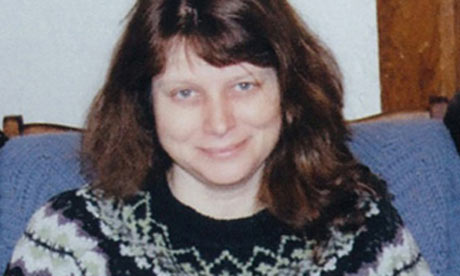
Eco terrorist or environmental activist Marie Mason

Marie Mason, an environmental activist from Cincinnati, Ohio, is serving 22 years after admitting 13 counts of arson and property damage. Photograph: freemarie.org

She is, in the eyes of the law, America's most dangerous eco-terrorist: a self-confessed serial arsonist who resorted to fire and destruction to register her opposition to the fur industry and genetically modified crops.

But to those who know her and to some legal experts, the 22-year jail term handed to Marie Mason, 47, is a consequence of America's preoccupation with terrorism in the post-9/11 world.

She is serving the longest sentence of any convicted animal rights or environmental militant, including several activists responsible for greater destruction.

"It is obvious the government is trying to send a message – to have a chilling effect, not only on my action, which of course transgressed the laws, but also on 30 years of above-ground actions in the environmental rights spheres," Mason told the Guardian in her first interview since she was sentenced last month.

Mason was convicted on the evidence of her fellow arsonist and ex-husband, Frank Ambrose. He was jailed for nine years.

"It's very, very sad. These are karmic things that Frank will have to deal with on his own," she said.

The explosive fire Mason and Ambrose set at Michigan State University on 31 December 1999 caused nearly $1m (£680,000) of damage to buildings and equipment, but no death or injuries. The target was the office of the director of a genetically modified crop research programme into moth-resistant food crops for Africa, funded by the US Agency for International Development and the biotechnology company Monsanto.

Professor Daniel Clay, who worked at the institute in 1999 and is now the director, said the attack had a severe impact on the staff. "It really was a shock," he said. "It was a very difficult period for all of us. People were frightened and we asked ourselves how close did this come to physically harming someone."

However, Mason's lawyer, John Minock, who filed an appeal against the sentence last week, argues that 22 years is excessively harsh. Mason got a much longer sentence than several militants recently convicted of setting fire to logging camps and vehicles in Oregon and Washington states – including Stanislas Meyerhoff who received 13 years for setting 11 fires and causing $30m in damage.

"Giving her a 22-year sentence is like using a cannon to shoot a mouse," Minock said. "She is a 47-year-old, mild-mannered woman with no previous criminal record other than trespassing."

The FBI had singled out militant environmentalists and animal rights activists as domestic security threats even before the 9/11 attacks. Since then, the courts have used domestic terrorism laws to stiffen the punishment for politically inspired violence.

Mason is a prime example. "We are definitely seeing more severe sentences post-9/11, no doubt about it," said Heidi Boghosian, the director of the National Lawyers Guild. "We have seen a trend of using the terrorist label and federalising a lot of criminal activities that would have gotten a far less stringent sentence before."

Lauren Regan, an Oregon lawyer who defends environmental militants, calls it the "green scare".

To those in Mason's home city of Detroit who know her, her elevation to the ranks of America's most dangerous criminals came as a shock. A fixture in activist circles, she was bright and charming, but unfocused – a woman who had an advanced degree in chemistry but lived near the poverty line.

They saw her as a doting mother to her adult son and teenage daughter, a soft touch who took in stray dogs and named them after revolutionary heroines, an amateur folk singer and a passionate supporter of various causes. But not, they say, the organiser of a series of attacks.

"She is one of those people that, whenever there would be a demonstration, she would be there," said Peter Werbe, a Detroit broadcaster who has known Mason for 20 years. "I don't think she ever rose to prominence as a figure in the city."

A long-time acquaintance said: "If you look at the court documents, Frank is always the one lighting the fire, she is always the one spray-painting the wall. That, in a nutshell, is who she is. Marie is always the support staff."

Mason met the man who was to become her third husband in 1998. Ambrose, now 34, was well-known among forestry activists in the mid-west and was leading a workshop for activists.

Mason says there was an instant attraction. The two were soon living together and married, although the relationship was troubled.

At about 9pm on New Year's Eve 1999, the couple entered an office in the Institute of International Agriculture at Michigan State University and doused it with petrol.

The arson, by Mason's own account, was botched. A fireball set her hair on fire, forcing the couple to run before she even managed to write her slogan, "No GMO".

The next day, the pair set fire to a logging camp. She has also admitted to burning boats belonging to the owner of a mink farm.

When asked whether the fires might have terrified staff and students at the university, she said: "It was intended as an enlightenment moment that people would see what is going on beneath the surface."

Clay argues his institute's research was aimed at creating a more sustainable agriculture, an ambition he believes should be shared by environmentalists. "It was most important to us that the perpetrators were caught and that justice was served," he said.

The couple nearly got away with it but were caught in March 2007. By then, the two had split up.

Ambrose, who was cleaning out his possessions, left gas masks, fuses, maps and explosives in a rubbish dump. The material was discovered by a man who called the authorities. Eventually, the gas masks led the FBI to Ambrose, who agreed to turn informer. He wore a wire and gave Mason a mobile phone, to help the FBI monitor her conversations.

Mason, in her jail cell, has often thought about those talks. "I did think that some of our conversations were very strained and strange but I attributed that to the fact that Frank was a very nervous person and he was under a lot of pressure," she said. "I was the last to know that Frank was unreliable."

Additional reporting by Damian Carrington.

Tuesday, March 24, 2009

Prison activist's death sparks uprising in women's prison of Thebe, Greece

Libcom.org March 22, 2009

The second uprising in the Greek prisons in only two days was sparked by the death of Katerina Goulioni, inmate activist against vaginal inspection in jail. Clashes have erupted outside the prison between riot police and solidarity protesters. Koridalos Athens prisons also in turmoil.

The death of Katerina Goulioni, a female prison activist known for her struggle against vaginal inspection of inmates sparked a violent uprising in the Women's Prison of Thebes on Sunday 22/3. Inmates have refused to return to their cells, and are setting fires and smashing the jail premises, while a protest march in solidarity to Goulioni clashed with riot police forces outside the prison. One section of the prison is said to be seriously burned.

Tension is also evident in the central Athens prison of Koridallos where 200 inmates are staging a protest in solidarity to the Theban uprising. The Minister of Justice, Dendias, notorious for his recent police-state legislations, has refused to allow the Initiative for Prisoner's Rights to visit the rebel inmates, saying he will not tolerate "left wing threats".

Katerina Goulioni's last letter to the Initiative for Prisoners' Rights published in the Communist Newspaper Epoxi is revealing of the activist's struggle with the prison authorities: "I hit the chief-screw because besides everything he had me locked in isolation in Koridallos Prison and I had to pee in a bottle". Besides her struggle against vaginal inspection which she has termed "informal rape", in letters past, Katerina has denounced the conditions of prison transfer, a process during which many inmates lose their life under suspicious conditions, the lack of facilities for prisoners with special mobility needs.

Goulioni's co-inmates have sent the press the following goodbye note to their comrade:

"All your life was full of thirst. Thirst for struggle and justice. You fought for all and for everything without care for the consequences. And at the end the consequences of your struggles rewarded you in the worse of manners, with a violent, unexpected sudden death. But we are still here, Katerina, and we shall remember you and continue the struggle you began. You are everywhere. We sense you and we thank you for taking care of us. For us, you will live for ever. Have a great journey!"


Joined: 6 Jun 08
User offline. Last seen 6 hours 16 min ago.

During the clashes outside the prison one protester was wounded and is being hospitalised with a broken arm. Late in the evening the general secretary of the Ministry of Justice held talks with the rebel inmates, promising an immediate revision of vaginal inspection methods (hinting at the introduction of ultra-sound technology) and the improvement of prison conditions as a whole. An investigation over the conditions of Goulioni's death during her transfer from Crete to the mainland has been ordered. It is still unclear whether the inmates have returned to their cells.

Amnesty International's Greek department announced regarding the death of Goulioni:

«Accusations on unacceptable treatment of prisoners in greek jails are growing, while first reports on the conditions of Goulioni's death do not exclude the possibility of its connection with her struggle for defending human rights of prisoners. After so many deaths, brutalisations, and uprisings the authorities must at last left the veil of concealment over prison conditions, and allow access of control bodies and organisations into the prisons, as well as move into immediate and effective measures so as to guarantee, as they are obliged, respect of human dignity and human rights for the prisoners"

Monday, March 23, 2009

Chilean political activist and ex-political prisoner Victor Toro


The known Chilean political activist and ex-political prisoner Victor Toro (La Peña del Bronx) was arrested by an agency of the Department of Homeland Security of the U.S. today, Friday, July 6, 2007. The agency that carried out the detention is known as the US Border Patrol.

Victor Toro is facing a FINAL deportation hearing on March 25th. We are going to have a protest outside of the cout on that date!

10am @ 26 Federal Plaza NY NY

We demand political asylum as he is a victim of the 17yr. bloody military dictatorship of Augusto Pinochet.

No Human Being is Illegal!


Saturday, March 21, 2009

Prison uprising in Chania, Crete, over dehumanising living conditions

Libcom.org March 21, 2009

Uprising breaks up in Chania Prison, Crete, due to inhumane living conditions. Inmates pledge to fight state terrorism.

On Saturday 21/3 the prisoners of the Chania Prison, in the Greek island of Crete led an uprising against their captors decrying the conditions in the jail, occupying the prison yard and setting up barricades. The inmates are demanding the immediate decrowding of the cells. The uprising comes after the persistent failure of the Ministry of Justice to fulfill its promise to release several thousand prisoners from the Greek jails, given as a response to the universal hunger strike in Greek prisons last autumn. The uprising in the Chania Prison is the first in the country after the general prison uprising in spring 2007 (in response to the brutal beating of the anarchist prisoner Yannis Dimitrakis).

Chania houses 157 prisoners in cells with a capacity to only 70 and 108 beds, resulting in ten inmates per cell, with one toilet for every 57 inmates. The State persecutors asked the prisoners to end the uprising and return to their cells, pledging to come back to them after a week with proposals. The inmates refused the offer, and have established an insurgent assembly where decisions are taken by consensus. The direction of Chania Prison is infamous for its brutality, and only last week 20 immigrants were locked in isolation naked.

The insurgent prisoners first communique reads:

We, the inmates of the judicial prisons of Chania, today 21 of March 2009, reacting to the miserable conditions of living have refused to return to our cells, demanding the immediate decrowding of the prison. We believe that the solution is the immediate transference of a large number of inmates to other prisons of the country. What nobody tolerates to lack even for a single moment is HUMANE CONDITIONS OF LIVING AND DIGNITY! How could we not revolt when we are piled 157 people in a prison (ex ottoman fort) where there is place only for 70, and 57 of us are forced to share a section for 20, sharing a single toilet, having to arrange dates for using it; when we have to unite beds so that three sleep in two, when we lack warm water and when we are cold, when we cry and nobody hears us, when the State is hiding form society the unspeakable truth! For yet another time the State is the moral culprit of an uprising that is deemed inevitable! The threats voiced regarding the repression of the uprising and for the penalisation of those of us who take part in it, as rebels-villains-criminals do not scare us. The State will always be our enemy. State terrorism will not pass! We have voted by consensus and have agreed: We shall continue our struggle until we speak to a Ministry of Justice representative and our demands are met

Inmates of Chania Prison

Friday, March 20, 2009

Support Eric McDavid Tour Headed to the Northwest - Your Help Needed!

Support Eric McDavid Tour Headed to the Northwest - Your Help Needed!

author: Sacramento Prisoner Support
Mar 20, 2009 10:01 Seattle indymedia

We are headed north and would love to stop in your community...

Dear Friends,

We've almost made it through Winter and now we're itching to get back
on the road and continue our tour. Eric has been locked in a cage for
over three years now, and we refuse to remain silent about his case
and the wider implications it carries for anyone engaging in dissent.
Eric has suffered enormous injustices at the hands of the state – and
we want to do everything we can to make sure that people don’t forget
about Eric, that they understand how his case was created, and to
ensure that people learn what they can from our experiences these
past 3 years.

To that end, we will be heading to the northwest to educate folks
about Eric’s case, which we will use as a lens through which to study
the basic concepts of entrapment, the use of informants, and
government repression in general. Unfortunately, the use of these
tools by the state is becoming more and more prevalent, and it’s
imperative that people understand how they work.

In addition to the presentation itself, we will be accompanied by
friends who will bring us some beautiful musical catharsis. Nora &
Gnoll and Spoke Pants of the Flowering Skillet, from the
Anarchozarkian Music Collective will be touring with us, straight
from the bowels of the midwest. We assure you, you won't be
disappointed. (See below for links to music)

If you are interested in scheduling a presentation in your community,
please contact us at: tour@supporteric.org.

We will be on the road during the month of June. Below is a rough
estimate of when we’ll be in specific areas.

For more information about Eric and his case, please visit:
www.supporteric.org

We hope to see you soon!

(Very) Tentative “Schedule”

San Francisco, CA: June 5-7

Arcata, CA: June 8-10 (OR July 1-2)

Eugene, OR: June 11-13 (OR June 29-30)

Portland, OR: June 13-16 (OR June 25-28)

Astoria, OR: June 16-17 (OR June 23-24)

Olympia, WA: June 18-20

Seattle, WA: June 20-22


Nora and Gnoll
http://www.last.fm/music/Nora%2B%2526%2BGnoll/Forward+in+All+Directions

Spoke Pants of the Flowering Skillet
http://southwestmomusic.ning.com/profile/SpokePantsoftheFloweringSkillet

Marie transfered into the federal prison system

From: freemarie@riseup.net
Date: Thursday, March 19, 2009

We just received word that Marie has been transferred via plane by federal
Marshals from Newaygo County Jail to FCI Waseca. This is a federal low
security all women's prison about 75 miles south of Minneapolis, MN.

We do not know at this time if Marie is just being held there for
processing or if she will be held there long term.

As many of you know Marie is a committed Vegan and obtaining Vegan food
during her
incarceration has been spotty at best. She relies heavily on
her commissary to purchase items she needs to survive. You can find
detailed information on how to put funds in her federal commissary by
checking out the following link
http://www.bop.gov/inmate_programs/money.jsp .

She was unable to take very little with her on the transfer likely no
longer has many friends and supporters contact information. Even if you
have done so recently, please write Marie a letter of support at the new
address below.

Marie Mason #04672-061
FCI WASECA
FEDERAL CORRECTIONAL INSTITUTION
P.O. BOX 1731
WASECA, MN 56093

Best,
Got Your Back Collective
POB 10371
Columbus, OH 43201

For the latest updates see www.freemarie.org

Many Iraqis held by US to go free

AP March 19, 2009

CAMP BUCCA, Iraq – Thousands of Iraqis held without charge by the
United States on suspicion of links to insurgents or militants are
being freed by this summer because of little or no evidence against
them.

Their release comes as the U.S. prepares to turn over its detention
system to the fledgling Iraqi government by early 2010. In the six
years since the war began, the military ultimately detained some
100,000 suspects, many of whom were picked up in U.S.-led raids
during a raging, bloody insurgency that has since died down.

The effort to do justice for those wrongly held to begin with, some
for years, also runs the risk of releasing extremists who could be a
threat to fragile Iraqi security.

As part of an agreement between the two countries that took effect
Jan. 1, Iraqi authorities have begun reviewing the cases of the
detainees to decide whether to free them or press charges. About
13,300 remain behind barbed wire in U.S. custody in Iraq.

But Iraqi judges have issued detention orders to prosecute only 129
of the 2,120 cases it has finished reviewing so far this year — or
about 6 percent, according to U.S. military data. As of Thursday,
1,991 detainees had been freed since Jan. 1.

An Associated Press reporter embedded for two days at Camp Bucca, the
largest U.S. detention facility in Iraq, and talked with military
officials about preparations to shut it down.

"God willing, God willing," said Layla Rasheed after learning that
her son, a former government worker from Baghdad, was likely to be
released. "He doesn't have anything to do with terrorists. I don't
know why he was picked up."

The military also expects to release another 600 detainees by the end
of March, a spokesman said.

The U.S. detention policy has been unpopular in a country where many
feel that thousands have been detained without cause, and where the
Abu Ghraib prison abuse scandal will be remembered for a long time.

Iraq's biggest Sunni parliamentary bloc has called for the release of
virtually all detainees, arguing that even those who were militants
no longer pose a threat because so many Sunni groups have abandoned
the insurgency.

"It's very easy to go back and say, 'Well, you rounded up all these
innocent people.' Well, innocence has different shades," Brig. Gen.
David Quantock, commander of the U.S. detention system in Iraq, said
in an interview this week.

"It's not like we have a choice — it is prosecute or release. So it's
a huge undertaking right now to try to find as much evidence as we
can. We're not going after all of them, we're going after a certain
amount."

It is not clear that Iraqi judges will continue to issue warrants in
so few cases.

Those who have been freed since Jan. 1 make up what Quantock called
low-level threats that Iraqi security forces should be able to
contain if they return to insurgent groups. Extremists will be the
last to have their cases reviewed, giving the U.S. time to compile
evidence against what they consider the highest risk to Iraq's
security.

Quantock cited the cases of about 3,000 detainees where U.S.
officials are scrambling to compile enough evidence to keep them
locked up. Additionally, 2,400 detainees have already been convicted
or are awaiting trial, a military spokesman said.

Most of the detainees — about 9,600 — are being held at Camp Bucca, a
sprawling, dusty military facility that sits a few yards north of the
Kuwaiti border, about 340 miles southeast of Baghdad. It is slated to
close this summer.

Its detainees included those whom Quantock called "the worst of the
worst" — suspected al-Qaida terrorists, Shiite militants and Sunni
insurgents.

And there are those like Sunni teacher Suhail Najim Abdullah, who was
released from Camp Bucca in March 2008 after being held there for
more than three years.

"They just simply apologized to me and said, 'You have been arrested
mistakenly,'" Abdullah said in an interview in Baghdad this week.
"They gave me a shirt and trousers and $20. It's like I started my
life over from zero."

Abdullah is suing two private U.S. security contractor firms that he
said tortured him for a month while being detained at Abu Ghraib in
2003. A U.S. military spokesman confirmed Abdullah's detention at
Bucca but did not provide details about his time at Abu Ghraib.

International law allows the capture and detention of people who are
considered an "imperative" national security threat during times of
war or conflict. However, human rights groups like Amnesty
International have argued that the United States violated detainees'
legal rights by holding them without charge after Iraq was declared a
sovereign nation in June 2004.

That argument largely became moot with the Jan. 1 agreement. The U.S.
currently is referring up to 1,500 detainees cases to Iraqis each
month for review.

Human rights groups worry about the detainees who will remain in
Iraqi custody.

"We have concerns for those who would be transferred to Iraqi custody
because of allegations of torture," said Nicole Choueiry of Amnesty
International in London. The Jan. 1 security agreement, Choueiry
said, "does not contain any guarantees for their safety."

At Camp Bucca, Quantock said 75 percent of detainees are Sunni and
nearly all the rest are Shiite. Nearly all are Iraqi: Only 137
detainees come from 22 other counties, most from Egypt, Syria, Jordan
and Iran.

Quantock said very few detainees who have been released are later
recaptured: Out of 18,600 who were freed last year, only 157 returned.

How much of a threat — if any — the detainees will pose once freed is unclear.

A potential danger, said one U.S. official, is whether hard-core
foreign fighters would head to Western Europe or the United States to
carry out attacks there.

One Camp Bucca imam said the majority of detainees are ready to
forgive once they are released — even if they are angry and confused
after being held so long.

"Some of them have decided to go outside Iraq to change," said the
imam, who identified himself only as Sheik Abdul-Sattar. "Some can
say, we can forgive everyone. The majority are like that. The
extremists speak of revenge."

The camp also is being closely watched as a test case as the Obama
administration grapples with releasing detainees or expanding legal
rights to those held at Guantanamo Bay in Cuba and Bagram Air Base in
Afghanistan.

"It's a unique time in the history of warfare, with all of the
confusion and the chaos surrounding what to do with detainees, to
watch and see if it works," said Glenn Sulmasy, a professor of
international law and national security expert at the U.S. Coast
Guard Academy. "We don't know. And we're going to be dealing with
these same issues at Guantanamo and Bagram in the future."

Texas 2 Solidarity Statement


http://tc.indymedia.org/2009/mar/re-trial-david-mckay-monday / Felony
Working Group Statement, Twin Cities / Re-Trial for David McKay on
Monday

As the case of Bradley Crowder and David McKay, two individuals from
Texas who are being federally charged with Posession of an
Unregistered Firearm, has unfolded, there have been many confusing
and saddening developments. The Texas two were accused of making
molotov cocktails at the RNC. Amongst the controversies and
cloudiness has been the revelation that Brandon Darby, a well
known-activist, had been working as an informant for the FBI and was
heavily involved in the case against them. This fall, six activists
from Texas (including informant Brandon Darby) were subpoenaed to a
grand jury in connection with the charges against Bradley and David,
and had their subpoenas dropped. There have also been rumors
regarding whether or not either of the Texas two are co-operating
with law enforcement.

In early January, Bradley Crowder took a guilty plea. He has been
held without bail in prison since his arrest at the RNC and is
awaiting sentancing. The felony working group in the Twin
Cities—which has been doing legal support for those facing felonies
stemming from the RNC—has been unable to ascertain whether or not his
plea is a cooperating one (i.e., if he is implicating his
co-defendant and giving other information to the state in exchange
for less prison time). Bradley is also facing new felony charges in
relation to another incident at the RNC, and there is concern, but no
specific evidence at this point, that he may be cooperating in the
prosecution of two other people relating to this incident.

David McKay has plead not guilty to the charges against him. In late
January, his trial resulted in a hung jury. His retrial will begin on
Monday, March 16th.

Upon his arrest, David made statements to the police that may have
implicated himself. At his previous trial, David stated that he had
tried to “cover” for the other individuals who were allegedly
involved. It seems that McKay's discussions with law enforcement were
motivated not out of selfishness but naivete. Though irreconcilable
damage may have been already been done, it was clear at McKay's
original trial that he had not intended to implicate his co-defendant.

If we truly desire for our community of resistance to survive this
wave of state repression, we must make a habit of security culture
practices, including never speaking to law enforcement of any agency,
especially about actions that one or one’s friends have taken. A
common law enforcement tactic is to coerce those facing serious
criminal charges by encouraging them to implicate their co-defendants
and give up information on other individuals under the frequently
false impression that it will lessen the consequences that they face
personally. It is important to keep quiet even-- perhaps especially
so-- in cirumstances that are scary and unexpected and messy.

While both Bradley and David have taken actions post-arrest that may
seem questionable to members of the radical community, it is
important not to lose focus of who it is that enabled this
prosectution and created this situation. The work of FBI informant
Brandon Darby is instrumental in placing these two behind bars. Darby
is well-known amongst radical communities in the U.S. and has been
working with the forces he was presumed to oppose for at least the
past two years in relation to the RNC. Those who knew him felt he was
eager to suggest and encourage illegal actions, in particular those
involving explosives, weapons, property destruction or violence. It
seems clear that Darby exploited the Texas two’s desire to do
something powerful in response to a world full of systematic violence
and oppression. McKay’s lawyer intends to use this in his defense.
While Brandon Darby has justified his involvement with the FBI by
taking a moral high ground and has stated that the people whose life
he has handed over to be devoured by the state had no “legitimate”
motivation, his actions have reverberated beyond the lives of Bradley
and David. Brandon Darby has only given the state more capacity to
disrupt the communities of resistance that it finds threatening. We
feel that the case of the Texas two has relevance to our community
beyond supporting them as individuals. This case is being used as a
justification for repressive tactics, and will influence the
political climate that anarchists exist in.

At McKay’s first trial, it was mentioned to individuals who were
present to watch it that his lawyer and father would prefer if
scruffy anarchists weren’t there, potentially influencing the jury.
Some individuals chose to leave and others decided to stay. Be aware
that at least McKay’s father and lawyer expressed those wishes, and
they certainly didn’t ask for courtwatchers. But you may have other
reasons why it is important for you to be there, and it can be a good
thing to have a watchful, respectful presence in the courts when
radicals are facing charges. Notes from the first trial are available
here on twincities indymedia. Details on where the trial will be held
will be posted here later as well.

More information can be found on Bradley and David’s support site,
freethetexas2.com

The felony working group’s webpage has updates about the Texas Two as
well as others facing felonies. A copy of Bradley Crowder’s plea
agreement can also be found there.
http://rnc08arrestees.wordpress.com/arrestees/felony-info-and-support.

Activists accused in violent animal rights protests say their free speech rights are under attack

SAN JOSE - Four animal rights activists indicted by a federal grand jury for their alleged roles in violent demonstrations at the homes of UC biomedical researchers pleaded not guilty today, then held a rally denouncing what they call an attack on free speech rights.

Joseph Buddenberg, Maryam Khajavi, Nathan Pope and Adriana Stumpo are being charged under the relatively new Animal Enterprise Terrorism Act, a 2006 law aimed at terrorism against scientists and others involved in using animals in their research. The San Jose charges are believed to be the second case in the nation brought under AETA, approved by Congress to "prosecute animal rights extremists" with a tougher law that includes stiffer penalties.

At the rally, which occurred just outside the federal courthouse downtown, supporters waved signs that called the law - known as AETA - unconstitutional. Some signs dubbed the four defendants the "AETA 4."

Well-known civil rights lawyer Tony Serra, who is representing Khajavi, said his client and the other defendants are idealist kids whose free-speech rights are being curtailed. Punishing youth for dissenting leads to the downfall of a society, Serra said.

"We represent the voice of tomorrow," he said.

Authorities say the activists are linked to the alleged crimes through video surveillance footage and fliers seized by federal agents in which they pledged violence against the researchers for using animals in experiments.

a two-count indictment filed March 12, prosecutors cite three specific protests, including a February 2008 incident outside the home of a UCSC professor in which demonstrators shook doors and hit the professor's husband with thrown objects. According to court papers, protesters, wearing bandanas to hide their faces, yelled, "We're gonna get you." The animal terror act prohibits "force, violence and threats involving animal enterprises."

In addition to the attempted home invasion attack of a UCSC researcher a year ago the four are accused of being involved in several demonstrations at the homes of UC Berkeley researchers in late 2007 and early 2008. No one has been charged in the most egregious of the animal rights protests - the July firebombings of two UCSC scientists' homes.

Robert Bloom, the attorney for Buddenberg, 25, said the government's case seems weak. The demonstrators were simply denouncing people who were terrorizing animals.

"This is not intimidation," Bloom said. "This is not threats. This is exposing people who are believed to be torturers."

Challenging the constitutionality of the Animal Enterprise Terrorism Act will be a part of the defense, according to the defense attorneys. The law is vague and violates free speech rights, Bloom said.

"It's really deplorable," he said.

Khajavi was the only defendant to speak at the rally. Reading from a prepared statement, the 20-year-old UC Santa Cruz graduate said she has never been in trouble before and is only being punished for trying to express her point of view.

"I'm a victim of free speech suppression," she said.

In court Thursday, the judge issued conditional release terms for Pope and Stumpo, who were arrested last month in North Carolina as they returned from a trip to Costa Rica. Pope, 26, was a one-time Cabrillo College student who lives in Oceanside. Stumpo, 23, had attended UCSC and now lives in Long Beach. Unlike the other defendants, Pope and Stumpo will be allowed to contact each other - but not discuss the case pending against them - because they are engaged, the judge decided.

About 40 people, most of them young and casually dressed, packed into the courtroom to watch the proceedings in front of Magistrate Judge Howard R. Lloyd.

The defendants, all free on $20,000 bonds, return to court April 16. Defense attorneys are waiting for the prosecutor from the U.S. Attorney's Office to turn over evidence, including several DVD and reports from police and the FBI.

Serra said he anticipates the case will go to jury trial. It could take as long as two years to adjudicate, he said.

In court papers, federal prosecutors insist the defendants "conspired to use force, violence or threats to interfere with the operation of the University of California" and its animal research programs.

California Democratic Sen. Dianne Feinstein co-sponsored the 2006 legislation, citing a number of violent protests at California research facilities, including a string of attacks at UC San Francisco between 2001 and 2005, and the 2003 firebombing at the Chiron Corp. in Emeryville.

The only other reported case the Justice Department has pressed under the domestic terrorism statute was the 2006 prosecution of seven animal rights activists in New Jersey. A federal appeals court in Philadelphia earlier this year heard arguments on a free speech challenge to the law in that case, a ruling that could serve as a test for whatever unfolds in the San Jose prosecution.

Wednesday, March 18, 2009

David McKay Found Guilty: Court Report from Tues. 3/17

tc. indymedia.org March 17, 2009

In a tumultuous, somewhat stunning turn of events, David McKay's guilty plea was accepted in federal court in Minneapolis Tuesday, a day after Judge Davis indicated that he was unlikely to accept the plea on the basis of evidence pointing to entrapment by FBI informant and horrible human being-extraordinaire Brandon Darby at the original trial. McKay had been motivated to plea at the last minute - supporters and courtwatchers did not know about the plea until Sunday evening - when the state compelled co-defendant Bradley Crowder to testify against him, threatening additional prison time for noncooperation. The plea deal was to plead guilty to all three counts - possession of an unregistered firearm (the molotov cocktails), illegal manufacture of a firearm, and possession of a firearm with no serial number - in exchange for the government not to seek four additional sentencing points for "intent to use" the molotov cocktails.

At what was supposed to be the beginning of the retrial on Monday, Judge Davis called potential jurors to line up in the hallway, before reconsidering his position and giving the parties a night to "think it over" and argue the matter again Tuesday. The rollercoaster series of events left many feeling emotionally spent; many hoped that Davis would reject the plea and bring the matter to trial again to prove Darby's entrapment, feeling that McKay had been pressured into accepting the deal - although McKay in court affirmed there had not been any official persuasion for him to do so (but who knows?). A source close to the defense reported that at the original trial, the jury had been deadlocked at 6-6 on the question of entrapment.

Here's what happened on Tuesday:

Shortly after 9 o'clock, prosecutor and U.S. Assistant Attorney Jeffrey Paulsen went to chambers with defense attorney Jeff DeGree. Later they re-emerged entering the courtroom from the main entrance and at about 9:45, Judge Davis appeared. David stated that he met with both attorneys, and that he wants David McKay to be honest in his statements. He read the indictment all over again in the same procedure as the day before, and everyone went through the same process as Monday. DeGree began to question his client:

(paraphrasing below, except where in quotes)

DEGREE: what happened at the August 31 meeting after the shields were confiscated?

MCKAY: there was a discussion between myself, Brandon Darby and Bradley Crowder. I earlier testified that it was Darby's idea to make molotov cocktails. But I don't remember who actually brought the idea, and that is the truth. If Darby had not been there, Bradley and I would've done it anyway.

DAVIS: why is that? what was going through your mind?

MCKAY: because we thought it was a necessary tactic, in order for us to contribute something. if Darby was not there or if another person had made the suggestion, we would've followed through. we didn't need darby there.

DEGREE: then what?

MCKAY: i went to wal-mart, then to [248 Dayton] and built the molotovs with Bradley in the bathroom.

DAVIS: it wasn't just you at wal-mart, was it? who made up the plans to have women buy the tampons and so forth? did the women know what they were for?

MCKAY: we were organized in an affinity group, and did not share info outside of those groups. myself, [another activist], bradley and darby had built an AG, but now it was only myself, bradley and darby. we didn't talk with others about what we were doing, but soon they realized what was up.

DAVIS: so you and crowder came up with the plan?

MCKAY: yes

DAVIS: tell me in your own words.

MCKAY: "the concept of making molotov cocktails came from that conversation." i don't have a recollection of whose idea it was. after getting in the van to wal-mart, bradley and i made the plans.

DEGREE: where did the list of supplies come from?

MCKAY: the internet, i believe. bradley went online to find the list. after we built them, the plan was to bring them to the park...

DAVIS: how did you "you make your bombs"? who else assisted?

MCKAY: freia took us to the gas station to buy gas. the women helped buy supplies at wal-mart. after they realized what was up, they had a meeting and contacted us, but we had already made the cocktails. it was just me and bradley making them.

DAVIS: was brandon darby there?

MCKAY: i don't know where he was - maybe at another house. he didn't go to the store. ... to make the cocktails, we put gas in the bottles, then duct taped the tops.

DAVIS: did you lock the bathroom door?

MCKAY: there was no lock.

DAVIS: [he doesn't understand the concept of affinity groups at all.] this wasn't a "library book club," it was more like a "secret cell," wasn't it?

MCKAY: affinity groups set up an information barrier so as not to tell others about tactics and jeopardize things.

DAVIS: what was this based on? [long pause - davis takes an extraordinarily long time to ask this question, about two words at a time between pauses, grasping for words about something he doesn't understand] was it research... done by other groups... that have been.... labeled as.... terrorist organizations?

MCKAY: not to my knowledge.

DAVIS: "it's not a book club!" you've got cells. who came up with all this? was it... "i forget the name of the group" [but he's clearly referring to the RNC Welcoming Committee]

MCKAY: it was decided at our first meeting to form an affinity group. affinity groups are a way of staying safe.

DAVIS: safe from what?

MCKAY: "from getting caught doing something bad."

DAVIS: so you were predisposed to do something bad, and so you set up a barrier.

MCKAY: from the point we formed the AG to the time of the RNC, we simply wanted to keep our information amongst people we trusted, about things like the shields

DAVIS: but what are you protecting from?

MCKAY: cops, informants

DAVIS: why?

MCKAY: because what we were doing may have been illegal, or considered a threat or danger to the RNC

DAVIS: so you knew that before. back up you walked into an affinity group meeting... what was your reason for getting involved?

MCKAY: to be with a protest group. we were willing to be arrested, and wanted someone to have our backs - someone i could rely on

DAVIS: so this AG was not based on nonviolence?

MCKAY: no, it was not ... we understood that we had a great possibility of being arrested.

DAVIS: did you know about other peaceful groups coming to protest?

MCKAY: yes

DAVIS: and you decided to meet up with other affinity groups to infiltrate peaceful, nonviolent groups, to disrupt them.

MCKAY: our goal was NOT to infiltrate, but to meet with others to create a "disgruntled protest"

DAVIS: a violent protest, then?

MCKAY: perhaps violent

DAVIS: you did not come to St. Paul to peacefully demonstrate?

MCKAY: no

DAVIS: you were in the bathroom making bombs - how?

MCKAY: i was in the tub pouring the gas. brad put motor oil in and duct taped the tampon

DAVIS: how many?

MCKAY: eight

DAVIS: then what did you do?

MCKAY: put one in a backpack, the rest away

DAVIS: where?

MCKAY: next to the door [describes where in the apartment]

DAVIS: back up - why have freia buy the gas?

MCKAY: we had no vehicle and didn't want to talk through the RNC area

DAVIS: there would be problems if you walked?

MCKAY: most definitely. we were next to the STP cathedral, and there were constant police patrols

DAVIS: you didn't want to be detected? why?

MCKAY: we were doing something illegal

DAVIS: was Darby with you?

MCKAY: no

DAVIS: Brad Crowder was your good friend?

MCKAY: yes

DAVIS: what does that mean to you?

MCKAY: i've known him since 18, we were really close and hung out lots

DAVIS: when you came to STP, is it correct that you and crowder were leaders of the AG?

MCKAY: um... as i understand it there's not supposed to be a leader - we're all equal. you might say we were leaders of the shield concept. most people who came up with us were not there for the shield idea, though - they were mostly medics and observers.

DAVIS: so any activity with violence was you and crowder coming up with that plan?

MCKAY: our concept involved confrontation with police, but not by using the shields physically. the confrontation would only be by not obeying their orders to move.

DAVIS: we've seen the video of you in the street - you were active and agressive?

MCKAY: yes

DAVIS: Darby wasn't in your ear?

MCKAY: no

DAVIS: you were aware of the number of peaceful demonstrators coming to STP to peacefully demonstrate and voice their opposition to... policies?

MCKAY: my knowledge was limited - i knew people would be there, but that was not who i was associated with or getting info from

DAVIS: did you know your actions would disrupt peaceful demonstrations?

MCKAY: we took steps not to be part of their marches or "green zones" - we made a conscious effort not to run into peaceful protesters. we specifically wanted to not be near the march that went from the capitol to the xcel center, i believe

[DAVIS asks DEGREE to have david confirm the molotov cocktails were unregistered and had no serial number, and he does. tip for the future from the feds: apparently putting a random number on your molotov cocktails might lessen your sentence!]

PAULSEN: you admit you are guilty of the three counts?

MCKAY: yes

PAULSEN: you made them voluntarily?

MCKAY: yes

PAULSEN: you knew it was against the law?

MCKAY: yes... not to this extent.

[Davis asks DeGree to confirm with David that he understand the burden of proof for entrapment is on the government, and that's he giving up forever the right to say he was entrapped. he does.]

Davis asks David the same questions as Paulsen, and once again asks if he was forced into saying anything. David gives the same answers.

Judge Davis then pauses and, in a complete reversal from the day before, accepts the guilty plea. He says there will be a pre-sentence investigation soon, and an interview with a probation officer. Then a date will be set for sentencing, before which motions will be heard on sentencing.

Paulsen points out that in a "crime of violence", pre-sentencing detention is mandatory. The defense doesn't have any exception to this rule that fits, and so Davis orders David back into custody. David slowly takes off his suit coat, his necktie and his belt, takes a final look at his father and supporters in the room, then is escorted out a side door without looking back. It's very sad.

In the hallway, Paulsen is cornered by two reporters, who don't ask very hard questions, but he still acts like a prick - being an assistant US attorney, after all. He's asked if this case gives cause for the FBI to re-examine their use of informants, and he adamantly says no - the guidelines that were in place were used. Paulsen's asked why the conversation outside Hard Times Cafe wasn't recorded, and says that if the case were more serious, it would likely have been, but this case wasn't serious enough. Apparently it's serious enough to seek two trials, apparently engage in shady backroom deals, unfairly threaten co-defendants with additional prison time and force them to testify against each other, have the U.S. marshals create arbitrary rules to intimidate supporters, and most seriously pursue three counts carrying a possible 10 years in prison each.

It seems likely that David will be returned to Sherburne County Jail (a federal holding facility near the Twin Cities) to await sentencing. When the address for writing to him is confirmed, it will be posted on twin cities indymedia (tc.indymedia.org) and the felony support webpage: http://rnc08arrestees.wordpress.com/arrestees/felony-info-and-support/

Solidarity to David, his family, friends and comrades. When one is in prison, none are free. To the feds: for every one you lock up, there are ten more of us who will see another world - run away now!

Mumia has new book on jailhouse lawyers, book launch parties on east and west coasts


Mumia Abu Jamal has published a new book: Jailhouse Lawyers: Prisoners Defending Prisoners v. the USA. Details on the book are available here: https://www.prisonlegalnews.org/122_ProductDetails.aspx

A book party held on Mumia’s 55th birthday will be held in Philadelphia on the 24th of April, 2009 at the Church of the Advocate at 6 PM and in New York City at the Riverside Church at 4 PM on the 25th . The flyer with event details is attached to this e mail. I will be among those speaking at both events. For those interested in prison, court access and jailhouse lawyering issues I hope you will be able to attend the event and or purchase the book. Please let others know about the events and encourage them to attend. Mumia is a prisoner on death row in Pennsylvania since 1982 and is a PLN columnist and the co jailhouse lawyer vice president of the National Lawyers Guild.

PLN Releases First book: Prisoners Guerrilla Handbook to Correspondence Courses in the US

As most people know, in 1994 Bill Clinton eliminated Pell Grants for prisoners which largely ended higher education behind bars for prisoners. Those prisoners desiring a higher education can still obtain one, but via the mail if they can pay for it. (there are a few limited exceptions to this). The Prisoners Guerrilla Handbook to Correspondence Programs In the United States and Canada, 3rd Edition is a guide to distance learning options available to prisoners aimed at the prisoner student, i.e., no internet or residency required. The original publisher retired and asked PLN if we would keep it in print.

Prison Legal News is now publishing books and we can announce the third edition of the PGH. If you or someone you know is in prison and interested in furthering their education while they are there, this is the book for them. Please let folks know about the book and its availability.

Also, if you are an aspiring author, we are interested in non fiction, reference books that would be of interest to prisoners. We do not pay advances but our royalty rate is the best in the industry: 10% royalty on the cover price for all copies sold with a simple, easy to understand contract.

Full details about the book and ordering information are at:

https://www.prisonlegalnews.org/111_ProductDetails.aspx

Prisoners Guerrilla Handbook to Correspondence Programs In the United States and Canada, 3rd Edition

Jon Marc Taylor and Susan Schwartzkopf

In 1994 the Democratic Congress and President Clinton eliminated Pell grants for prisoners. Within the next few years, most states followed suit and either totally eliminated or gutted their prison education programs. Prison and jail education programs beyond GED and Adult Basic Education (ABE) became, and remain, a rarity. Of course, prisoner illiteracy rates remain sky high; all that changed is that prisoners seeking a higher education can no longer seek one within the prison system. The other alternative is correspondence courses. While there are books on the market discussing correspondence courses, they are all aimed at non prisoners, virtually all of which require some degree of internet access or residency.

Prisoners' Guerrilla Handbook to Correspondence Programs in the U.S. and Canada, 3rd Edition (PGHCP) is written by Missouri prisoner Jon Marc Taylor who has successfully completed a B.S. degree, an M.A. degree and a Doctorate by mail while imprisoned. This book was initially published in the late 1990s. The second edition was published by Biddle Publishing in 2002. The publisher retired in 2007 and Prison Legal News took over the publishing of the book as the first title in its new book line.

With the expert assistance of Editor Susan Schwartzkopf, the third edition of PGHCP has been totally revamped and updated. Many colleges no longer offer correspondence courses, having gone totally to online distance learning courses. This book offers a complete description of more than 160 programs that are ideal for prisoners seeking to earn high school diplomas, associate, baccalaureate and graduate degrees and vocational and paralegal certificates. In addition to giving contact information for each school, Taylor includes tuition rates, text book costs, courses offered, transfer credits, time limits for completing course, whether the school is accredited, and if so by whom, and much, much more. What makes the book unique is Taylor’s first hand personal experience as an imprisoned distance learning student who has a basis for comparison and knows how to judge a college correspondence course from the perspective of an imprisoned student who doesn’t have e mail access and who cannot readily call his instructor.

Book editor Susan Schwartzkopf brings a masters degree in education and 12 years of experience teaching immigrants English language skills to the project. The book’s introduction by Vivian Nixon, the executive director of the College and Community Fellowship which advocates for the inclusion of released prisoners in higher education, further bolsters the masterful expertise and experience brought together in this book.

Taylor also explains factors to be considered in selecting an educational program and how to make meaningful comparisons between the courses offered for the tuition charged. No money to pay for school? Taylor covers that too. Diploma mills? The book addresses how to recognize and avoid them. Any prisoner seeking to begin or continue their education behind bars will find this to be an invaluable road map. This is not just the only book on the market to address the needs of prisoners seeking a higher education while locked up; it does a fantastic job accomplishing its goal. It saves the prospective student countless money and time researching the best course for their needs.

Paul Wright, Editor

Prison Legal News

P.O. Box 2420

West Brattleboro, VT 05303

802 257-1342

pwright@prisonlegalnews.org

www.prisonlegalnews.org

Seattle Office

2400 NW 80th St. Suite 148

Seattle, WA 98117

206-246-1022

Tuesday, March 17, 2009

Two New British prisoners

Urgent ELP! Bulletin (17th of March 2009)

Dear friends

ELP has the details of two new British animal rights prisoners. Bryan Griffiths and Nicole Vosper

BRYAN GRIFFITHS

As some ELP supporters will be aware, last week there was a terrible and tragic accident during whilst Hunt Monitors monitored a Fox Hunt to ensure they did not break the law.

Two Hunt Monitors were in a privately owned Gyrocopter. The Gyrocopter landed for fuel and at least one of the hunt suppoters went up to confront the Hunt Monitors. Sadly in doing so the hunt supporter was hit by the gyrocopter and died. It was clearly an accident.

However, despite the obvious facts this was an accident, the police decided to arrest the two people in the gyrocopter on suspicion of murder!!! As a result of that, Bryan Griffiths (the pilot of the gyrocopter) has now been formally charged with murder and has been remanded into custody.

This is such a blatent miscarriage of justice its unbelievable and if anyone is a member of Amnesty International we encourage them to contact Amnesty about this. In the mean time please send urgent letters of support to:

Bryan Griffiths XW8892

HMP Hewell

Hewell Lane

Redditch B97 6QS

England

Bryan is a vegetarian.

Please remember,when writing to Bryan that he is up on a very very very serious charge,so despite your views on fox hunting, don't say anything like "the bastard deserved it" or anything like that. This was a tragic accident and Bryan never intended to even injure the hunt supporter, yet alone kill him.

NICOLE VOSPER

ELP has learnt that earlier today Nicole Vosper appeared in court and made a plea at Winchester Crown Court today charges relating to Huntingdon Life Sciences. We're unsure what those exact charges are as yet, but please send urgent letters of support to:

Nicole Vosper VM9385

HMP Bronzefield

Woodhthorpe Road

Ashford

Middx

TW15 3JZ

England

+++++++

Earth Liberation Prisoners Support Network

BM Box 2407

London

WC1N 3XX

England

www.spiritoffreedom.org.uk

Monday, March 16, 2009

Sara Jane Olsen Scheduled for Release... But Not Without a Fight

SACRAMENTO, Calif. (AP)– A saga that began in the violent cauldron of California's 1970s radical counterculture and took a dramatic turn into a quiet middle-class neighborhood in Minnesota is about to come to an end.


Sara Jane Olson, who was a fugitive for a quarter-century after attempting to kill Los Angeles police officers and participating in a deadly bank robbery near Sacramento as a member of the Symbionese Liberation Army, is scheduled to be released from a California prison next week.


Her bid for freedom after serving seven years is not ending quietly.


Police leagues in Los Angeles and Minnesota are objecting to the terms of her parole, her attorneys are nervous after Olson was mistakenly released and sent back to prison a year ago, and people in her home state have conflicting views about the return of a woman with two identities — a quiet, caring community volunteer and a domestic terrorist.


Olson was freed by California corrections officials a year ago when they miscalculated her parole date. She was re-arrested five days later as she was about to board a flight to Minnesota, the state she adopted as her home during her life on the run.


"After what happened last year, I think she won't feel comfortable until she's back in Minnesota," said David Nickerson, one of her lawyers. "She is just anxious about getting out ... until she's home, until she knows it's real. She wants to be with her family.
"

Olson, 62, her red hair turned long ago to gray, is scheduled to be released Tuesday from the Central California Women's Facility in Chowchilla, about 150 miles southeast of San Francisco.


Where she goes next is a point of contention. Police leagues in Los Angeles and Minnesota object to having her paroled to Minnesota. Both have written to Gov. Arnold Schwarzenegger, urging him to have Olson serve her parole in California, where her crimes were committed.


Former Los Angeles police officer John Hall was a target of one of two 1975 attempted bombings by the Symbionese Liberation Army, the urban guerrilla group most notorious for its kidnapping of newspaper heiress Patty Hearst. The pipe bombs were placed beneath two police cars.


One bomb, packed with nails, failed to explode as Hall and his partner drove away from a restaurant in Los Angeles' Hollywood Division on an August night. A similar unexploded device was found under another police car miles away.


"That bomb should have gone off that night," Hall said. "I would have been just one of many people that would have been dead. It just brings up a lot of anger knowing that she's going to be released.
"

Hall recalls that a girl about 8 years old was watching from the restaurant.


"That little girl was waving at us as we drove off. If that bomb would have gone off, she would have been killed along with her family," said Hall, who served 31 years with the department. "I haven't forgiven her (Olson) in the least for what she's done and what she could have done to many more innocent people.
"

In addition to the attempting bombings and the Hearst kidnapping, the SLA had a long list of high-profile crimes during the mid-1970s, including the assassination of an Oakland schools superintendent and the shotgun slaying of Myrna Opsahl, a 42-year-old mother of four who was depositing a church collection at a bank near Sacramento when the group robbed it.


Olson was in the bank during that 1975 heist, which netted the SLA $15,000.


After her 1999 arrest, she pleaded guilty to the attempted bombings of the police cars and the death of Opsahl.


Olson, was born Kathleen Ann Soliah in North Dakota and grew up in Palmdale, in the high desert north of Los Angeles.


If her release goes as planned, her attorneys say she will be paroled to her mother's house in Palmdale and will have 24 hours to report to her California parole agent. Unless there is a change, she then will be allowed to return to St. Paul, Minn., where she changed her name and married Dr. Gerald "Fred" Peterson.


"Her release of course is a great relief," Peterson said in an e-mail to The Associated Press, declining a request for an interview. "We need to regroup in our home, and preserve our privacy as much as possible, and get our lives coordinated again. We're very happy to reunite.
"

Many of Olson's friends and former associates in Minnesota declined to comment about her release, fearing any statements might hurt her chances of getting out on schedule.


And some have simply run out of patience with the attention the case has gotten.


"I don't have anything to say," snapped Wendy Knox, artistic director of the Frank Theatre and a longtime friend of Olson's. "Every time something happens in that case I get 50,000 calls from reporters.
"

Others said they couldn't wait to see her again.


"I'm planning on giving her a big hug when she gets back and am going to count on her to do what she did before, which was read the New York Times to the blind and volunteer in all sorts of activities to help the less fortunate," said Andy Dawkins, a longtime family friend from St. Paul.


Not everyone will be happy to have her back. After Olson's arrest in 1999, Minneapolis gun store owner Mark Koscielski (koh-SHEL'-skee) countered supporters with bumper stickers that said "Fight Terrorism — Jail Kathleen.
"

"She's a ... terrorist and she shouldn't be out of jail," Koscielski said.


The president of the St. Paul Police Federation, Dave Titus, wrote to Schwarzenegger last week arguing against letting Olson serve her parole in his city.


"Returning Soliah to the same neighborhood that harbored her during her 24-year flight from justice is hardly conducive to strict parole monitoring," Titus wrote.
"If having a convicted domestic terrorist living in their midst didn't bother her neighbors, why would the State Department of Corrections think they would report her if she violated parole?"

Olson, then Soliah, was in her late 20s when she joined the SLA. The small band of mostly white, college-educated children of middle-class families was started in 1973 by an ex-convict named Donald DeFreeze. He died with five members of the group in a 1974 shootout with police at their Los Angeles hideout.


After the attempted bombings of the LAPD police cars, Olson fled to St. Paul, 1,900 miles away, where she acted in community theater, joined a church, taught English to immigrants, worked with senior citizens and raised the couple's three daughters.


She was arrested in June 1999 on a tip from the "America's Most Wanted" television show.


Opsahl's son, Jon Opsahl, said he is glad the saga is coming to an end.


"She did her minimal time and has paid her debt to society after all these years," he said. "As far as I'm concerned, she can leave the state as soon as possible and get back to her life.
"

___

Associated Press writers Steve Karnowski and Doug Glass in Minneapolis, Minn., contributed to this report.

Sunday, March 15, 2009

American Grand Jury Prisoner

Urgent ELP! Bulletin (14th March 2009)

Dear friends

ELP has just learnt that yesterday, 13th of March, an American animal rights activist, Jordan Halliday, was jailed for contempt of court after he refused to testify before a Grand Jury.

Please send letters of support to:

Jordan Halliday #324013
c/o Salt Lake County Metro Jail
3415 S. 900 W.
Salt Lake City, UT 84119
USA

+++++++

Earth Liberation Prisoners Support Network
BM Box 2407
London
WC1N 3XX
England
www.spiritoffreedom.org.uk

Sunday, March 08, 2009

Two new American prisoners

Urgent ELP! Bulletin (8th of March 2009

Dear friends

On Thursday the 5th of March two Americans, William "BJ" Veihl and Alex
Hall, were raided and arrested accused of raiding a mink farm in Utah, last
August, and attempting to raid a second mind farm, in October 2008. Both
are being held at Salt Lake County Jailed charged with Animal Enterprise
Terrorism.

Both BJ and Alex are vegan, but both are being denied vegan meals (this is
despite the fact their friends and supporters are being told, by the jail,
they are getting vegan food!!!). People are working on assuring BJ and Alex
get the food they require. But in the mean time please send urgent letters
of support to:

William Veihl
Booking #:906617
Prisoner ID: 323754
c/o Salt Lake County Metro Jail
3415 S. 900 W.
Salt Lake City
UT 84119
USA

Alex Jason Hall
Booking number: 906610
Prisoner ID: 323748
c/o Salt Lake County Metro Jail
3415 S. 900 W.
Salt Lake City
UT 84119
USA

E-mailed messages of support can be sent to bjandalexsupport@gmail.com
However remember no prisoner has access to e-mail, so if you want a reply
you'll need to include a postal address.

++++++++++++

Earth Liberation Prisoners Support Network
BM Box 2407
London
WC1N 3XX
England
www.spiritoffreedom.org.uk

Saturday, March 07, 2009

Anarchist and SDSer Forest Student Serving 60 Days in Jail

olympiaimc.org March 7, 2009

Anarchist, SDSer and community organizer Forest Student is currently spending 60 days in jail for crimes he did not commit on May Day 2008 in Olympia, WA.

Forest was rounded up along with five other anarchists on May Day in Olympia in 2008 during a march for a project initiated by SDS, MEChA, IVAW and the IWW to make Olympia a sanctuary city for both undocumented workers and war resisters. Some participants of the march targeted US Bank and Bank of America during the march and the police came en force, arresting six anarchists, and brutalizing many others at the march.

During the trial, Forest took an Alfred plea bargain (saying he didn't commit the crime he was charged with but pleading guilty because there is a chance he would loose in court and he couldn't take that chance), pleading a felony and a gross misdemeanor down to two gross misdemeanors. Forest's plea did not implicate anyone else.

The court said that Forest ran alongside someone who stole a cop’s cell phone and then tried to trade clothes. Forest denies this. Forest maintains that he was running away from a cop who had pointed a gun at him. At the sentencing Forest told the judge that he was a stable person, married and has a lease on a house. He talked about the work he does in his community, including but not limited to sexual assault prevention.

Forest’s lawyer asked the judge not to sentence Forest harder because he was protesting when the arrest happened and asked that the judge not silence and sentence political dissent.

Which is what the judge did.

For two gross misdemeanors Forest Student was sentenced to 60 days in jail.

Forest was arrested for political reasons, charged for political reasons, convicted for political reasons, and sentenced for political reasons. This sentencing arises from a broader pattern of targeting and prosecuting anarchists in Olympia by the city and Thurston County. Anarchist and SDSer Shyam Khanna also fell victim this fall during a trial where he was charged with two misdemeanors relating to the Port of Olympia demonstrations in 2007. The police lied to the jury to get him convicted and he too has to serve time. Wally Cuddeford, another local anarchist was charged last month for felony inciting riot because he was standing on a sidewalk holding a bag filled with anti-police/police brutality signs. Professional fighter and Wobbly Jeff Monson is another Olympia anarchist who had his passport taken from him by the court briefly because he was deemed a flight risk for “being an anarchist”.

Forest is an active community member, organizer, activist and revolutionary in Olympia. He works in support of anti-imperialist struggles and Iraqi self-determination, sexual assault prevention/destroying rape culture, prison abolition and political prisoner support, port militarization resistance, organizes against police and police violence, is an active member of the Northwest queer and trans community and is active in SDS. Forest is also a trained street medic, a lover, a friend, a housemate, kind to children and animals, a great cook, a good neighbor and an all around good person to be around.

Forest has court fees (totaling $700) to cover and rent while he is in jail. If you can at all support monetarily it would be greatly appreciated. If you cannot, your kind words and thoughts will be cherished just as much.

Support your community

In Solidarity

For questions or contributions please contact FreeForestFund@yahoo.com

If you would like to write Forest (and please do) you can write him at

FOREST A STUDENT
c/o Lewis County Corrections
23 SW Chehalis AVE
Chehalis WA 98532

He was originally serving his two months time in Thurston County Jail but was recently moved. There’s always a possibility that he will be moved again. He can also receive books in the mail but they must be sent by either a publisher or bookstore. The books must be paperback.

Friday, March 06, 2009

RNC8 West Coast Speaking Events March 9-14

Two of the RNC 8 are hitting the road on the west coast next week! Come say hello at the following events.
Monday, March 9
Presentation at Evergreen College, Olympia
5:30pm
Building E, Room 1105
Free

Tuesday, March 10
Presentation at Reed College, Portland
Followed by a concert with David Rovics!
5-7pm
Eliot Hall Chapel, 3203 Woodstock Blvd
Free
www.DavidRovics.com

Wednesday, March 11
Presentation at Red and Black Cafe, Portland
followed by music by the Dapper Cadavers and Steve Arceri
6pm
400 SE 12th Ave
Donations at the door
www.myspace.com

Saturday, March 14
come visit at the Bay Area Anarchist Bookfair Cafe!
1pm
SF County Fair Building
Ninth Avenue and Lincoln Way
Golden Gate Park, San Francisco
sfbookfair.wordpress.com

Defend the RNC8!
rnc8.org

www.myspace.com
www.facebook.com
www.facebook.com


Get updates with Twitter at
www.twitter.com

Sign a petition to Defend the RNC8 at
www.thepetitionsite.com

News from Russia, Belarus and France

ELP Information Bulletin (7th of March 2009)

Dear friends

ELP has recently received some excellent news. The French eco-activist,
Yildune Levy, who was on remand accused of sabotaging railway lines to
protest against the nuclear power industry, has been released from prison
pending her trial. However as far as we are aware, her co-defendant Julien
Coupat remains in prison. Therefore please continue to send letters of
support to:

Julien COUPAT
N° d'écrou 290173
42 rue de la santé
75014 Paris
France

Other good news is the Antifa prisoners Vahtang Devitlidze from Russia and
Yuri Yurevich from Belarus have both been released from prison. Yuri, who
was on remand, apparently received a 1.5 years "public works" sentence after
he was convicted of fighting with a neo-nazi.

And finally, Olga Aleksandrovna Nevskaya, the Russian eco-activist serving 6
years for arson, criminal damage and causing explosions in protest at the
war in Chechnya, has been released from prison.

However, despite the good news, ELP has also been told about a number of new
prisoners who are being added to our Antifa lists.

Russian Antifa activist, Aleksey Bychin, has been remanded for fighting with
neo-nazis. Whilst Andrei Mergenov has been sentenced to 3 years for a fight
with neo-nazis.

Please send letters of support to:

Aleksey Bychin
SIZO 47/2
ul. Akademika Lebedeva, dom. 39
195005 St. Peterburg
Russia

Andrei Mergenov
FGU IZ 64/1 OKB 2 komn. 73
Up. Kutyakova 107
410601 Saratov
Russia

Finally, ELP has learnt about an Anarchist/Animal Rights activist who has
been jailed for non-animal rights reasons. Pavel Delidon was indispute with
his employer over some wages which he had not received. Pavel allegedly
took direct action to try and gather his wages and has subsequently been
jailed, for merely trying to take money owed to him.

Pavel's address is:

Pavel Delidon
ul. Timiryazeva-1
FGU IK-7
309990 Valuyki
Russia

+++++++

Earth Liberation Prisoners Support Network
BM Box 2407
London
WC1N 3XX
England
www.spiritoffreedom.org.uk

Thursday, March 05, 2009

Help Russell Maroon Shoats!!!

Philadelphia ABCF March 5, 2009

Long time New Afrikan Freedom Fighter and Political Prisoner, Russell Maroon Shoatz has glaucoma and cataracts in both eye and needs surgery to correct the cataracts.
Dr Jin (who is the doctor at SCI-Greene) said he would submit the paper work for the surgery, but hasn't.
Maroon's daughter, Theresa Shoatz, called SCI Greene and spoke to Dan Davis, who said said he was emailing Dr. Jin as they spoke,
to speed up the paper work for Maroon's surgery. Dr. Jin responded to
the email by sending Maroon back to the eye doctor who diagnosed the
cataracts. Once again the eye doctor told Maroon, you don't need to see me
you need to see the surgeon. The eye doctor told Maroon he would
tell Dr. Jin to once again submit the paperwork for the surgery.

Maroon is also in need of a typewriter, due to the side effects of taking Cipro
for more than a year. Maroon began taking Cipro in 2005 for his prostate
infection. The FDA has warned the public about the terrible side
effects of Cipro, which often causes damage to a person's tendons. Maroon is experiencing
terrible pain in the chest, arm, and hands. The tendons surrounding
the muscle in those areas are inflamed. Maroon said the pain is constant and describes the pain similar to a broken bone. There is swelling and
no ice is available. Maroon complained that writing is difficult, therefore we
asked the warden for a typewriter. Theresa spoke to the warden, who told her to just order it, as long as Maroon has enough money in his account, which he does. The warden called Theresa back later and told her that's it's unfair to the other prisoners on Administrative Custody (AC)status if Maroon is able to purchase a typewriter since AC status prisoners are not allowed to own typewriters. Maroon is housed in the capital area (death row). Death row prisoners are
allowed typewriters.

We are asking people to call the Pennsylvania Department of Corrections Medical Chief of Staff, Dr. Schraff and request that Russell Shoats AF-3855, confined at SCI-Greene:

1. receive the eye surgery immediately to correct the cataracts and also receive the proper treatment for glaucoma.

2.be allowed to purchase a typewriter in light of his on going medical condition which makes writing painful, the result of the side effects from taking Cipro.

Call or fax Dr. Schraff

phone 717-214-8449

fax 717-731-7000

people wishing to send letters to Dr. Schraff should send their letters to the following address:

Philadelphia ABCF
P.O Box 42129
Philadelphia, Pa 19101

We will collect all letters sent in and mail them in bulk to Dr. Schraff and also send copies to Maroon.

We also encourage people to write to Maroon:

Russell Shoats
AF-3855
175 Progress Drive
Waynesburg, Pa 15370

Thank you for your support!

Philadelphia ABCF
ABCF.net

Wednesday, March 04, 2009

German Prisoner Update

ELP Information Bulletin (4th of March 2009)
Dear friends
ELP has just learnt some great news. German Antifa Prisoner, Andrea Neff has been released from prison! This is brilliant news and we wish her well for the future.
However, we also have some bad news from Germany as well.....
ELP has just learnt about Natalja Liebich, a 'Party & Protest' anti-Globalisation prisoner who took part in both the anti-G8 protests in Heiligendamm in 2007 and the anti-NATO security conference protest in Munich in 2008. Natalja has been in prison for a while and is due to remain in prison until June of this year. Please send letters of support to:
Justizvollzugsanstalt Aichach
Natalja Liebich
Postfach 1380
86544 Aichach
Germany
Also check out her support blog site at http://natalja.blogsport.de
Other news from Germany, supporters on the ELP-Extra mailing list may remember a posting a couple of years ago about three young German squatters who, during a police raid, threw rocks at the police. All three have been found guilty of throwing rocks and sentenced to five years imprisonment. For more info check out their support http://hausbesetzerinnensoli.de.vu
Although the three have been imprisoned for an action that falls outside of ELP's remit for support, if anyone would like to support them their addresses are:

Lukas Winkler
Marktplatz 1
96157 Ebrach
Germany

Stephanie Träger
Am Neudeck 10
Germany
Sven Maurer
Stadelheimerstr. 12
81549 München
Germany
Many thanks to the ABC group that sent us this information. As always, ELP welcomes all and any prisoner information we receive. As a small group of volunteers we rely upon our supporters to keep us up-to-date with prisoner news. So if you are aware of any prisoners who are not listed by ELP, but who you feel we might be interested in, please do let us know. Even if we don't list the prisoners ourselves, we're more than likely to pass on their details to other who may wish to support them.
+++++++
Earth Liberation Prisoners Support Network
BM Box 2407
London
WC1N 3XX
England

Eric McDavid Moved Back to Medium II

From:    sacprisonersupport@riseup.net
Date: Mon, March 2, 2009

Hello everyone,

Just a quick note to let you know that Eric was moved back to the Medium
II facility on Saturday. His address is:

Eric McDavid 16209-097
FCI Victorville, Medium II
Federal Correctional Institution
PO Box 5300
Adelanto, CA 92301

We'll keep you posted as we get more info.

Yours,
SPS

Introduction to Mumia Abu-Jamal's Jailhouse Lawyers

From:    "Political Prisoner News" <ppnews@freedomarchives.org>

March 02, 2009 By Angela Davis

Jailhouse Lawyers: Prisoners Defending Prisoners v. The USA by Mumia
Abu-Jamal

Foreword by Angela Y. Davis

288 pages | $16.95

ISBN: 9780872864696

Published by City Lights Books |
<http://www.citylights.com/>www.citylights.com

One of the most important public intellectuals of
our time, Mumia Abu-Jamal has spent more than
twenty-five years behind bars, the majority of
that time on death row. He is supported by
millions all over the planet, not only because of
the egregious repression he has suffered at the
hands of the state of Pennsylvania, but because
he has used his abundant talents as a thinker and
writer to expand our knowledge of the hidden
world of jails, prisons, and death houses in
which he has spent the last decades of his life.
As a transformative thinker, he has always taken
care to emphasize the connections between
incarcerated lives and lives that unfold in the putative arenas of freedom.

As Mumia has repeatedly pointed out, those of us
who live in the "free world" are not unaffected
by the system of state violence that relies on
imprisonment and capital punishment as pivotal
strategies for ordering society. While those
behind bars suffer the most direct effects of
this system, its raced, gendered, and sexualized
modes of violence bolster the institutions and
ideologies that inform our lives on the outside.
In all of his previous books, Mumia has urged us
to reflect on this dialectic of freedom and
unfreedom. He has asked us to think deeply about
the racial and class disproportions in the
application of capital punishment, rarely taking
advantage of the opportunity to call upon people
to save his own life, but rather using his
writing to speak for the more than 3,000 people
who inhabit the state and federal death rows.
Over the years, I have been especially impressed
by the way his ideas have helped to link
critiques of the death penalty with broader
challenges to the expanding
prison-industrial-complex. He has been
particularly helpful to those of us­activists and
scholars alike­who seek to associate death
penalty abolitionism with prison abolitionism.

In this book, Jailhouse Lawyers: Prisoners
Defending Prisoners v. the U.S.A., Mumia
Abu-Jamal introduces us to the valuable but
exceedingly underappreciated contributions of
prisoners who have learned how to use the law in
defense of human rights. Jailhouse lawyers have
challenged inhumane prison conditions, and even
when they themselves have been unaware of this
connection, they have implicitly followed the
standards of such human rights instruments as the
Standard Minimum Rules for the Treatment of
Prisoners (1955), the International Covenant on
Civil and Political Rights (1966), and the
Convention Against Torture and Other Cruel,
Inhuman or Degrading Treatment or Punishment
(1984). Mumia argues that the passage of the
Prison Litigation Reform Act (PLRA) is a
violation of the Convention Against Torture, for
in ruling out psychological or mental injury as a
basis through which to recover damages, such
sexual coercion as that represented in the Abu
Ghraib photographs, if perpetrated inside a U.S.
prison, would not have constituted evidence for a
lawsuit. If jailhouse lawyers are concerned with
broader human rights issues, they also defend
their fellow prisoners who face the wrath of the
federal and state governments and the
administrative apparatus of the prison. Mumia
Abu-Jamal's reach in this remarkable book is
broadly historical and analytical on the one hand
and intimate and specific on the other.

We are fortunate to be offered this history of
jailhouse lawyers and this analysis of their
legacies by one who can count himself among their
ranks. Mumia's words in the opening section of
the book about the general conditions that create
trajectories leading prisoners to jailhouse law
are compelling. He writes of a "deep, abiding
disenchantment with lawyers that forces some
people to become their own, and also to assist
others. In every penitentiary, in every state of
the U.S., there are men and women who have
learned, through study and experience, and trial
and error, the principles of the law." See note.

Many of the jailhouse lawyers evoked in the pages
of this book­including the author himself­were
well educated before they entered prison.
Studying the law was more a question of focusing
their intellectual skills on a different object
than of familiarizing themselves and becoming
comfortable with the discipline of learning. But
there are also those jailhouse lawyers who
literally had to teach themselves to read and
write before they set about learning the law.
Mumia points to what was for me a startling
revelation: jailhouse lawyers comprise the group
most likely to be punished by the prison
administration­more so than political prisoners,
black people, gang members, and gay prisoners.
Whereas jailhouse lawyers are now punished by
what Mumia calls "cover charges," historically
they could be charged with internal violations
for no other reason than that they used the law
to challenge prison guards, prison regimes, and prison conditions.

The passage of the Prison Litigation Reform Act
(PLRA)­understood by many to have saved the court
from frivolous lawsuits by prisoners­was a
pointed attack on the jailhouse lawyers Mumia
sets out to defend in these pages. He
successfully argues that many significant reforms
in the prison system resulted directly from the
intervention of jailhouse lawyers. Some readers
may remember the scandals surrounding conditions
in the Texas prison system. But they will not
have known that the first decisive challenges to
those conditions came from jailhouse lawyers.
Mumia refers, for example, to David Ruiz, whose
1971 handwritten civil rights complaint against
Texas prison conditions was initially thrown away
by the prison administrator charged with having
it notarized. As we learn, Ruiz rewrote the
complaint and bypassed the prison administration
by giving it to a lawyer, who handed it over to a
federal judge. This case, Ruiz v. Estelle, was
eventually merged with seven other cases
originating with prisoners. They challenged
double- and triple-celling and work regimes that
incorporated the violence of plantation slavery.

Moreover, Texas, along with other southern prison
systems, relied on what were known as "building
tenders," i.e., armed prisoners acting as
assistants to guards, for the governance of the
institution. The largely white guards and
building tenders poised against the majority
Mexican- and African-American prisoners led to
"abuse, corruption and officially sanctioned
injustice." For those who assume that charitable
legal organizations in the "free world" were
always responsible for the prison lawsuits that
led to significant change, Mumia reminds us that
what is now known as "prison law" was pioneered
by prisoners themselves. These lawyers behind
bars practiced at the risk of punishment and even
death. Ruiz himself was placed in the hole after
filing this lawsuit against the warden. But, as
Mumia points out, the state of Texas was
eventually compelled to disestablish the building
tender system and to curtail its overcrowding and
the overt violence of its regimes. Such
contemporary suits as the recent one brought in
part by the Prison Law Office against the State
of California, which focuses on overcrowded
conditions and the lack of health care in
California prisons, have been precisely enabled
by the work of jailhouse lawyers­those who risked
violence and even death in order to make their voices heard.

In light of the major transformations that have
historically resulted from the work of jailhouse
lawyers, it is not surprising that Mumia argues
strenuously against the Prison Litigation Reform
Act, whose proponents largely relied on the
notion that litigation by prisoners needed to be
curtailed because of their proclivity to submit
frivolous lawsuits. One of the cases most often
evoked as justification for the passage of the
PLRA was mischaracterized as claiming cruel and
unusual punishment because the prisoners received
creamy instead of chunky peanut butter. This was
not the entire story, which Mumia offers us as a
powerful refutation of the underlying logic of
the PLRA. Popular representations of prisoners as
intrinsically litigious were linked, he points
out, to representations of poor people as more
eager to receive welfare payments than they were
to work. Thus he connects the 1996 passage of the
PRLA under the Clinton administration to the
disestablishment of the welfare system, locating
both of these developments within the context of rising neoliberalism.

Mumia Abu-Jamal's Jailhouse Lawyers is a
persuasive refutation of the ideological
underpinnings of the Prison Litigation Reform
Act. The way he situates the PLRA historically­as
an inheritance of the Black Codes, which were
themselves descended from the slave codes­allows
us to recognize the extent to which historical
memories of slavery and racism are inscribed in
the very structures of the prison system and have
helped to produce the prison-industrial-complex.
If slavery denied African and African-descended
people the right to full legal personality and
the practices of racialized second-tier
citizenship institutionalized the inheritance of
slavery, so in the twentieth and twenty-first
centuries, prisoners find that the curtailment of
their capacity to seek redress through the legal
system preserves and reaffirms that inheritance.

Mumia's profiles include both men and women, both
people of color and white people, with disparate
motivations and often very different ways of
identifying or not identifying themselves as
jailhouse lawyers. Prisoners have challenged the
law on its own terms in ways that recapitulate
the grassroots organizing by ordinary people in
the South that led eventually to the overturning
of laws authorizing racial inferiority.

As Mumia points out, if there is increasing
respect for the religious rights and practices of
people behind bars, then it is largely due to the
work of jailhouse lawyers. In the state of
Pennsylvania, where Mumia himself is imprisoned,
one extremely active jailhouse lawyer profiled in
the book is Richard Mayberry, who initiated many
important lawsuits, including the case known as
I.C.U. (Imprisoned Citizens' Union) v. Shapp,
which broadly addressed health, overcrowding, and
other conditions of confinement in Pennsylvania prisons.

The I.C.U. case ended in a settlement, which
required an agreement by all parties. Mayberry
served as class representative and signed on
behalf of thousands of state prisoners, and a
court-agreed settlement went into force, creating
new rules that covered the entire state system.
The I.C.U. provisions became the foundation for
every subsequent regulation that governed the
entire state, and they lasted for decades, until
the passage of the Prison Litigation Reform Act. (82)

Mumia not only offers accounts of cases and
profiles of prison litigators who have had a
lasting impact on the prison system in the United
States, he also reveals the extent to which
jailhouse lawyers provide legal assistance to
their peers, both with respect to their cases and
with respect to institution violations. In
relation to the latter, outside lawyers are often
actually prohibited from representing prisoners,
whereas jailhouse lawyers are permitted to assist
prisoners in their defense of institutional charges.

Whether the lawsuits generated by jailhouse
lawyers are expansive in their reach, potentially
affecting the lives of large numbers of
prisoners, or whether they are specifically
focused on the case of a single individual, they
have indeed made an enormous difference. Mumia
Abu-Jamal has once more enlightened us, he has
once more offered us new ways of thinking about
law, democracy, and power. He allows us to
reflect upon the fact that transformational
possibilities often emerge where we least expect them.

Free Mumia!

ANGELA YVONNE DAVIS is Professor Emerita of
History of Consciousness at the University of
California and author of eight books. In recent
years a persistent theme of her work has been the
range of social problems associated with
incarceration and the generalized criminalization
of those communities that are most affected by
poverty and racial discrimination. She draws upon
her own experiences in the early 1970s as a
person who spent eighteen months in jail and on
trial, after being placed on the FBI's "Ten Most
Wanted List." She has also conducted extensive
research on numerous issues related to race,
gender and imprisonment. She is a member of the
executive board of the Women of Color Resource
Center, a San Francisco Bay Area organization
that emphasizes popular education of and about
women who live in conditions of poverty. Having
helped to popularize the notion of a "prison
industrial complex," she now urges her audiences
to think seriously about the future possibility
of a world without prisons and to help forge a
twenty-first century abolitionist movement. Her
most recent books are Abolition Democracy and Are
Prisons Obsolete?, both published in the Open
Media Series. Her forthcoming books, The Meaning
of Freedom and Narrative of the Life of Frederick
Douglass, an American Slave, Written by Himself A
New Critical Edition will also be in the Open
Media Series, published by City Lights Books.


Freedom Archives
522 Valencia Street
San Francisco, CA 94110

415 863-9977

www.Freedomarchives.org Questions and comments may be sent to
claude@freedomarchives.org

Tuesday, March 03, 2009

Spirit of Freedom (March 2009)

Produced by
EARTH LIBERATION PRISONERS SUPPORT NETWORK

"The whole experience has been tough, but all the kind and strengthening
words and wise thoughts from strangers made it much easier!"
(Former Swedish Animal Rights Prisoner)

Welcome to the March 2009 edition of Spirit of Freedom. As we go to print
three young Swedish men either find themselves in prison, or are worried
about the fact they may return to prison. Two of those men (Swedish
Prisoner 1 and Swedish Prisoner 2), both aged 18, are accused of an animal
rights arson against a fur shop and are both held on remand. The third man,
Jonatan, aged 20, is appealing against a 15-month prison sentence, but has
been told the prosecution are pushing hard for him to return to prison
following his conviction for eco-sabotage. For legal reasons ELP cannot
publish any contact details apart from e-mail addresses for the three young
men. However that does not mean they can't be sent messages of support.

All three of the young Swedish men welcome e-mailed messages of support.
All three can speak English and all three would love to hear from YOU! So
please, e-mail them today, even if its just to say "Hello. Stay strong. I'
m thinking about you."

Remember ours is an international movement, so please regardless of what
country you come from, regardless of what languages you speak, the prisoners
really do appreciate your letters of support. So please, no matter where
you are in the world, support the eco-prisoners. And no compromise in
defence of Mother Earth.

This edition of Spirit of Freedom is dedicated to the memory of Eva Rhodes,
a British animal rights activist who, in early February, went missing in
Hungary. It is feared she may have been murdered as a result of her
campaigning in Hungary. Eva ran a shelter for cats and dogs and regularly
came into confrontation with people who did not look after their companion
animals properly. Our thoughts are with her family and friends.

ECO-DEFENCE PRISONERS

Tre Arrow, #70936065, FCI Herlong, Federal Correctional Institution, PO Box
800, Herlong, CA 96113, USA. Serving 78 months for his involvement in two
ELF arsons. 1) an arson on logging trucks 2) an arson on vehicles owned by
a sand & gravel company. (Tre is a raw energy vegan - He has asked that his
letters of support are written on scrap paper or tree-free paper).

Grant Barnes #137563, San Carlos Correctional Facility, PO Box 3, Pueblo, CO
81002, USA. Serving 12 years for setting fire to a number of SUV vehicles.
The letters ELF were spray painted onto all of the vehicles. (Grant is a
vegan).

Nathan Block, #36359-086, FCI Lompoc, Federal Correctional Institution, 3600
Guard Road, Lompoc, CA 93436, USA. Serving 7 years & 8 months for an ELF
arson against a Poplar Tree Farm and an ELF arson against an SUV dealership.
Also admitted his role in an ELF/ALF conspiracy. (Diet unknown).

Julien COUPAT, N° d'écrou 290173, 42 rue de la santé, 75014 Paris, France.
On remand accused of sabotaging railway lines to protest against the nuclear
power industry (which carries waste by railway lines). (Diet unknown).

Marco Camenisch, Postfach 3143, CH-8105 Regensdorf, Switzerland. Serving 18
years. 1) Ten years for using explosives to destroy electricity pylons
leading from nuclear power stations. 2) Eight years for the murder of a
Swiss Boarder Guard whilst on the run. In '02 Marco completed a 12-year
sentence in Italy for destroying electricity pylons in Italy. (Marco is a
meat eater who encourages organic living).

Daniele Casalini, Casa Circondariale, Via Burla 59, 43100 Parma, Italy. Il
Silvestre activist awaiting trial accused of using explosives to damage an
electricity pylon in protest at nuclear energy. (Daniele is a vegan).

Francesco Gioia, Casa Penale, Via Lamaccio 1, 67039 Sulmona (Aq), Italy.
Il Silvestre activist awaiting trial accused of using explosives to damage
an electricity pylon in protest at nuclear energy. (Francesco is a
vegetarian and Straight Edge).

Jonatan. E-mail messages of support to freejonatan@yahoo.se A 20-year old
Swedish man sentenced to 15 months imprisonment after admitting damaging a
communication tower used by the Department of Defence, cutting the cables on
a crane used in creating urban sprawl, and damaging a vehicle used in the
logging industry. Jonatan is currently on bail as he appeals his sentence
(Jonatan is a vegan).

Yildune LEVY N° 369 772, Maison d'arret des femmes, 6, avenue des Peupliers,
F-91700 Fleury Mérogis, France. On remand accused of sabotaging railway
lines to protest against the nuclear power industry (which carries waste by
railway lines). (Diet unknown).

Jeffrey Luers, # 13797671, CRCI, 9111 NE Sunderland Ave, Portland, OR
97211-1708, USA. Serving 10 years for arson on a SUV dealership & the
attempted arson of an oil truck. The original sentence was 22 years & 8
months, but was reduced on appeal. (Diet unknown).

Marie Jeanette Mason, Clinton County Jail, 1347 E Townsend Rd., Saint Johns,
MI 48879, USA. Serving 21 years and 10 months for her involvement in an ELF
arson against a University building carrying out Genetically Modified crop
tests. Marie also pleaded guilty to conspiring to carry out ELF actions and
admitted involvement in 12 other ELF actions. (Marie is a vegan).

Eric McDavid, 16209-097, FCI Victorville, Medium II, Federal Correctional
Institution, PO Box 5300, Adelanto, CA 92301, USA. Serving 19 years & 7
months for planning to destroy the property of the U.S. Forestry Service,
mobile phone masts and power plants. At the point of his arrest no criminal
damage has actually occurred. (Eric is a vegan).

Daniel McGowan, 63794-053, USP Marion, US Penitentiary, PO Box 1000, Marion,
IL 62959, USA. Serving 7 years for an ELF arson against a Poplar Tree Farm
and an ELF arson against an old growth logging corporation. Also admitted
his role in an ELF/ALF conspiracy. (Daniel is a vegetarian).

Jonathan Paul - See details in Animal Liberation Prisoners List.

Michael Sykes 696693, Richard A. Handlon Correctional Facility, 1728
Bluewater Highway, Ionia, MI 48846, USA. Serving four to ten years for
anti-sprawl arsons, criminal damage to a utility pole, spray-painting
political graffiti and burning the American flag. (Diet unknown)

Briana Waters 36432-086, FCI Danbury, Federal Correctional Institution,
Route 37, Danbury, CT 06811, USA. Serving six years for involvement in an
ELF arson on a University. (Diet unknown).

Joyanna Zacher, #36360-086, FCI Dublin, 5700 8th St.- Camp Parks- Unit F,
Dublin, CA 94568, USA. Serving 7 years & 8 months for an ELF arson against
a Poplar Tree Farm and an ELF arson against an SUV dealership. Also
admitted her role in an ELF/ALF conspiracy. (Diet unknown).

ANIMAL LIBERATION PRISONERS
(All Animal Liberation Prisoners follow a minimum vegetarian diet and most
are vegan).

Jonny Ablewhite TB4885, HMP Ranby, Retford, Notts, DN22 8EU, England.
Serving 12 years for attempting to blackmail a farmer who supplied guinea
pigs for vivisection. (Jon is a vegan).

Dan Amos VN7818, HMP Winchester, Romsey Road, Winchester SO22 5DF, England.
Serving 4 years for conspiracy to blackmail Huntingdon Life Sciences. (Dan
is a vegan)

Gregg Avery TA7450, HMP Coldingley, Shaftesbury Road, Bisley, Woking, Surrey
GU24 9EX, England. Serving 9 years for conspiracy to blackmail Huntingdon
Life Sciences. (Gregg is a vegan).

Natasha Avery NR8987, HMP Bronzefield, Woodthorpe Road, Ashford, Middx. TW15
3JZ, England. Serving 9 years for conspiracy to blackmail Huntingdon Life
Sciences. (Nat is a vegan).

Mel Broughton TN9138, HMP Woodhill, Tattenhoe Street, Milton Keynes, Bucks
MK4 4DA, England. Serving 10 years for "conspiracy to commit arson" against
Oxford University vivisection department. (Mel is a vegan).

Dean Cain, WJ4309, HMP Lincoln, Greetwell Road, LN2 4BD, England. On remand
for allegedly trespassing at a rabbit farm. The charges include interfering
with a contractual relationship so as to harm an animal research
organisation, conspiracy to interfere with a contractual relationship so as
to harm an animal research organisation, and conspiracy to commit criminal
damage. (Dean is a vegan).

Jacob Conroy #93501-011, FCI Terminal Island, Federal Correctional
Institution, P.O. Box 3007, San Pedro, CA 90731, USA. Serving 48 months
imprisonment for helping organise the SHAC-USA campaign. (Jake is a vegan).

Donald Currie A3660AA, HMP Parkhurst, Newport, Isle of Wight, PO30 5NX,
England. Serving an Indeterminate Sentence, of not less than six actual
years, for carrying out arsons against targets associated the vivisection
industry including HLS. (Don is a vegan).

Lauren Gazzola #93497-011, FCI Danbury, Federal Correctional Institution,
Route #37Danbury, CT 06811, USA. Serving 54 months imprisonment for helping
organise the SHAC-USA campaign. (Lauren is a vegan).

Joshua Harper #29429-086, FCI Sheridan Federal Correctional Institution,
P.O. Box 5000, Sheridan, OR 97378 USA. Serving 36 months imprisonment for
helping organise the SHAC-USA campaign. (Josh is a vegan).

Sean Kirtley WC 6977, HMP Stafford, 54 Gaol Road, Stafford, ST16 3AW,
England. Serving four and a half years for running an anti-vivisection
campaign website. (Sean is a vegan).

Kevin Kjonaas #93502-011, FCI Sandstone, PO Box 1000, Sandstone, MN 55072
USA. Serving 72 months imprisonment for helping organise the SHAC-USA
campaign. (Kevin is a vegan).

Daniel McGowan - See details in Eco Defence Prisoners List.

Gavin Medd-Hall WV9475, HMP Coldingley, Shaftesbury Road, Bisley, Woking,
Surrey GU24 9EX, England. Serving 8 years for conspiracy to blackmail
Huntingdon Life Sciences. (Gavin is a vegan).

Heather Nicholson VM4859, HMP Bronzefield, Woodthorpe Road, Ashford, Middx.
TW15 3JZ, England. Serving 11 years for conspiracy to blackmail Huntingdon
Life Sciences. (Heather is a vegan).

Jonathan Paul, #07167-085, FCI Phoenix, Federal Correctional Institution,
37910 N 45th Ave., Phoenix, AZ 85086, USA. Sentenced to 51 months for an
ALF arson on a horse meat plant. Also admitted his role in an ELF/ALF
conspiracy. (Jonathan is a vegan).

John Smith, TB4887, HMP Lindholme, Bawtry Road, Hatfield Woodhouse,
Doncaster, DN7 6EE, England. Serving 12 years for attempting to blackmail a
farmer who supplied guinea pigs for vivisection. (John is a vegan).

Luke Steele, WJ4308, HMP Lincoln, Greetwell Road, LN2 4BD, England. On
remand for allegedly trespassing at a rabbit farm. The charges include
interfering with a contractual relationship so as to harm an animal research
organisation, conspiracy to interfere with a contractual relationship so as
to harm an animal research organisation, and conspiracy to commit criminal
damage. (Luke is a vegan).

Swedish Prisoner 1. E-mail messages of support to orebro2@gmail.com 18
year old Swedish man held on remand accused of an arson against a fur and
leather store. (Swedish Prisoner 1 is a vegan)

Swedish Prisoner 2. E-mail messages of support to orebro2@gmail.com 18
year old Swedish man held on remand accused of an arson against a fur and
leather store. (Swedish Prisoner 2 is a vegan)

Dan Wadham, A5705AA,HMP Camp Hill, Newport, Isle of Wight, PO30 5PB,
England. Serving 5 years for conspiracy to blackmail Huntingdon Life
Sciences. (Dan is a vegan).

Kerry Whitburn TB4886, HMP Lowdham Grange, Lowdham, Nottingham, NG14 7DA,
England. Serving 12 years for attempting to blackmail a farmer who supplied
guinea pigs for vivisection. (Kerry is a vegan).

Sarah Whitehead, VM7684, HMP Bronzefield, Woodthorpe Road, Ashford, Middx,
TW15 3JZ, England. Serving two years for: 1) rescuing a puppy from horrific
conditions. 2) rescuing over 100 animals from a pet breeder who was later
prosecuted for animal abuse. Also awaiting trial for SHAC activity. (Sarah
is a vegan)

PLOUGHSHARES PRISONERS

Helen Woodson, 03231-045, FMC Carswell - Admin. Max. Unit, POB 27137, Ft.
Worth, TX 76127, USA. Serving 8 years 10 months for actions that focused
on the interrelationship of war & the destruction of the natural world. The
actions included pouring red paint over the security desk of a federal court
and making threatening communications. Previously Helen had served 20½
years for: 1) Using a hammer to disarm a nuclear missile silo. 2) Burning
$25,000 on the floor of a bank whilst denouncing war, environmental
destruction & economic injustice. 3) Mailing warning letters with bullets
attached to Government & corporate officials. (Diet unknown).

THE LECCE DEFENDANTS
The Lecce Defendants have been charged with "subversive association" accused
of damaging Esso petrol pumps to oppose the War on Iraq; sabotaging the cash
machines of a bank which funds an immigration centre; and targeting the
multinational company Benetton in support of Mapuche land rights activists
in Chile. All of the defendants are currently either under house arrest or
released on bail.

ANTIFA PRISONERS

Vahtang Devitlidze, ul. Libbedova 42, UO 68/2, otryad 14, brigada 142, g.
Hagyshensk, Krasnodarskiy Kray, 352680 Russia. Serving 2½ years for
stabbing a neo-nazi in the leg whilst defending himself from attack. (Diet
unknown).

Fabio Milan, C.C. via Pianezza 300, 10151 Torino, Italy. On remand accused
of fighting with the police after an anti-fascist protest. (Diet unknown).

Andrea Neff, Bnr: 746/07/2, Justizvollzugsanstalt fur Frauen in Berlin,
Arkonastrasse 56, 13189 Berlin, Germany. Serving 14 months for anti-fascist
activity. (Diet unknown).

Christian Sümmermann, Bnr: 441/08/5, JVA Plötzensee, Lehrterstr. 61, 10557
Berlin, Germany. Serving 40 months for breaching the peace whilst serving a
suspended sentence issued for anti-fascist activities. (Diet unknown).

Tomasz Wiloszewski, Zaklad Karny, Orzechowa 5, 98-200 Sieradz, Poland.
Serving 15 years for accidentally killing a neo-nazi whilst defending
himself. (Tomasz is a vegetarian).

Yuri Yurevich Milevskiy, SIZO #7 kamera 38, g. Brest, ul. Karla Marksa 86,
224000 Belarus. On remand for fighting with neo-nazis. (Diet unknown).

OTHER PRISONERS

Olga Aleksandrovna Nevskaya, UU163/5, 7 Otryad, pos. Dzerzhinskiy, Mozhaysk
140090 Moskovskaya oblast, Russia. Eco-activist serving 6 years for arson,
criminal damage and causing explosions in protest at the war in Chechnya.
Due for release in 2009. (Diet unknown).

Richard Sills (Address Unknown, USA). Serving 15 months for bomb hoaxing a
University saying they would be targeted by the ALF if they didn't stop
their animal experiments. (Diet unknown).

Fran Thompson, #1090915 HU 1C, WERDCC, PO Box 300, Vandalia, MO 63382, USA.
Serving Life for killing, in self-defence, a stalker who had broken into her
home. Before her imprisonment Fran was an eco, animal & anti-nuke
campaigner. (Fran is a vegan).

MOVE
MOVE is an eco-revolutionary group who carried out protests in defence of
all life. All move prisoners describe themselves as vegetarians. There are
currently eight MOVE activists in prison each serving 100 years after been
framed for the murder of a cop in 1979. 9th defendant, Merle Africa, died
in prison in 1998.

Debbie Simms Africa (006307), Janet Holloway Africa (006308) and Janine
Philips Africa (006309) all at: SCI Cambridge Springs, 451 Fullerton Ave,
Cambridge Springs, PA 16403-1238, USA.

Michael Davis Africa (AM4973) and Charles Simms Africa (AM4975) both at SCI
Graterford, PO Box 244, Graterford, PA 19426-0244, USA.

Edward Goodman Africa (AM4974), SCI Mahanoy, 301 Morea Rd, Frackville, PA
17932, USA.

William Philips Africa (AM4984) and Delbert Orr Africa (AM4985) both at SCI
Dallas Drawer K, Dallas, PA 18612, USA.

Mumia Abu Jamal, (AM8335), SCI Greene, 175 Progress Drive, Waynesburg PA
15370, USA. In 1981 Mumia, former Black Panther and vocal supporter of
MOVE, was framed for the murder of a cop. He was originally sentenced to
death but is currently awaiting re-sentencing following a court hearing in
2001.

STATEMENT ON VIOLENCE
Some people listed in this newsletter have carried out violent actions.
'Spirit of Freedom' does not condone violence. But we are also against
censorship & believe people can decide for themselves who they wish to
support.

ABOUT E.L.P. SUPPORT NETWORK
ELP is an international eco-prisoner support network founded, in Britain, in
1993 to support jailed eco-activists. We support the prisoners by producing
various regular prisoner lists:

Spirit of Freedom is ELP's international monthly prisoner listing which is
circulated by e-mail.

Urgent ELP! Bulletin is an e-mail service that distributes the names of any
new eco-prisoner as soon as ELP gets their details. For more info e-mail
ELP4321@hotmail.com

On-Line Newsletters - ELP has a number of websites that provide news,
prisoner lists and additional info about ELP & the prisoners.

English language ELP Website
www.spiritoffreedom.org.uk

Greek language ELP Website
http://greekelp.blogspot.com

North American ELP Website
www.ecoprisoners.org

Turkish language ELP Website
www.geocities.com/yesilanarsi/elp.htm

ELP Extra is an e-mail group that circulates the details of political
prisoners, ELP learns about, who do not fall within the remit for support by
ELP. To subscribe to the list e-mail ELP4321@Hotmail.com

Australian ELP.SN is our Australian contact. For more info e-mail
elp4321@hotmail.com

Belgium ELP.SN is our Belgium contact. For more info e-mail
elp_bel@hotmail.com

German ELP.SN is a prisoner led initiative run by eco-prisoner Marco
Camenisch. For more info contact Marco Camenisch, Postfach 3143, CH-8105
Regensdorf, Switzerland.

Greek ELP.SN is our Greek contact. For more info e-mail greekelp@yahoo.gr

North American ELP is our North American contact. For more information
e-mail naelpsn@mutualaid.org

Turkey ELP.SN is our Turkish contact. For more info e-mail
yesilanarsi@yahoo.com

Angola 3 - 36 Years of Solitude


From: "Political Prisoner News" <ppnews@freedomarchives.org>
Date: Tue, March 3, 2009

Mother Jones Magazine

By James Ridgeway March 2, 2009

What's left of Albert Woodfox's life now lies in the hands of a federal appeals court in New Orleans. By the time the court hears his case on Tuesday, the 62-year-old will have spent 36 years, 2 months, and 24 days in a 6-by-9-foot cell at the Louisiana State Penitentiary in Angola. An 18,000-acre complex that still resembles the slave plantation it once was, the notorious prison, immortalized in the film Dead Man Walking, has long been considered one of the most brutal in America, a place where rape, abuse, and violence have been commonplace. With the exception of a few brief months last year, Woodfox has served nearly all of his time there in solitary confinement, out of contact with other prisoners, and locked in his cell 23 hours a day. By most estimates, he and his codefendant, Herman Wallace, have spent more time in solitary than any other inmates in US history.

Woodfox and Wallace are members of a triad known as the "Angola 3"­three prisoners who spent decades in solitary confinement after being accused of prison murders and convicted on questionable evidence. Before they were isolated from other inmates, the trio, which included a prisoner named Robert King, had organized against conditions in what was considered "the bloodiest prison in America." Their supporters believe that their activism, along with their ties to the Black Panther Party, motivated prison officials to scapegoat the inmates.*

Over the years, human rights activists worldwide have rallied around the Angola 3, pointing to them as victims of a flawed and corrupt justice system. Though King managed to win his release in 2001, after his conviction was overturned, Woodfox and Wallace haven't been so lucky. Amnesty International has called their continued isolation "cruel, inhuman, and degrading," charging that their treatment has "breached international treaties which the USA has ratified, including the International Covenant on Civil and Political Rights and the Convention against Torture." Rep. John Conyers (D-Mich.), chair of the House Judiciary Committee, has taken a keen interest in the case and traveled to Angola last spring to visit with Woodfox and Wallace. "This is the only place in North America that people have been incarcerated like this for 36 years," he told Mother Jones.

Meanwhile, the prevailing powers in Louisiana, from Angola's warden to the state's attorney general, are bent on keeping Woodfox and Wallace right where they are. The state's Republican governor, Bobby Jindal, has thus far steered clear of the controversial case. Conyers, though, who has spoken with Jindal about Woodfox and Wallace, says the governor seemed "open-minded."

For his part, Conyers is optimistic that Woodfox's fortunes, at least, could soon change. On Tuesday, Nick Trenticosta, who is one of Woodfox's lawyers, will have 20 minutes to convince the 5th Circuit Court of Appeals to uphold the decision of a district court judge in Baton Rouge, who last July overturned Woodfox's conviction for the 1972 murder of an Angola prison guard. The murder, for which Wallace was also charged, occurred while Woodfox was already serving a sentence for armed robbery. Trenticosta, a longtime Louisiana death penalty attorney who heads the New Orleans-based Center for Equal Justice, will argue that his client received inadequate representation from his court-appointed attorneys when he was retried in
1998, as well as during his original trial in 1973. Better lawyers, he'll argue, would have shown that Woodfox's conviction was quite literally bought by the state, which based its case on jailhouse informants who were rewarded for their testimony. The primary eyewitness to the murder received special privileges and the promise of a pardon. One of the corroborating witnesses was legally blind, while another was on the anti-psychotic drug Thorazine; both were subsequently granted furloughs.

Woodfox's lawyers will also make the case that the state failed to provide his previous defense attorneys with crucial information about the witnesses­ensuring that they were unable to cross-examine them effectively­and lost physical evidence, which was inconclusive at best, and possibly favorable to the defendant. (A spokeswoman for the Louisiana State Penitentiary said the prison, as a matter of policy, would not comment on an ongoing case.)

Depending on how the appeals court decides, Woodfox may get a chance at another trial, where this time he'll be represented by a team of highly skilled lawyers. If given that opportunity, Trenticosta told Mother Jones in a recent interview, he and his colleagues will go beyond just refuting the evidence that led to their client's conviction. They intend to reveal the identities of the real murderers of prison guard Brent Miller, who, Trenticosta says, are now dead. He says his team has "numerous witnesses who saw" the murder and others "who have good information." (Asked for the names of the witnesses and others with specific knowledge of the murder, Trenticosta said he would reveal their identities only if there is another trial.) Of Woodfox and Wallace, Trenticosta says, "They were targeted. They were set up." The lawyer believes the state of Louisiana is determined to prevent Woodfox from being retried in order to "cover up a coverup."

The state's case against overturning Woodfox's conviction will be argued by Kyle Duncan, a University of Mississippi law school professor who is an admirer of the jurisprudence of Supreme Court Justice Antonin Scalia. He will likely take the usual position in these types of cases, arguing that Woodfox's previous defense attorneys, despite what Trenticosta might say, had every opportunity to cross-examine the witnesses, so no new trial is warranted. But Duncan is little more than a mouthpiece; the force behind the state's appeal is Louisiana attorney general James "Buddy" Caldwell Jr. The former prosecutor, who moonlights as an Elvis impersonator, is a politically ambitious Democrat. Since his election in 2007, Caldwell has fought efforts by Woodfox and Wallace to overturn their convictions. After Woodfox's conviction was overturned last year, Caldwell declared, "We will appeal this decision to the 5th Circuit. If the ruling is upheld there I will not stop and we will take this case as high as we have to. I will retry this case myself…I oppose letting him out with every fiber of my being because this is a very dangerous man."

Caldwell shares this position with Angola's warden, Burl Cain, a devout Baptist who has a reputation for proselytizing to the inmates under his watch. Cain, who has likened the Black Panthers to the KKK, is adamant that the aging Woodfox is and always will be a menace to society by virtue of his political beliefs. He has said that Woodfox is "locked in time with that Black Panther revolutionary actions they were doing way back when…And from that, there's been no rehabilitation."

After a three-judge appelate panel hears arguments on March 3, it will be at least six weeks, and possibly many months, before it rules on the appeal. If it concurs with the district court's decision, Woodfox will be retried or released. If it overrules the lower court, his conviction will remain in place, and his defense team will have to go back to the drawing board.

Albert Woodfox's journey to the East Courtroom of the 5th Circuit Court of Appeals began 40 years ago, when he was convicted of armed robbery at age 21 and sentenced to 50 years of hard labor. After being transferred from New Orleans to Angola in 1971, Woodfox met Herman Wallace and Robert King.

In the early 1970s, Angola ­which spans an area the size of Manhattan and is 30 miles from the nearest town­was a lawless, dangerous hellhole. The all-white corrections officers, who were called "freemen," lived with their families in their own community on the prison grounds, with inmate-servants they called "house boys." There were just 300 freemen to control an inmate population of more than 3,000­but they were backed by hundreds of so-called "trustees," supposedly trustworthy convict guards, who were known to abuse other prisoners. In his just-published autobiography, From the Bottom of the Heap, Robert King, who was released in 2001 after proving that he'd been wrongfully convicted of the murder of a fellow Angola inmate, says prison guards stripped prisoners, shaved their heads, and made them run a gauntlet of bats and clubs; incoming prisoners, known as "fresh fishes," were sold as sex slaves. According to records kept by the prison's famous newspaper, The Angolite, there were 82 stabbings in 1971, 52 in 1972, and 137 in 1973. (The paper's longtime editor, Wilbert Rideau, won the prestigious George Polk Award for his journalism while still in prison.)

In his book, King describes the tinderbox atmosphere at Angola when he arrived in 1971. That August, prisoners had organized a hunger strike to demand an end to the inmate-guard system, sexual enslavement, racial segregation, and 16-hour workdays. King sensed a mood of defiance among the prisoners and learned that Wallace and Woodfox were "teaching unity amongst the inmates, establishing the only recognized prison chapter of the Black Panther party in the nation." He joined Wallace and Woodfox in organizing the prison population to advocate for better living conditions.

It was in this volatile environment that Brent Miller, a 23-year-old corrections officer born and raised in Angola's staff community, was stabbed to death in a prison dormitory on the morning of April 17, 1972. About 200 prisoners­ every one of them black­were rounded up and interrogated. Billy Wayne Sinclair, a white inmate who was on Angola's death row at the time (he was eventually freed), later told NPR: "You heard hollering and screaming and the bodies being slammed against the walls. Upstairs you could smell tear-gas bombs…We heard the beatings that were going on for weeks after that." Two days after the murder, an elderly prisoner named Hezekiah Brown came forward, reportedly telling investigators that he had witnessed the stabbing being carried out by Woodfox and Wallace, along with two other inmates. Based on his statements, the local sheriff filed charges against the men he had named.

Brown was the state's key witness against Woodfox in his 1973 trial. A magistrate judge who reviewed Woodfox's case wrote last summer that Brown's testimony was "so critical to [the prosecution's] case that without it there would probably be no case." After a federal court overturned Woodfox's conviction, he was given another trial in 1998, where Brown's account again figured heavily. At that point, Brown had been dead for two years, but his testimony­without defense objection­was read into the record. In his 1973 testimony, Brown admitted that he had at first said he was not in the dormitory when the murder happened, but then decided to tell "the truth." According to Brown, the truth was that on the morning of the murder Miller stopped by his bed for coffee, as he often did, and while he was sitting on Brown's bed, the
four men came into the dorm and began stabbing him. (NPR, which did a three-part series on the case last year, interviewed a former Angola inmate who said he was with Woodfox in the prison mess at the time of the murder.)

According to evidence presented at Woodfox's 1998 trial, Brown was rewarded for his testimony in numerous ways: He was moved to a minimum-security area, where he lived in a house, luxurious by prison standards, and was provided with a carton of cigarettes a week. And a month after the 1973 trial, then-warden Murray Henderson began writing letters to state officials seeking a pardon for Brown, which cited his testimony against Miller's alleged murderers. During Woodfox's 1998 retrial, Henderson acknowledged that he promised Brown a pardon in exchange for his help "cracking the case." It took years, but Brown, a serial rapist serving life without parole, was released in 1986.

A second key witness was an inmate named Paul Fobb, who said he saw Woodfox leaving the dormitory after the murder. Fobb, who was legally blind, was also dead in 1998, and his earlier testimony, like Brown's, was read into the record without objection by Woodfox's lawyers. Fobb, who had been convicted of multiple rapes, was granted a medical furlough shortly after testifying, and left Angola.

A third prosecution witness, Joseph Richey, claimed that he saw Woodfox and others exiting the dorm, and on going inside saw Miller's body. At first he said he thought the inmates were going for help, but after a meeting at the attorney general's office, Richey changed his statement. He later confirmed being on Thorazine at the time of his testimony, and said he had told the attorney general's office as much. This information was not given to Woodfox's defense lawyers in either trial, nor were the juries made aware. Richey was subsequently transferred from Angola to a minimum-security state police barracks, and went on to work as a butler at the Louisiana governor's mansion. He was even provided the use of state police cars. While supposedly under the watch of the state police, Richey robbed three banks.

Yet another supposed witness, Chester Jackson, never testified at Woodfox's 1973 trial. Yet in 1998, his statements to investigators were mentioned by prison officials testifying for the prosecution, with only belated objections by the defense that this was hearsay evidence.

Then there was the physical evidence: a homemade knife that couldn't be linked to any of the accused; a bloody fingerprint that likewise matched none of the men Brown had implicated; and flecks of human blood on Woodfox's shirt (which he denies he was wearing that day). The bloodstained shirt was lost before the 1998 trial­and before it could be tested for DNA.

In 1973, Woodfox was convicted of Miller's murder in a matter of hours by an all-white jury. Wallace was convicted just as quickly in a separate trial. It took more than two decades of appeals, but Woodfox finally won a new trial on the basis of "ineffective assistance of counsel"­poor lawyering. Yet the 1998 trial not only failed to reveal earlier miscarriages of justice, but also introduced one of its own: One member of the grand jury that reindicted Woodfox was Anne Butler, ex-wife of former Angola warden Murray Henderson, who had led the investigation of the murder in 1973. She was kept on the jury even after revealing her identity to the district attorney, and despite the fact that she had written about Miller's murder­and her belief that Woodfox and Wallace were guilty­in the 1992 book she coauthored with Henderson, Dying to Tell, which she reportedly passed around for other jurors to read.

Woodfox began working to secure himself a third trial almost immediately after his second. But a lifeline came to him via another member of the Angola 3, Robert King. Convicted of a separate prison murder and placed in solitary for decades, King ultimately won his release with the help of Chris Aberle, a former 5th Circuit staff attorney who had been assigned to represent him in his appeal. King was convinced that, like himself, Woodfox and Wallace were "victims of frame-up and racism," he said in a recent interview. He asked Aberle to help them as well, and the lawyer
agreed. In 2006, Aberle filed a habeas corpus petition on Woodfox's behalf with the Federal District Court for the Middle District of Louisiana.

With Aberle and a team of new lawyers fighting for them, King speaking out on their behalf, and a growing support movement, it looked as if 2008 would be a turning point for Woodfox and Wallace. In March, they were moved for the first time in 35 years from solitary to a maximum-security dormitory with other prisoners. The move followed Rep. John Conyers' visit to Angola and was spurred by a civil lawsuit initiated by the ACLU and carried forward under the leadership of noted death penalty attorney George Kendall, who argued that the Angola 3's decades-long confinement in solitary violated the constitutional ban on cruel and unusual punishment. (The case is ongoing.)

Then, in June 2008, a federal magistrate judge named Christine Noland issued a 70-page report in response to Woodfox's habeas petition. The report recommended that Woodfox's 1998 conviction be overturned, based on the deficiencies in his defense counsel. It also pointed to the weakness of the state's case:

At the most, the Court sees a case supported largely by one eyewitness [Brown] of questionable credibility…two corroborating witnesses, Richey and Fobb, both of whom, according to other evidence submitted with Woodfox's petition, provided trial testimony which was materially different from their written statements given just after the murder, and one of whom's testimony (Fobb's) could have been discredited by expert evidence; and no physical evidence definitively linking Woodfox to the crime.

Because, in the Court's view, the State's case did not have "overwhelming" record support, confidence in the outcome is more susceptible to and is undermined by defense counsel's errors...and as a result, Woodfox is entitled to the habeas relief he seeks­that his conviction and life sentence for the second-degree murder of
Miller be reversed and vacated.

A month later, in July 2008, federal district court Judge James Brady affirmed Noland's findings and issued a ruling overturning Woodfox's conviction. In November, he ordered Woodfox to be released on bail pending a new trial. "Mr. Woodfox today is not the Mr. Woodfox of 1973," Brady wrote in his ruling. "Today he is a frail, sickly, middle-aged man who has had an exemplary conduct record for over the last 20 years."

Buddy Caldwell, Louisiana's attorney general, would have none of it. He appealed Brady's decision, then moved swiftly to mount an emergency motion to block Woodfox's release. "We're…not going to let them get away with that kind of thing," Caldwell told the press. (Caldwell declined to comment for this story.)

Woodfox's release was contingent upon him finding a place to live. His niece, who lived in a gated community outside New Orleans, offered to take him in. But an attorney in Caldwell's office emailed the neighborhood association to warn that
a cold-blooded murderer was about to be released into their midst. Woodfox's niece reported that her neighbors stopped waving to her family and cars began circling past her house, sometimes stopping. "We became afraid for our children," she said. While his lawyers worked to secure other living arrangements, the court decided to grant the state's emergency motion, declaring that Woodfox would have to remain in custody pending his appeal.

Caldwell has shown a similar determination when it comes to Wallace, who is pursuing his case through state courts, backed by the same legal team. In 2006 a state judicial commissioner issued a report similar in many ways to Christine Noland's, recommending that Wallace's conviction be overturned based largely on questions about Hezekiah Brown's testimony. But the recommendation was subsequently dismissed by both the district court and its appellate court. Wallace has taken his appeal to the Louisiana Supreme Court, where his case is pending.

Caldwell's fixation on keeping Wallace and Woodfox locked up mystifies some observers of the case. But in addition to any political motives he may have, Woodfox's lawyer, Nick Trenticosta, suggests, Caldwell may be seeking to protect the reputation of one of his closest associates and childhood friends, John Sinquefield.

As the district attorney who prosecuted the 1973 case against Woodfox, Sinquefield stands to be tainted by revelations that the state's key witnesses were compromised­ and that he failed to provide key information to the defense team. Magistrate Judge Noland has already criticized Sinquefield's behavior in Woodfox's 1998 trial, where he was called as a witness. After Brown's testimony had been read into the record, Sinquefield, who's now the chief assistant district attorney for East Baton Rouge Parish, took the stand to describe the dead witness' delivery of his original testimony. Brown, said Sinquefield, had "testified in a good, strong voice, he was very open, he was very spontaneous, he answered questions quickly, and he was very fact specific." He also declared, "I was proud of the way he testified. I thought it took a lot of courage."

In her report, Noland pointed out that Sinquefield's testimony was highly unorthodox. She noted that "a prosecutor's statements suggesting that he has personal knowledge of a witness's credibility" meets the Supreme Court's criteria for "egregious prosecutorial misconduct."

Caldwell, for his part, has made clear that he will go to great lengths to keep Woodfox and Wallace in prison, and preferably in solitary confinement (where both men were returned after their brief respite last year). If need be, he says, he will personally prosecute Woodfox for a third time for the Miller murder. And if at any point it looks as if Woodfox will be returned to society­whether on bail or through exoneration ­Caldwell has said he intends to launch a prosecution on what he claims are several 40-year-old charges of rape and robbery for which the prisoner was never prosecuted.

Good luck, says Aberle, who notes that Caldwell is referring to an arrest record from the '60s. Such charges were then commonly used to hold black men, he says, but seldom stuck because they had literally been pulled off a list of existing unsolved rape cases. "Nothing ever happened with any of them," Aberle says. Caldwell, he adds, "would have to make a case with witnesses he couldn't come up with 40 years ago."

After Caldwell, the man who appears most determined to keep Woodfox and Wallace behind bars, is Angola's current warden, Burl Cain. Known for his prison evangelizing, Cain has set up chapels around the grounds and a host of Bible study classes and other religious activities for prisoners. As described in a glowing 2008 article in the Baptist Press:

Once called the bloodiest prison in America, the Louisiana State Prison at Angola now has a new reputation as a place of hope for more than 5,000 inmates who live out their life sentences without parole. Many inmates know they'll leave the prison walls only when they die, yet despite their circumstances, there is joy in their hearts.

Credit for this unprecedented transformation is given to its one-of-a-kind warden, Burl Cain, who governs the massive prison on the Mississippi River delta with an iron fist and an even stronger love for Jesus.

The article notes Cain's special dedication to delivering souls from the death chamber into the hands of Christ. When he supervised his first execution as warden, Cain said, "I didn't share Jesus" with the condemned man, and as he received the lethal injection, "I felt him go to hell as I held his hand." As Cain tells it, "I decided that night I would never again put someone to death without telling him about his soul and about Jesus." Cain believes that there is only one path toward rehabilitation, and it runs through Christian redemption. According to Wallace, Cain has at least once offered to release him and Woodfox from solitary if they renounced their political beliefs and accepted Christ as their savior.

If Cain did indeed make that offer, that's the extent of the mercy he's willing to show the men. "They chose a life of crime," he has said. "Every choice they made is theirs. They're crybabies crying about it. What they ought to do is look in the mirror and quit looking out." The appeals panel that reviewed Woodfox's grant of bail relied heavily on Cain's statements in deciding to keep the prisoner in custody. According to the court's stay of release, "The only testimony on whether Woodfox poses a threat of danger was the deposition of Warden Cain, who testified about his impressions of Woodfox's character and Woodfox's disciplinary record while in prison. The Warden stated his belief that Woodfox has not been rehabilitated and still poses a threat of violence to others."

In his deposition, Cain provided numerous examples of Woodfox's rule breaking: Prison
guards, he reported, had discovered five pages of "pornography" in the prisoner's cell, which, Cain went on to say, "we believe can cause inmates to become predators on other inmates, because they see­ the sexual thing arouses them. And so they're in an environment where there are no females, there is no sexual gratification other than whatever you can create yourself, and then what happens is…it causes homosexuality…and is counterproductive to moral rehabilitation." On another occasion, Woodfox was found "hollering and shaking the bars on his cell," a "very serious" offense, Cain said, because the inmate was "absolutely being defiant," behavior that could cause other inmates to "rack the bars" and even "cause a riot." Cain rattled off more charges against the man he called a "predator," ranging from throwing feces at other prisoners to threatening a hunger strike. Cain said that Woodfox had made a "telescopic" pole of compressed paper that could be used as a spear or a blowgun. Woodfox had also been found with an empty Clorox bottle, something escaping prisoners used as "flotation devices," according to Cain, when making their getaways down the nearby Mississippi River. The majority of these
violations­ 25 of them over 36 years­ had occurred more than 20 years earlier.

Cain has made clear that one of the reasons he thinks Woodfox and Wallace are dangerous is his belief that the prisoners are moles for the Black Panthers, who might take the opportunity to start a revolution in the prison if they are released from solitary. If they're let out of prison altogether, Cain suggests, they will take their militant agenda to the streets. In his deposition, he stated that Robert King is "only waiting, in my opinion, for them to get out so they can reunite."

"Reunited for what reason?" asked Nick Trenticosta.

"Because he passes out little cookies with the panther on them," Cain said, apparently referring to the logo of King's homemade candy business. (King began making pralines­which he now dubs "freelines"­while still in Angola, using a makeshift stove fashioned out of soda cans and fueled by toilet paper.) "If he passed out those cookies with KKK on them, it would be no different to me. He would be guilty. If you build your life on hatred and you're hung up back 20 or 30 years ago, and we have moved onto society past that, you can't go back reliving in the public. You're dangerous…You can keep until the cows come home; I'm never going to tell you he's not
violent and dangerous, in my opinion. I just can't do it."

Asked by Trenticosta to assume, for a moment, that Woodfox was not guilty of killing Miller, Cain insisted that his treatment of the prisoner would remain unchanged.

"I would still keep him in CCR [solitary confinement]," he said. "I still know that he is still trying to practice Black Pantherism, and I still would not want him walking around my prison because he would organize the young new inmates. I would have me all kind of problems, more than I could stand, and I would have the blacks chasing after them [Woodfox and Wallace]…He has to stay in a cell while he is at Angola."

Asked to define "Black Pantherism," Cain replied, "I have no idea. I have never been one. I know they hold their fists up, and I know that I read about them, and they advocated violence…Maybe they are nice good people, but he is not."

When Trenticosta pressed him on why Woodfox was dangerous, Cain grew angry. "What can I say? He's bad. He's dangerous. I believe it. He will hurt you…They better not let him out of prison."

*Among the activists who have taken up the cause of the Angola 3 were Anita Roddick, the late founder of the Body Shop (who was also a Mother Jones board member) and her husband, Gordon. The Roddicks' family charity, the Roddick Foundation, contributed funding for this story.

Freedom Archives
522 Valencia Street
San Francisco, CA 94110

415 863-9977

www.Freedomarchives.org Questions and comments may be sent to
claude@freedomarchives.org

Dr. Rafil A. Dhafir and hardship for Muslims at Terre Haute CMU

http://www.dhafirtrial.net/2009/01/07/request/
Dr. Dhafir and other Muslims being held at the Communication Management Unit (CMU) in Terre Haute, Indiana need your help. Please write to Warden Jett (address below) and ask that he address Dr. Dhafir’s concern about a situation that is creating religious hardship for Muslim prisoners. Please be respectful and courteous in all correspondence.
Dr. Dhafir says:
There are a good number of us here who fast Mondays and Thursdays as well as 3 additional days every month for religious reasons. This is something highly recommended in Islam. This is a total of 11-13 days a month.
This practice was recognized from day one here [at the CMU] and we were accommodated.
Meals are served at about 6 am, 10.30.am and 4.30 pm daily. On fasting days we will take our trays and keep it in our rooms until sun set when we eat it after cooking it. No special requirement from the Kitchen people what so ever.
As of Jan. 4 this year, Administration decided that no food is allowed to leave the eating area at all regardless of our fasting. We pleaded with them that this was unfair and is depriving us from a religious practice. An appeal to the Chaplain here went unanswered. Many cannot afford to buy food on their own on so many days a month from the commissary.
Our contentions are:
1. this is a religious practice that we did not invent.2. this is something we did since day one and was recognized earlier by Administration to the extent that the previous Unit Manager Mr. Henry wrote a memo about it to give us this freedom.3. We are not asking for any special arrangement, no special meals, no special added work. We simply are asking that we are allowed to have our own meals stored until we are allowed to eat at sunset.4. If they don’t like us to store it in our rooms ( which is what we did for over 2 years now with no problem), there is an empty refrigerator in the eating area where they can store it and lock it until sunset. We will not remove anything outside the eating area thereby complying with their regulations.5. We are not keen on fighting them over this issue in courts as it is a clear violation of our religious rights. We want to solve it peacefully. So far they want no part with it.
Please call Administration here constantly** and explain to them our request to accommodate us in such a simple request. We want no problem, just treat us fairly.
[** Phone number for Terre Haute: 812-238-1531. Please be respectful and courteous in all communication/correspondence.]
Help Dr. Dhafir’s have his concern heard by writing to:
Warden B. R. JettFCI-Terre HauteP.O. Box 33Terre Haute IN 47808
———-
Here are examples of some letters that have been sent:
Dear Warden Jett,
I wonder if you realise that Muslim inmates in FCI Terre Haute are being prevented in practice from eating after fasting during daylight hours in accordance with their religious vows. This has only happened since Jan. 4th this year as the result of an order forbidding the removal of any food whatever from the eating area. I gather that the inmates concerned have done their best to suggest practical means of storing the food provided by the canteen during the day. As this situation may arise twice a week, plus holy days, it can only result in either a great deterioration in health or people being forced to break religious vows that in no way harm others. This surely violates the fundamental religious rights of human beings in the USA.
I would be most grateful if you could look into this matter urgently and would appreciate your early reply, for which I enclose a stamped, addressed envelope.
Yours sincerely,
Mrs. Claire Shearer, B.Sc. A.R.C.S.
——————–Re Islamic religious hardship
Dear Warden Jett:
I understand that there are a number of Islamic prisoners at FCI-Terre Haute who for some time have been fasting at least twice a week. I further understand that the FCI has recognized this practice since “day one.”
It seems that recently your administration has decided that no food should leave the eating area - thus short-circuiting the prisoners’ custom of saving up their meals in their unit until after sundown when their day’s fast is complete.
Although I am not Islamic, I have lived in predominantly Islamic lands and have noted the seriousness with which Muslims fast. Such is their devotion to the practice that I found myself observing Ramadan as well. I have also noted how in the Islamic world fasting is woven into the warp and woof of daily life. For a Muslim fasting is no casual or trivial matter.
I write today to respectfully request that your administration reconsider its policy of preventing your Muslim prisoners from bringing their meals back to rooms where they can then be held until their fast’s end at sundown.
Sincerely,
Ed Kinane
—————
Dear Warden Jett,
Rafil Dhafir 11921-052 who is an inmate in FCI Terre Haute’s Communication Management Unit CMU has mentioned in his latest communications with me that the policy of allowing inmates, who fast on some days for religious purposes, to store their food for consumption in the evening has been rescinded. I believe that it would raise the spirits of everyone who has to live or work in the unit and make for greater harmony between the men and the staff if this policy could be reinstated. Perhaps if there is a worry about food going bad in the rooms, then a refrigerator could be employed. I appreciate any efforts you can make in this direction.
Sincerely,
Bob ElmendorfSecretary, Dr. Dhafir Support Committee


————————————————————

Dr. Rafil A. Dhafir at Terre Haute Prison’s New Communications Management UnitBy Katherine Hughes
The Federal Correctional Institution at Terre Haute, Indiana (www.rawstory.com).
AT PRECISELY 7 a.m. on Monday, Dec. 11, 2006, 17 federal prisoners across the country were taken out of their cells, held in isolation for two days, then bused to the Federal Correctional Institution (FCI) in Terre Haute, Indiana. Here the government quietly began implementing the first stages of a secret new program, the Communications Management Unit (CMU). A completely self-contained unit housing almost exclusively Arab and/or Muslim inmates, it eventually will hold approximately 85 prisoners.
Special new rules set out in a “CMU Institutional Supplement” dated Nov. 30, 2006 include severe restrictions on prisoner communication. Contact with family and friends is limited; outgoing and incoming mail is monitored and copied, with a one- to two- week delivery delay; and no contact visits are allowed. Instead of 300 minutes of phone time a month, prisoners may receive only one 15-minute call a week, which the warden has the power to reduce to just three minutes a month. Unlike the usual weekly or biweekly all-day contact visits, visits in the CMU are for two hours, just twice a month, and are restricted to non-contact only. Calls and visits must be conducted in English unless prior arrangement is made.
According to Jennifer Van Bergen, the journalist who broke the CMU story, there are only three government offices—all within the Justice Department—that have authority to issue changes to federal prison operations: the Office of the Director of the Prisons Bureau, the Office of Legal Counsel, and the Office of the U.S. Attorney General. Van Bergen was unable to get confirmation of where the authorization originated. The Bureau of Prisons Web site (<www.bop.gov>) does not list CMU among its facility abbreviations, and a search of the site for “CMU” or “Communications Management Unit” yields no result.
In a Dec. 18, 2006 letter, however, CMU inmate Dr. Rafil A. Dhafir wrote:
“No one seems to know about this top-secret operation until now. It is still not fully understood. The order came from the Attorney General himself. The staff here is struggling to make sense of the whole situation. There are 16 of us, all Muslims but two, with one non-Arab Muslim. We are housed in what we are told was the holding area for those on death row!!!!! We are told this is an experiment, so the whole concept is evolving on a daily basis.” [emphasis added]
According to Howard Keiffer, executive director of Federal Defense Associates, an Institution Supplement cannot exist without the authorization of a National Program Statement, and the CMU has no such authorization. The Administrative Procedures Act (APA) requires that all prison regulations be promulgated under the law, yet there was no public notice of any changes to prison programs and no opportunity for opposition to be heard. Civil libertarians are concerned that the CMU operates by racial and religious profiling and that the severe restrictions placed on inmates’ communication inhibit their ability to mount an appeal. Keiffer says the CMU “violates not only the Constitution, but [also federal] statute[s and] regulation[s], and its implementation almost certainly is also violative of the APA.”
Bureau of Prisons spokeswoman Traci Billingsley said that although the CMU’s present population consists of inmates convicted of terrorism-related cases, the unit will not be limited to prisoners who fit that definition. Many of those currently held there, however, are not considered high-risk prisoners, meaning the government definition of a terrorism-related case needs to be examined closely.

CMU Prisoner Dr. Rafil A. Dhafir and The War on Muslim Charities Magda Bayoumi (l) and Robert Newman at a rally protesting former Attorney General John Aschcroft’s recent lecture at Syracuse University. Bayoumi’s was among the 150 Muslim families interrogated between the hours of 6 and 10 a.m. on the morning of Dr. Dhafir’s arrest because they had donated to Help the Needy (Photo K. Hughes).
Some of the major casualties in the government’s “war on terror” have been Muslim charities and their principals. Two CMU inmates, Enaam Arnaout of Benevolence International Foundation (BIF) and Dr. Rafil A. Dhafir of Help the Needy (HTN), were defendants in Islamic charity cases. Neither has been convicted of charges that have anything to do with terrorism: Arnaout accepted a plea agreement by pleading guilty to one charge of “racketeering conspiracy,” and after a long trial Dhafir was convicted of violating the International Economic Emergency Powers Act (IEEPA) and white-collar crime.
The government justifies its targeting of Islamic charities by saying it is going after the money funding terrorism. Just three months after 9/11, in December 2001, the government raided and closed down the country’s three largest Islamic charities: the Holy Land Foundation (HLF), the Global Relief Foundation (GRF), and the Benevolence International Foundation (BIF), accusing them of supporting terrorism. In each case, alleged “guilt by association” meant that the charities’ assets were frozen and their principals imprisoned without bail. Since then the government has shut down several additional smaller Islamic charities. However, “Muslim Charities and the War on Terror,” a 2005 report by OMB Watch—which describes itself as “a nonprofit research and advocacy organization…formed in 1983 to lift the veil of secrecy shrouding the White House Office of Management and Budget (OMB)”—concluded that despite their new investigative powers, government authorities have failed to produce evidence of terror financing by Muslim charities.
Dhafir and other HTN associates were arrested in the early morning of Feb. 26, 2003, just weeks before the U.S. invasion of Iraq. Between the hours of 6 and 10 a.m. that day, law enforcement agents interrogated 150 Muslim families who had donated to the charity. Then-Attorney General John Ashcroft announced that a number of “funders of terrorism” had been arrested.
A founding member of the mosque in Syracuse, New York, Dhafir is a leader among the local Muslim community. An Iraqi-born oncologist, he has been a U.S. citizen for almost 30 years. Before his arrest, he and his wife, Priscilla, were very active in Syracuse civic affairs, and Dhafir often spoke at events and on local TV and radio about health and cancer care. In the early 1990s, in direct response to the humanitarian catastrophe caused by the brutal embargo on Iraq, he founded Help the Needy. For 13 years it sent food and aid to civilians suffering under U.N. sanctions imposed on Iraq at the insistence of the U.S. and Britain. Dhafir devoted much of his life to prayer and charity, and government records showed that he donated half his income to charity every year. In his oncology practice he treated those without medical insurance for free, paying for their chemotherapy out of his own pocket.
Confident in his innocence and the American system of justice, Dhafir refused to accept a plea bargain, and the government piled on charges. When his case finally came to trial 19 months after his arrest, he faced a 60-count indictment of white-collar crime.
The government employed many tools to inhibit Dhafir’s ability to mount a defense. Despite the facts that Syracuse’s Muslim community put up $2.3 million in bond money and that Dhafir offered to wear an electronic tag, he never was granted bail; his assets were frozen, making it more difficult to hire defense counsel; and he was denied access to both his records and his counsel. The government’s unlimited resources, moreover, allowed it to present its case in minutiae—seven government agencies had investigated Dr. Dhafir for five years before the case came to trial. The limited resources of the defense counsel, on the other hand, enabled it to call but a single witness, who testified for a mere 15 minutes.
Although state and national officials smeared Dhafir in the press and New York Gov. George Pataki described Dhafir’s case as “money laundering…to help terrorist organizations,” local prosecutors successfully petitioned Judge Norman Mordue, the presiding judge who had denied Dhafir bail on four occasions, to prevent the charge of terrorism from being part of the trial. This ruling made his defense a nightmare: throughout the trial the prosecution hinted at more serious charges, but the defense was prohibited from addressing these inflammatory innuendos.
As a direct result of the lack of terrorism charges, only the local Syracuse newspaper, The Post Standard, covered the proceedings. The paper proved to be little more than a mouthpiece for the government, however. On the rare occasion that it did provide coverage of a cross-examination, it immediately followed with a restatement of the charges in the indictment. Convicted on 59 counts of white-collar crime and held without bail for 31 months, Dhafir was sentenced to 22 years in prison for a crime that he was never charged with in a court of law—money laundering to help terrorist organizations.
The government continues to hound Dhafir. In January of 2007 it successfully overturned an appeals court order to release his transcripts to him at the court’s expense. The three-judge panel of the Second Circuit Court of Appeals gave no reasons and did not address the points in opposition.
Nor are Islamic charities free from government harassment. The Holy Land Foundation (HLF) case will come to trial this July—six and a half years after its assets were seized and its principals arrested. It is imperative that members of the public attend this trial to monitor its proceedings.
For more information visit <www.dhafirtrial.net>. Non-tax-deductible contributions in any amount may be sent to the Dr. Dhafir Appeal Fund, c/o Peter Goldberger, Esq., Attorney at Law, 50 Rittenhouse Place, Ardmore, PA 19003. Checks should be made payable to “Dr. Dhafir Appeal Fund.”
Katherine Hughes attended nearly every day of the 17-week Dhafir trial, and for the last two and a half years has tried to educate people about Dhafir’s case and the plight of Islamic charities in the U.S.

Monday, March 02, 2009

anarchist Birthday Brigade for March

Here are the birthdays for March. Please take a moment to let let our comrades know that we are thinking about them.


RICHARD MAFUNDI LAKE #079972

100 Warrior Lane #A-21-A

Bessemer, AL 35023-7299

March 1, 1940

HUGO L.A. PINELL

#A88401

SHH D3-221

PO Box 7500

Crescent City, California

95531-7500

March 10, 1945

JAAN K. LAAMAN

10372-016/ USP Tucson

US Penitentiary

PB Box 24550

Tucson, AZ 85734

March 21, 1948

Locked Out and Locked Up: Current Situation of Youth in the U.S

http://www.truthout.org/021709J

by: Henry A. Giroux, t r u t h o u t | Perspective

A young American girl.
Henry A. Giroux argues that young people in America "face a fragile quality of life." (Photo: ABC News)

Already imperiled before the recent economic meltdown, the quality of life for many young people appears even more fragile in the United States in this time of political, economic and social crisis. A great deal has been written critically about both the conditions that enabled the free market to operate without accountability in the interests of the rich and how it has produced a theater of cruelty that has created enormous suffering for millions of hard-working, decent human beings. Yet, at the same time, there is a thunderous silence on the part of many critics and academics regarding the ongoing insecurity and injustice experienced by young people in this country, which is now being intensified as a result of the state's increasing resort to repression and punitive social policies. The current concerns about the effects of poverty, homelessness, economic injustice and galloping unemployment rates and Obama's plans to rectify them almost completely ignore the effects of these problems on young people in the United States, especially poor whites and youth of color.

Increasingly, children seem to have no standing in the public sphere as citizens and as such are denied any sense of entitlement and agency. Children have fewer rights than almost any other group, and fewer institutions protecting these rights. Consequently, their voices and needs are almost completely absent from the debates, policies and legislative practices that are constructed in terms of their needs. This is not to suggest that adults do not care about youth, but most of those concerns are framed within the realm of the private sphere of the family and can be seen most clearly in the moral panics mobilized around drugs, truancy and kids killing each other. The response to such events, tellingly, is more "get tough on crime policy," never an analysis of the systemic failure to provide safety and security for children through improved social provisions. In public life, however, children seem absent from any discourse about the future and the responsibilities this implies for adult society. Rather, children appear as objects, defined through the debasing language of advertising and consumerism. If not being represented as a symbol of fashion or hailed as a hot niche, youth are often portrayed as a problem, a danger to adult society or, even worse, irrelevant to the future.

This merging of the neoliberal state in which kids appear as commodities or a source of profits and the punishing state, which harkens back to the old days of racial apartheid in its ongoing race to incarcerate, was made quite visible in a recent shocking account of two judges in Pennsylvania who took bribes as part of a scheme to fill up privately run juvenile detention centers with as many youths as possible, regardless of how minor the infraction they committed. One victim, Hillary Transue, appeared before one of the "kickback" judges for "building a spoof MySpace page mocking the assistant principal at her high school."[1] A top student who had never been in trouble, she anticipated a stern lecture from the judge for her impropriety. Instead, he sentenced her "to three months at a juvenile detention center on a charge of harassment." It has been estimated that the two judges, Mark A. Ciavarella Jr. and Michael T. Conahan, "made more than $2.6 million in kickbacks to send teenagers to two privately run youth detention centers" and that over 5,000 juveniles have gone to jail since the "scheme started in 2003. Many of them were first-time offenders and some remain in detention." While this incident received some mainstream news coverage, most of the response focused less on the suffering endured by the young victims than on the breach of professional ethics by the two judges. None of the coverage treated the incident as either symptomatic of the war being waged against youth marginalized by class and race or as an issue that the Obama administration should give priority to in reversing. In fact, just as there was almost no public outcry over a market-driven scheme to incarcerate youth to fill the pockets of corrupt judges, there was very little public anger over the millions slashed from the stimulus bill that would have directly benefited kids by investing in schools, Head Start and other youth-oriented programs. It seems that the real failure of post-partisan politics is its willingness to sacrifice young people in the interests of winning political votes.

Rendering poor minority youth as dangerous and a threat to society no longer requires allusions to biological inferiority; the invocation of cultural difference is enough to both racialize and demonize "difference without explicitly marking it,"[2] in the post-racial Obama era. This disparaging view of young people has promulgated the rise of a punishing and (in)security industry whose discourses, technologies and practices have become visible across a wide range of spaces and institutions, extending from schools to shopping malls to the juvenile criminal justice system.[3] As the protocols of governance become indistinguishable from military operations and crime-control missions, youth are more and more losing the protections, rights, security or compassion they deserve in a viable democracy. The model of policing that now governs all kinds of social behaviors constructs a narrow range of meaning through which young people define themselves. Moreover, the rhetoric and practice of policing, surveillance and punishment have little to do with the project of social investment and a great deal to do with increasing powerful modes of regulation, pacification and control - together comprising a "youth control complex" whose prominence in American society points to a state of affairs in which democracy has lost its claim and the claiming of democracy goes unheard. Rather than dreaming of a future bright with visions of possibility, young people, especially youth marginalized by race and color, face a coming-of-age crisis marked by mass incarceration and criminalization, one that is likely to be intensified in the midst of the global financial, housing and credit crisis spawned by neoliberal capitalism.

As Alex Koroknay-Palicz argues, "Powerful national forces such as the media, politicians and the medical community perpetuate the idea of youth as an inferior class of people responsible for society's ills and deserving of harsh penalties."[4] While such negative and demeaning views have had disastrous consequences for young people, under the reign of a punishing society and the deep structural racism of the criminal justice system, the situation for a growing number of young people and youth of color is getting much worse. The suffering and deprivation experienced by millions of children in the United States in 2008 - and bound to become worse in the midst of the current economic meltdown - not only testifies to a state of emergency and a burgeoning crisis regarding the health and welfare of many children, but also bears witness to - and indeed indicts - a model of market sovereignty and a mode of punitive governance that have failed both children and the promise of a substantive democracy. The Children's Defense Fund in its 2007 annual report offers a range of statistics that provide a despairing glimpse of the current crisis facing too many children in America. What is one to make of a society marked by the following conditions:

Almost 13 million children in America live in poverty - 5.5 million in extreme poverty.

4.2 million children under the age of five live in poverty.

35.3 percent of black children, 28.0 percent of Latino children and 10.8 percent of white, non-Latino children live in poverty.

There are 9.4 million uninsured children in America.

Latino children are three times as likely, and black children are 70 percent more likely, to be uninsured than white children.

Only 11 percent of black, 15 percent of Latino and 41 percent of white eighth graders perform at grade level in math.

Each year 800,000 children spend time in foster care.

On any given night, 200,000 children are homeless - one out every four of the homeless population.

Every 36 seconds a child is abused or neglected - almost 900,000 children each year.

Black males ages 15-19 are about eight times as likely as white males to be gun homicide victims.

Although they represent 39 percent of the US juvenile population, minority youth represent 60 percent of committed juveniles.

A black boy born in 2001 has a 1 in 3 chance of going to prison in his lifetime; a Latino boy has a 1 in 6 chance.

Black juveniles are about four times as likely as their white peers to be incarcerated. Black youths are almost five times as likely and Latino youths about twice as likely to be incarcerated as white youths of drug offenses.[5]

As these figures suggest, the notion that children should be treated as a crucial social resource and represent for any healthy society important ethical and political considerations about the quality of public life, the allocation of social provisions and the role of the state as a guardian of public interests appears to be lost. Under the reign of the market-driven punishing state, a racialized criminal justice system, and a "financial Katrina" that is crippling the nation, the economic, political and educational situation for a growing number of poor young people and youth of color has gone from bad to worse. As families are being forced out of their homes because of record-high mortgage foreclosures and many businesses declare bankruptcy, tax revenues are declining and effecting cutbacks in state budgets, further weakening public schools and social services. The results in human suffering are tragic and can be measured in the growing ranks of poor and homeless students, the gutting of state social services, and the sharp drop in employment opportunities for teens and young people in their twenties.[6] Within these grave economic conditions, children disappear, often into bad schools, prisons, foster care and even into their graves. Under the rule of an unchecked market-driven society, the punishing state has no vocabulary or stake in the future of poor minority youth, and increasingly in youth in general. Instead of being viewed as impoverished, minority youth are seen as lazy and shiftless; instead of recognizing that many poor minority youth are badly served by failing schools, they are labeled as uneducable and pushed out of schools; instead of providing minority youth with decent work skills and jobs, they are either sent to prison or conscripted to fight in wars abroad; instead of being given decent health care and a place to live, they are placed in foster care or pushed into the swelling ranks of the homeless. Instead of addressing the very real dangers that young people face, the punishing society treats them as suspects and disposable populations, subjecting them to disciplinary practices that close down any hope they might have for a decent future.

All of the talk about a post-racial society in light of Obama's election is meaningless as long as young people of color are disproportionally criminalized at younger and younger ages, allowed to disappear into the growing ranks of the criminal justice system and increasingly viewed as a racial threat to society rather than as a crucial social, political and economic investment. Obama's message of hope and responsibility seems empty unless he addresses the plight of poor white youth and youth of color and the growing youth-control complex. The race to incarcerate - especially youth of color - is a holdover and reminder that the legacy of apartheid is still with us and can be found in a society that now puts almost as many police in its schools as it does teachers, views the juvenile justice system as a crucial element in shaping the future of young people, and supports a crime complex that models schools for poor kids after prisons.

--Citations--

[1] Ian Urbina and Sean D. Hamill, "Judges Plead Guilty in Scheme to Jail Youths for Profit," New York Times (February 13, 2009), p. A1, A20.

[2] Jean Comaroff and John Comaroff, "Reflections of Youth, From the Past to the Postcolony," Frontiers of Capital: Ethnographic Reflections on The New Economy," ed. Melissa S. Fisher and Greg Downey (Durham, NC: Duke University Press, 2006), p. 267.

[3] Garland, "The Culture of Control;" and Jonathan Simon, "Governing Through Crime: How the War on Crime Transformed American Democracy and Created a Culture of Fear" (New York: Oxford University Press, 2007). See also Phil Scranton, "Power, Conflict and Criminalisation" (New York: Routledge, 2007).

[4] Alex Koroknay-Palicz, "Scapegoating of Youth," National Youth Rights Association (December 2001). Online: www.youthrights.org/scapegoat.php.

[5] Children's Defense Fund, 2007 Annual Report (Washington, DC: Children's Defense Fund, 2008). Online:www.childrensdefense.org/site/DocServer/CDF_annual_report_07.pdf?docID=8421.

[6] See Bob Herbert, "Head for the High Road," New York Times, (September 2, 2008), p. A25; Sam Dillon, "Hard Times Hitting Students and Schools," New York Times (September 1, 2008), p. A1, A9; and Erik Eckholm, "Working Poor and Young Hit Hard in Downturn," New York Times (November 9, 2008), p. A23.

»

Henry A. Giroux holds the Global TV Network chair in English and Cultural Studies at McMaster University in Canada. His most recent books include: "Take Back Higher Education" (co-authored with Susan Searls Giroux, 2006), "The University in Chains: Confronting the Military-Industrial-Academic Complex" (2007) and "Against the Terror of Neoliberalism: Politics Beyond the Age of Greed" (2008). His newest book, "Youth in a Suspect Society: Beyond the Politics of Disposability," will be published by Palgrave Mcmillan in 2009.

Support the Good Time Bill!!

*Repost far and wide*

Support the Good Time Bill!!
Give people in federal prison a chance to come home earlier!!!


Americans inside US federal prisons have had no prospect of early release for decades thanks to the Sentencing Reform Act of 1984, which abolished federal parole. Since the early 1980’s federal prisons have become increasingly crowded. No provision has been made to decrease the burden to the federal prison system and the expense to the American taxpayer. Under current rules, no amount of rehabilitation or good behavior will have any substantial effect toward bringing any of the people in the overcrowded and expensive federal system home to be reunited with loved ones and community.

The estimated yearly cost to house one person in the federal system is over $40,000 and lengthy incarcerations are increasingly a drain on the health of the US economy. The Federal Bureau of Prisons is more than forty percent over capacity, and prison overcrowding presents real dangers to prisoners as well as staff. Some facilities are one hundred percent above capacity, and there is no plan to relieve the strain on the system. The vast majority of people held in federal prisons are non-violent low-level drug offenders with very long sentences. Do we want to continue to dump money into an overburdened federal system, or do we want to give people a second chance to be part of our communities?

A bill about to be re-introduced to Congress would reduce the sentences of people in federal prisons by increasing the "good time" credit all federal prisoners receive. This would apply to all federal prisoners except the ones serving life sentences. Re-establishing good time credit would save US tax-payers more than 2 billion dollars per year. Representative Danny Davis of Illinois introduced H.R. 7089 – the Federal Prison Work Incentive Act of 2008 – in the last session of Congress, and it is expected to be introduced again when Congress reconvenes. You can read the full text of the bill or download it as a PDF at http://www.fedcure.org/information/HR7089.shtml.

There is a good chance this bill will pass if it becomes a priority on the congressional agenda. Making this bill a priority for Congress will require a concerted push from all corners of the prison reform, political prisoner support, and progressive social justice communities nationwide.

Thank you for your time and support. Best wishes to you and yours.

———————————————
WHAT CAN I DO?

Email, Write or Call Your Own Congressional Representative!
Contact your Congress member and tell them to support the Good Time Bill. You can find out who your Congressional Representative is at http://www.house.gov or http://www.visi.com/juan/congress/index.html by typing in your address and zip code. Contact the local (not DC) office. Calling is easy and effective. You will speak to an aide briefly and they will take down your name and your position.

Join the Yahoo group to learn more, share information, help with the campaign. Send an email to:

For more information, visit: http://goodtimebill.info/